REVIEW · WINDHOEK
3 Day Sossusvlei Budget Camping Safari
Book on Viator →Operated by Chameleon Safaris · Bookable on Viator
A desert this old steals your attention fast. This 3-day budget camping safari takes you from Windhoek out to Sossusvlei’s most famous dunes and back to Swakopmund, with local Namibian guiding and real camp vibes. I like the way the schedule protects the best light with pre-dawn starts and then leaves you breathing room in the heat.
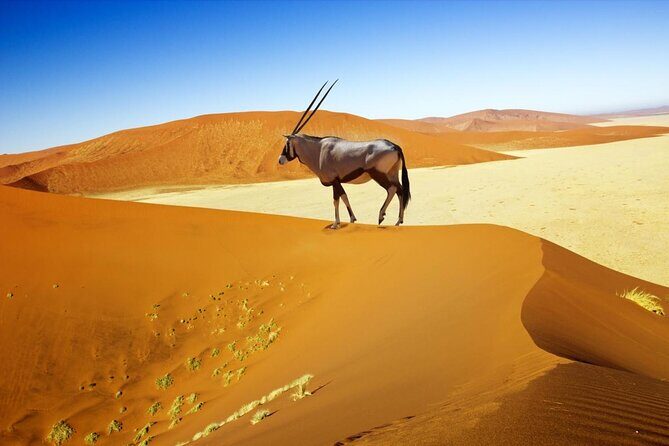
Two things I especially like: first, the focus on the classics—Dune 45 for sunrise and Deadvlei for those bleached clay pans and camelthorn silhouettes. Second, the value is real because you get most meals (breakfast, lunch, dinner) plus the key transport inside the Sossusvlei area, without needing a luxury price tag.
One thing to consider: this is a true budget setup, so you’ll want to plan for extra costs like snacks and drinks, and you must bring your own sleeping bag. If you’re craving comfort every minute, this may feel more rugged than you expect.
In This Review
- Key takeaways before you go
- Why this budget safari makes sense for Sossusvlei
- Windhoek pickup and the drive toward the dunes
- Sesriem camp setup: your base under a camelthorn tree
- Dune 45 sunrise: the best reason to wake up early
- Deadvlei: bleached clay, camelthorns, and real walking time
- Sesriem Canyon in late afternoon: a rare water moment
- The long road to Swakopmund and Walvis Bay Lagoon lunch
- Camping reality: meals, water, and what to pack
- Guides and group vibe: what you’ll feel day-to-day
- Price and logistics: getting your money’s worth
- Who should book this safari (and who might skip it)
- Should you book this 3-day Sossusvlei budget camping safari?
- FAQ
- What time is pickup in Windhoek?
- How many travelers are in the group?
- Where is the tour based for the first part of the trip?
- What major sights do you visit?
- Are meals included?
- Do I need to bring a sleeping bag?
- Are snacks and bottled water included?
- What if I need to cancel or change my booking?
Key takeaways before you go
- Small group size (max 7): easier pacing and more attention from the guide.
- Pre-dawn Dune 45 sunrise: your best photos and cooler hiking conditions.
- Deadvlei logistics are handled: 2×4 parking, then 4×4 shuttle into the Sossusvlei area.
- Sesriem Canyon after lunch: a swim break and a permanent-water spot in the Namib.
- Meals are mostly covered: lunch (3), breakfast (2), dinner (2), so you’re not constantly buying food.
- Sleeping bag not included: pack for camping, not hotels.
Why this budget safari makes sense for Sossusvlei
Sossusvlei is the kind of place where most of the experience is the timing and the views, not the fancy extras. This tour is built around that idea: you get the driving, the local guiding, and the access to the key stops, while keeping the budget friendly at $632.65 per person.
The small group size also matters. With a maximum of 7 travelers, you’re less likely to feel like you’re on a conveyor belt, and you can move at a human pace during the walks and dune climbing. That’s especially helpful at Deadvlei, where the best experience includes time on foot.
In terms of what you’re really paying for, you’re buying transportation between the regions, guide time, and the big-ticket segments of the day (like getting into the Sossusvlei area early). You still have to budget for personal snacks/drinks and your own sleeping gear, but the core structure is strong.
A few more Windhoek tours and experiences worth a look

Windhoek pickup and the drive toward the dunes
Your day starts with a 7:00 am pickup from accommodations within Windhoek city limits, then a short meeting at Chameleon Safaris HQ. After that, the route climbs off the central plateau and runs through the kind of changing scenery Namibia is famous for—mountain views, small towns, and desert horizons that seem to get wider every hour.
Along the way, there are practical stops for supplies and a chance to stretch. The plan includes a stop in Rehoboth for essentials, and then later you pass the small community at BűellsPort before pushing deeper toward Sesriem. It’s not just scenery—these breaks matter on long drives, so you arrive with less stress and more energy.
If you’re sensitive to schedule shifts, keep expectations flexible. One review noted a minor hiccup during Windhoek pickups that caused the group to start a little late, but the overall trip still ran smoothly afterward.
Sesriem camp setup: your base under a camelthorn tree
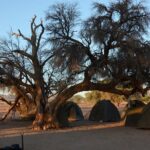
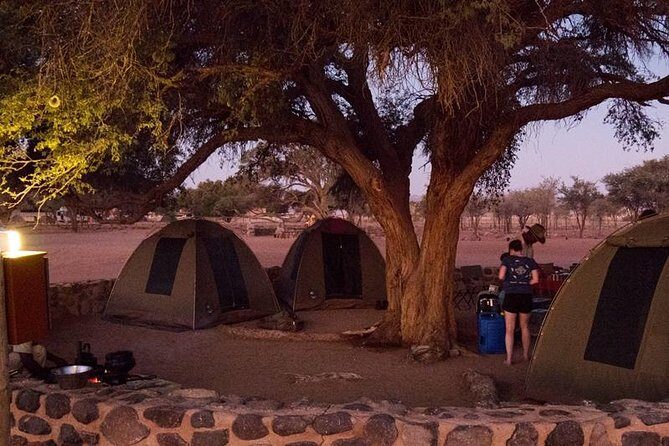
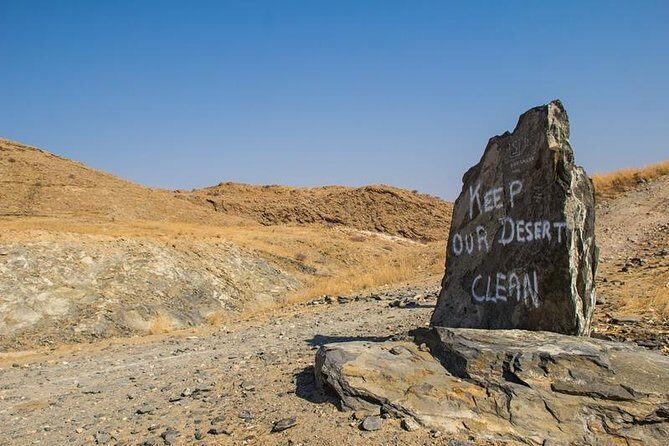
Once you reach Sesriem, the tour’s camping setup becomes part of the experience rather than a compromise. You’re expected to arrive around lunchtime and make camp beneath a huge ancient camelthorn tree, with towering red dunes in view nearby. That kind of setting changes the whole mood of a desert trip—everything feels closer, quieter, and more real.
Camping here also helps you do the next morning properly. Since the best dune photography and cooler conditions come early, having your base nearby saves you from spending another morning stuck on the road. It’s the sort of detail that makes the whole safari feel like it was planned by people who know how the desert works.
You’ll eat well enough to keep moving, but remember: this is camping. A sleeping bag is not included, and you’ll also need to cover snacks and drinks yourself (including bottled mineral water). If you forget either, you’ll feel it quickly once you’re out there.
Dune 45 sunrise: the best reason to wake up early
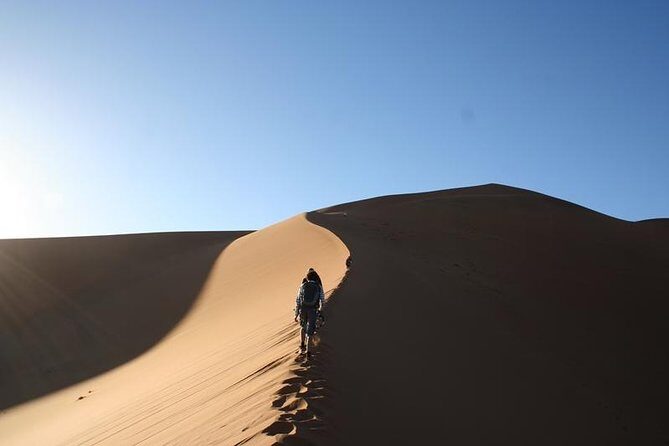
Dune 45 is famous for a reason: it’s one of the most accessible dunes that still delivers a serious “wow” moment. Your sunrise approach is timed so you’re in position before the light turns on fully, and you’ll cover the distance in darkness and early twilight.
You climb to a vantage point at the dune, then watch the colors shift as the sun rises—glowing orange and apricot-red on one side, with deep shadow on the other. This is where photography works best because the light has depth, and the sand texture shows up instead of washing out.
The practical win is that the climb and viewpoint happen while it’s cooler. That means you’re less likely to feel wrecked before your next stop. The tour also builds in breakfast after the dune descent, so you’re refueled before heading onward.
One bonus if you like variety: there’s mention of dune trekking that can include climbs such as Big Daddy (often paired with other dune hikes). Your exact dune choices can depend on conditions and group pace, but this tour clearly expects some “feet on sand” effort, not just a bus-window look.
Deadvlei: bleached clay, camelthorns, and real walking time
Deadvlei is the stop most people imagine when they picture the Namib Desert at its most dramatic. Getting there is part of the adventure: you park at a 2×4 parking area about 55 km away, then take a 4×4 shuttle into the Sossusvlei region.
Once you’re inside, you don’t just look—you walk. You’ll explore on foot to appreciate the cracked, bleached clay flats, the skeletal camelthorn trees, and the huge dunes that frame the whole scene. On a place like this, time is the whole point. You want the silence of walking slowly, seeing how the colors change with your shadow, and noticing details that disappear when you rush.
The route also includes shuttle time back to the vehicle, which is a smart compromise. You get the best of being on foot without turning the day into a grinding endurance test.
The itinerary marks Deadvlei access as included, so you’re not left piecing together extra tickets once you’re already traveling. For a budget trip, that’s one of the biggest quality-of-life wins.
A few more Windhoek tours and experiences worth a look
Sesriem Canyon in late afternoon: a rare water moment
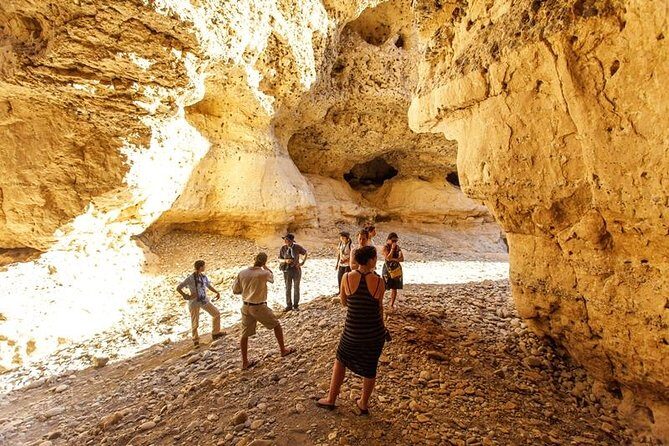
After the morning’s dune energy, the tour gives you a break by returning to Sesriem for lunch, then heading out to Sesriem Canyon later in the day. This is one of the few permanent water sources in the area, and that turns the canyon into a completely different kind of stop.
You’ll have time to relax and even swim (weather and conditions permitting). This matters because the desert day can feel one-note if you only focus on sand dunes. The canyon brings shade, a cooler feel, and a sense of place beyond the postcard.
If you’re traveling in shoulder seasons or just prefer slower moments, the late-afternoon timing is a good fit. You’re not fighting the hottest part of the day, and you still get that “I’m in the Namib” feeling when you move around in a more sheltered spot.
The long road to Swakopmund and Walvis Bay Lagoon lunch
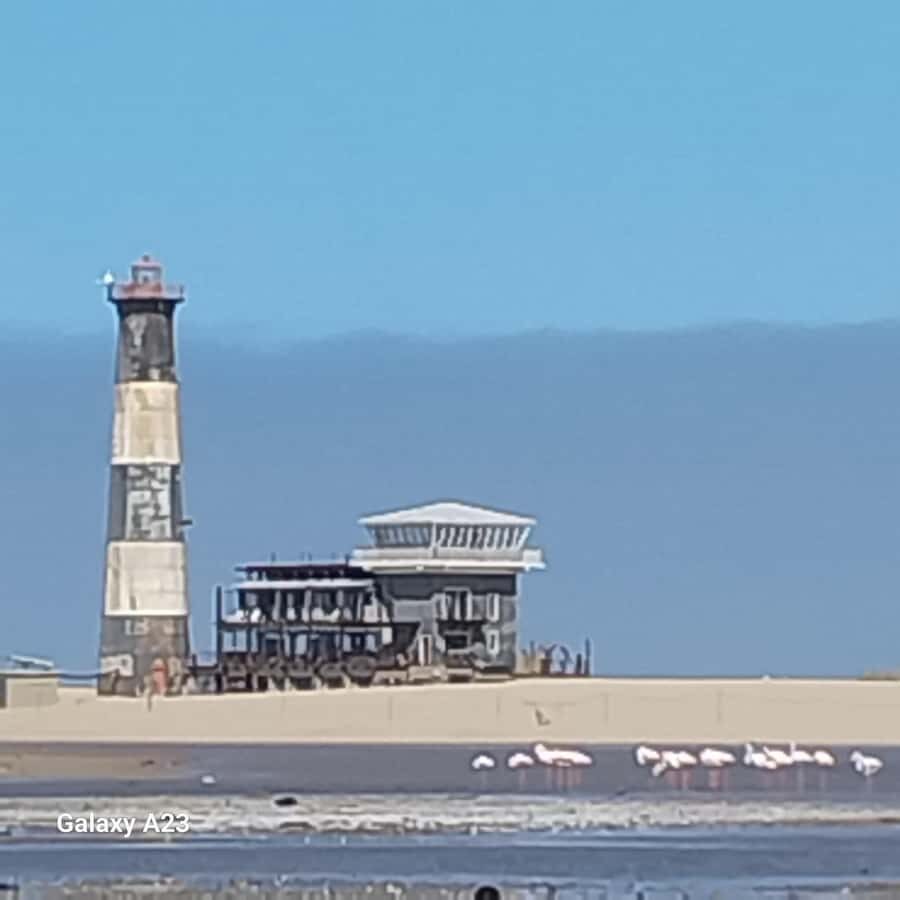
On the final day, you leave the desert early for the drive back toward the coast. The plan is straightforward: head to Swakopmund, with lunch at Walvis Bay Lagoon, and arrive about an hour after lunch.
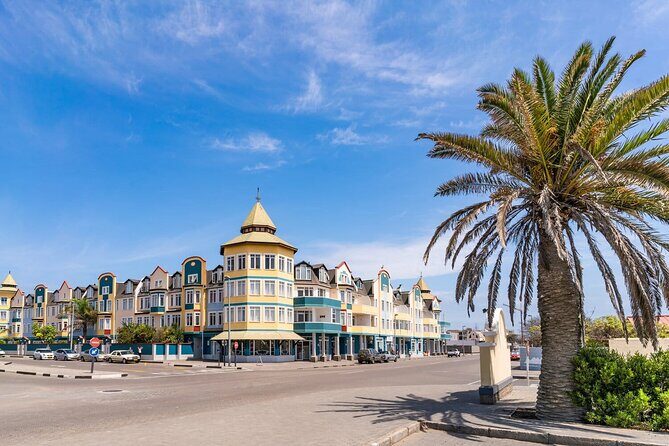
This is a practical end to the safari. Swakopmund is a great place to reset your travel brain—different climate, different rhythm, and a chance to shower, eat something fresh, and sleep in a proper bed after camping. You’ll be dropped off at your preferred accommodation, so you’re not forced into a single ending point.
One smart thing here: ending with a coastal town reduces the “immediately go back into travel mode” problem. Instead, you reach Swakopmund first, then you decide what to do next.
Camping reality: meals, water, and what to pack
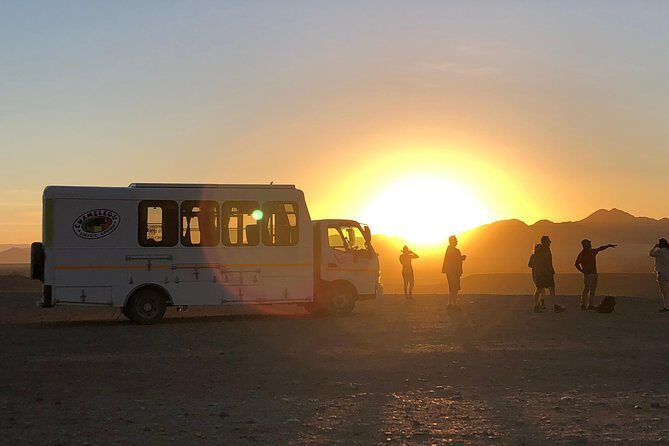
The tour includes most of the food you’ll actually need on a camping safari. You get dinner (2) and breakfast (2) plus lunch (3). That’s a big deal because desert travel can be expensive once you’re buying everything from roadside stops.
What’s not included is just as important. You’ll need to plan for snacks and drinks, including bottled mineral water. Since you’re out early and walking in dry air, it’s worth treating this as part of your budget—not an afterthought.
And don’t forget the gear gap: sleeping bag not included. With pre-dawn starts and nights under open desert skies, pack for temperature swings. Even if the day is warm, nights can feel chilly once the sun drops.
If you’re a one-bag traveler, bring what you need for comfort without trying to overpack. The best camping setup is simple: a real sleeping bag, layers, and the basics you’ll use every day—no complicated kit that you’ll regret dragging across sand.
Guides and group vibe: what you’ll feel day-to-day
This tour runs with local guidance, and the guide can make a big difference when you’re in a place where timing and route decisions matter. One guide name that shows up clearly is Johnny, described as experienced and very attentive, with good English communication and a strong focus on safety and clarity.
That style helps especially for solo travelers. More than one review highlighted that people traveled alone and still ended up meeting others—exactly what you want in a small group safari. It’s easier to relax when the guide sets expectations, keeps the group together, and makes sure you’re not left guessing what’s next.
Group size also affects the vibe around camp and during walking stops. With up to 7 travelers, you’re more likely to get your questions answered fast and adjust pacing without turning it into a group argument.
If you’re sensitive to cramped vehicles, keep expectations realistic. One review noted the vehicle may feel small for a longer tour, which is understandable in a budget setup. Still, the trade-off is the smaller group and the included transport plan.
Price and logistics: getting your money’s worth
Let’s talk value without fairy tales. At $632.65 per person for a 3-day safari, you’re paying for guided access to the Namib’s biggest hits plus meals and core transport. You’re not paying for luxury lodging or unlimited drinks.
The included meal counts do a lot of heavy lifting. Lunch (3), breakfast (2), dinner (2) means you’re less dependent on what you can find between towns. For a budget trip, that protection from extra spending adds up quickly.
On the logistics side, the tour also handles the trickiest part of Sossusvlei access: the shuttle system. Instead of you figuring out 2×4 parking locations and then arranging 4×4 transfers, the itinerary builds it in. That’s time saved and stress avoided.
Your extra costs are mostly personal items: snacks, drinks, bottled water, tips, and a sleeping bag. If you treat those as a planned add-on, this price looks fair for what you’re getting.
Who should book this safari (and who might skip it)
This is a strong fit if you want classic Sossusvlei sights without paying for a high-end lodge. You like sunrise starts, you’re okay with hiking on foot around Deadvlei, and you don’t mind a camping base that’s part of the adventure.
It’s also good if you’re traveling solo or in a mixed group. Small-group guiding and a communal camping setup tend to create an easy social rhythm, and a guide like Johnny makes it simpler for non-fluent English speakers to follow along.
You might want to think twice if you need a lot of comfort, or if you’re not prepared to carry and use camping essentials. You should also be ready for heat-based scheduling and downtime in the hotter parts of the day. The tour structure accounts for it, but it’s still desert travel.
Should you book this 3-day Sossusvlei budget camping safari?
I’d book it if you want the big Namib Desert hits—Dune 45 sunrise, Deadvlei, and Sesriem Canyon—with a guide-led plan and enough included meals to keep costs under control. The small group size, local guiding, and the way the schedule protects early light are the real reasons this works.
I’d skip it if you’re allergic to camping logistics or you assume “budget” means “everything’s provided.” Here, you’re responsible for a sleeping bag and your personal snacks and drinks. If you’re good with that, you’ll get a memorable desert experience that doesn’t require a luxury budget.
FAQ
What time is pickup in Windhoek?
Pickup starts at 7:00 am from accommodations within Windhoek city limits.
How many travelers are in the group?
The tour has a maximum of 7 travelers.
Where is the tour based for the first part of the trip?
You start in Windhoek, then travel to the Sesriem area where you camp.
What major sights do you visit?
You’ll focus on Sesriem, Dune 45, Deadvlei, Sesriem Canyon, and then finish in Swakopmund.
Are meals included?
Yes. Lunch (3), breakfast (2), and dinner (2) are included.
Do I need to bring a sleeping bag?
Yes. A sleeping bag is not included.
Are snacks and bottled water included?
No. Snacks and drinks, including bottled mineral water, are not included.
What if I need to cancel or change my booking?
The experience is non-refundable and cannot be changed for any reason.