REVIEW · WINDHOEK
9 Day Etosha, Skeleton Coast and Sossusvlei Camping and Lodge Safari
Book on Viator →Operated by Chameleon Safaris · Bookable on Viator
Namibia feels huge in nine days. This trip strings together top regions in a smart order, so you get wildlife days in Etosha, ancient culture with the Himba, and the surreal dune world of Sossusvlei. What I like most is the way the itinerary keeps you moving through Namibia’s major ecosystems without turning it into a rushed highlight reel.
Two standouts for me: the game drives in Etosha done from a vehicle built for close viewing (with pop-up roof access), and the fact that your guides cook meals over fire at camp. Many guides associated with this route, including Kennedy and Smithley, are known for being patient in the bush and turning camp food into a real part of the experience, not an afterthought.
One thing to think about before you book: this is a mix of camping and basic overnights, so pack for dust, early mornings, and the fact that a sleeping bag is not included.
In This Review
- Key points before you go
- Why Etosha, Skeleton Coast, and Sossusvlei work together
- The small-group setup: pop-up roof safari vehicle and real pacing
- Day 1: Windhoek to Okahandja wood carvings, then Mount Etjo rhinos
- Days 2–3 in Etosha: waterholes, sunrise drives, and the rhythm of big cats
- The first Etosha night at Okaukuejo
- Day three: Etosha Pan sunrise and the Great White Place
- Day 4: Otjikandero Himba village and Palmwag’s desert-elephant possibility
- Day 5: Skeleton Coast to Cape Cross—fog, shipwrecks, and seal-breeding vibes
- Day 6: Cape Cross seal walk and the Zeila shipwreck stop
- Day 7: Swakopmund adrenaline options, then Capricorn to Desert Camp
- Day 8: Deadvlei, Sossusvlei brunch, Dune 45 photos, and Sesriem Canyon
- Day 9: Solitaire cheetah learning and the return to Windhoek
- Camping + lodge style: what you’re really paying for
- My take: who this safari is perfect for (and who might struggle)
- Should you book this 9-day Etosha, Skeleton Coast and Sossusvlei safari?
- FAQ
- Where does the tour start and end?
- What time does the tour start?
- How long is the tour?
- What is the group size limit?
- What does the price include?
- What is not included in the tour price?
- Is pickup and drop-off offered?
- Does the tour include Etosha National Park game drives?
- Does it include the Himba cultural experience?
- Are there optional activities during the trip?
Key points before you go
- Small-group feel (max 10 travelers) keeps drives flexible and the vibe friendly.
- Etosha’s waterhole routine means you’re not just driving randomly—you’re hunting where animals actually come in.
- Mount Etjo Rhino Trust time gives context for conservation, not just sightings.
- Cape Cross seals plus Skeleton Coast shipwreck stops brings texture beyond the big parks.
- Sossusvlei access includes Deadvlei, Dune 45 photo time, and Sesriem Canyon.
- Camping comfort depends on your packing since a sleeping bag is not provided.
Why Etosha, Skeleton Coast, and Sossusvlei work together
If you want one Namibia safari that feels like a complete story, this route is a strong pick. Etosha is your wildlife foundation. The Skeleton Coast adds atmosphere and coastline extremes. Sossusvlei delivers that otherworld “how is this real” desert feeling you came for.
And it’s not just geography. You’ll be moving through very different conditions: grass-and-waterholes game viewing, then Atlantic fog and wrecks, then dune seas and canyon edges. That variety is the payoff.
A few more Windhoek tours and experiences worth a look
The small-group setup: pop-up roof safari vehicle and real pacing
You start in Windhoek with a meet-up at Chameleon Backpackers around 7:00 am, and the trip includes pickup and drop-off within the city limits. You travel in a custom-built safari vehicle with a pop-up roof, which matters more than people think. It makes scanning for animals easier and helps you get better angles when everyone’s trying to spot movement at distance.
Group size caps at 10 travelers, which is one reason this kind of itinerary can stay fluid. Short stops for photos or stretches happen without turning the day into a logistical chase.
Also watch the physical rhythm. The tour asks for moderate physical fitness, which usually means you’ll be getting in and out of vehicles often, walking a bit at places like Cape Cross, and handling desert heat or cool morning air without expecting everything to be flat and easy.
Day 1: Windhoek to Okahandja wood carvings, then Mount Etjo rhinos
Day one starts with culture and conservation before you even reach the major parks. First up is Okahandja’s Mbangura Woodcarvers Craft Market. You’ll get a chance to browse and practice bargaining while supporting local makers. It’s a simple stop, but it sets the tone: Namibia isn’t only wildlife posters.
Next you head to Mount Etjo Game Reserve, a private reserve linked with the Mount Etjo Rhino Trust. The big idea here is conservation with a goal—helping rhinos survive in a managed environment. You’ll arrive before lunch, set up camp, and then join an afternoon game drive on the reserve. Sunset at the end of the drive is where the day clicks, because you get wildlife time and a calm finish before the night routine.
The practical upside of this day: you ease into the safari mode gradually, instead of jumping straight into a full-on park schedule. The practical downside: it can feel like a lot of stops in one day if you’re the type who likes fewer transitions.
Days 2–3 in Etosha: waterholes, sunrise drives, and the rhythm of big cats
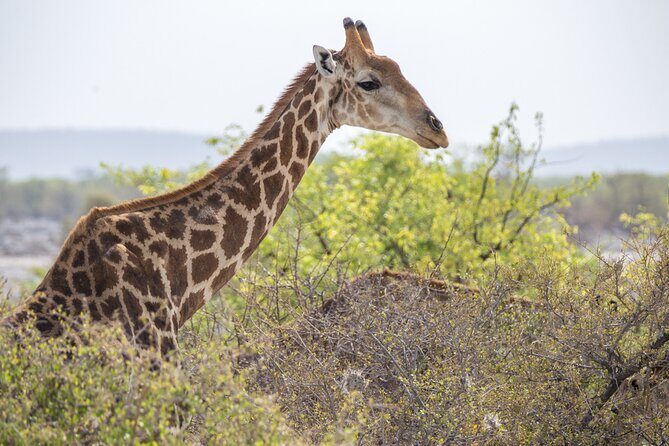
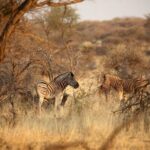
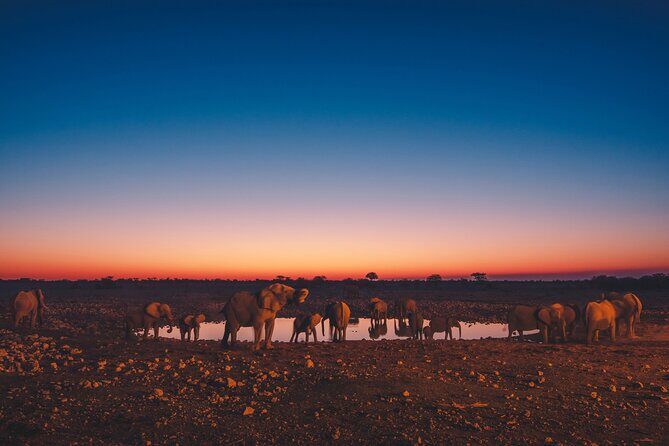
Etosha is the main wildlife reason people sign up for Namibia safaris. The tour enters Etosha and quickly shifts you into the park’s real logic: animals cluster around water, and that’s where your best odds come from.
The first Etosha night at Okaukuejo
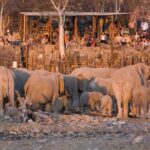
On day two, you drive to Okaukuejo, set camp, and enjoy an afternoon game drive. The way Etosha is organized makes these drives feel purposeful—you’re moving waterhole to waterhole, watching plains game, birds, and predators as they show up around water.
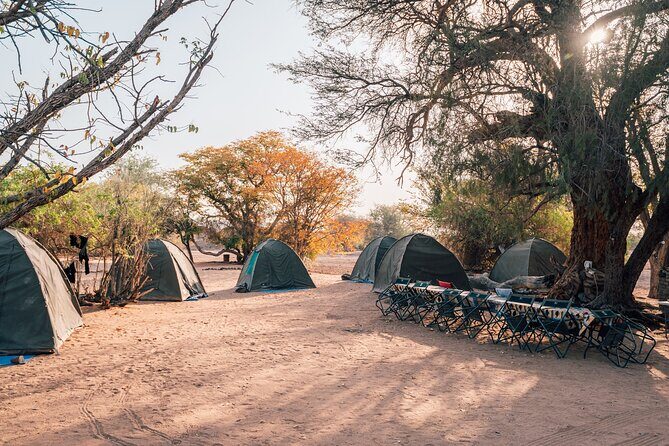
A standout here is the floodlit waterhole at night. You’ll have a chance to visit after dinner while it’s lit up, which increases the odds of spotting larger animals coming in. In the evening, dinner is cooked by your guide over an open fire, and that camp routine is a big part of why many people leave Etosha feeling more connected than just “saw animals, checked a box.”
Day three: Etosha Pan sunrise and the Great White Place
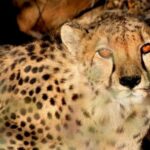
Day three starts early with a sunrise game drive, which is exactly when predators often have the best activity. You’ll visit multiple waterholes, then stop for breakfast at a fenced picnic spot inside the park. After that, you head toward the Etosha Pan area—called the Great White Place—which is basically a massive saline desert (about 4,500 square kilometers). Getting out of the vehicle there is a different kind of experience than standard viewing. The flatness, the scale, and the silence make you understand why conditions in this park can look otherworldly.
Then you continue with more game drive time aimed at Big Four possibilities, with Halali and Moringa Waterhole stops built into the day. You’re not guaranteed every species, but the structure is what gives you a shot.
Day 4: Otjikandero Himba village and Palmwag’s desert-elephant possibility
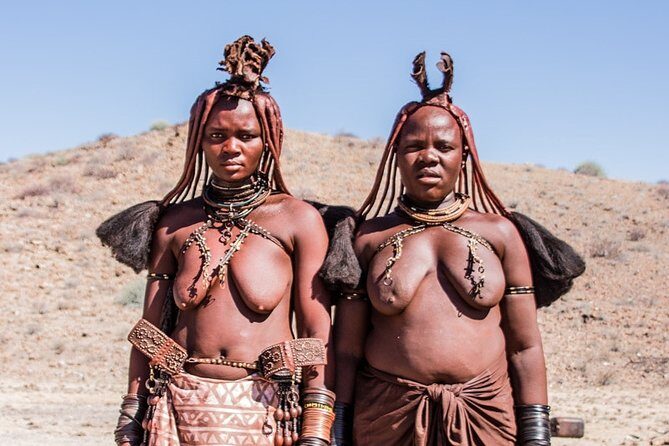
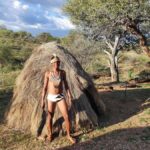
This is where the trip adds something many wildlife-only safaris don’t: a genuine culture encounter. After leaving Etosha, you visit the Otjikandero Himba Orphan Village. The tour includes a guided walk around the village, with time to learn about Himba traditions and daily life, and also share a little of your own culture with the hosts.
A helpful way to think about this part: it’s not about ticking a box. It’s about slowing down enough to see people in a living community, not a staged performance. Keep it respectful, listen more than you talk, and ask questions the guide frames for you.
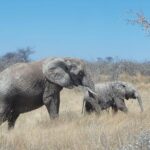
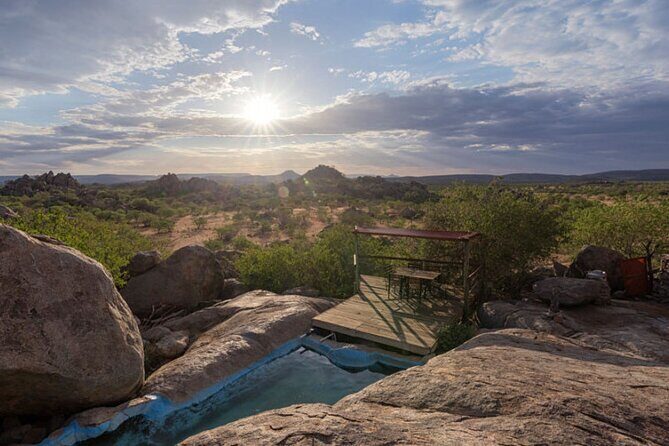
After lunch, you move onward to Palmwag, where you set up camp. Palmwag is known for its desert-adapted wildlife patterns, and the itinerary even gives you that “if you’re lucky” chance of seeing desert elephants. Even if you don’t get that specific sighting, Palmwag’s environment can be a strong shift from Etosha’s waterhole energy to something more open and dry.
Dinner again is guided and cooked over an open fire, and that matters on a camping trip. Good food keeps morale up when you’re tired and dusty.
Day 5: Skeleton Coast to Cape Cross—fog, shipwrecks, and seal-breeding vibes
Then you pivot hard from inland to coast. Day five takes you into Skeleton Coast National Park, heading all the way toward the Atlantic at Cape Cross.
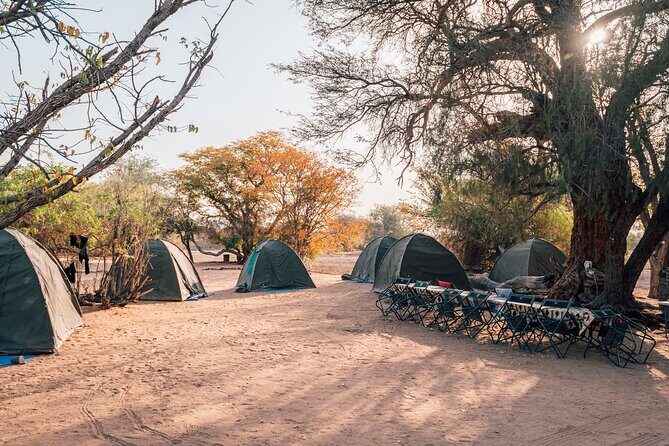
This area is famous for being harsh—fog, currents, and rough seas have historically turned ships into wrecks. The drive itself gives you that sense of isolation the Skeleton Coast is known for. You’ll set up camp late afternoon at Cape Cross, watch the Atlantic at sunset, and eat dinner prepared by your guide over an open fire.
If you’re the type who loves photos, this day can be a treat even without animals. The coastline light and the emptiness give you a different kind of Namibia memory.
Day 6: Cape Cross seal walk and the Zeila shipwreck stop
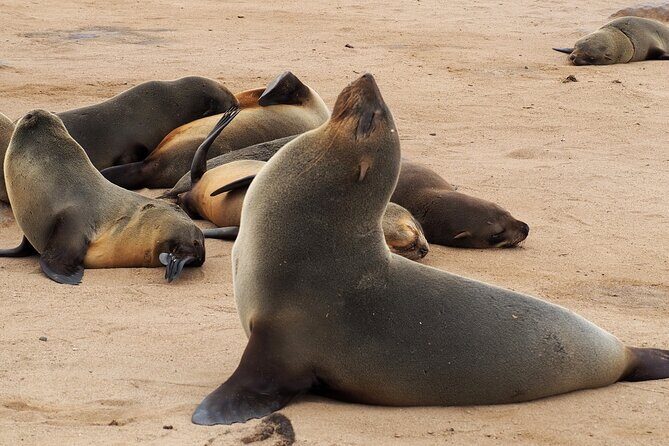
Day six starts with breakfast at camp, then a short walk to the Cape Cross Seal Reserve. This reserve hosts one of the world’s largest breeding colonies of Cape fur seals. If you’re traveling during breeding season (noted as November to December), you can see huge numbers of seals—up to 200,000+—so the timing can affect what you experience.
Even outside peak season, it’s still intense. Expect smells and noise. Expect your camera roll to fill up fast.
After seals, you continue along the coast with a stop at the Zeila Shipwreck, described as a relatively recent Skeleton Coast victim (from 2007). It’s quick, but it anchors the Skeleton Coast story in something real, not just a name on a map.
Then you reach Swakopmund in the afternoon. This is your break from camping. You get time to explore on foot or choose optional activities, ranging from skydiving to quad biking. Dinner is your own choice tonight, so it’s a night to eat what sounds good instead of sticking to camp food.
Day 7: Swakopmund adrenaline options, then Capricorn to Desert Camp
On day seven, you leave Swakopmund at 11:30, which gives you a solid window for optional activities. If you want adrenaline, this is one of your better chances—sandboarding down dunes, quad biking through dune fields, or cycling in Swakopmund’s older area.
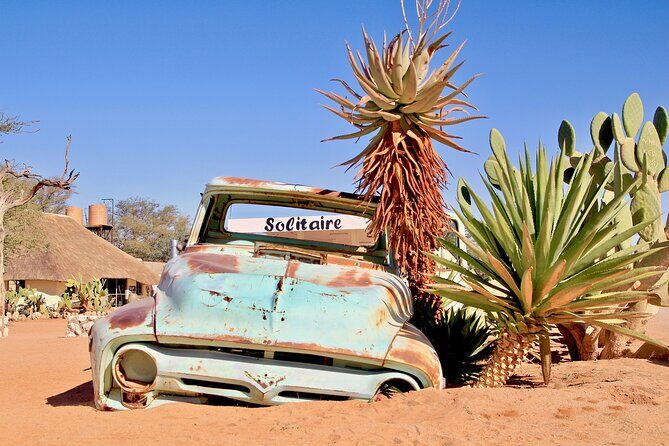
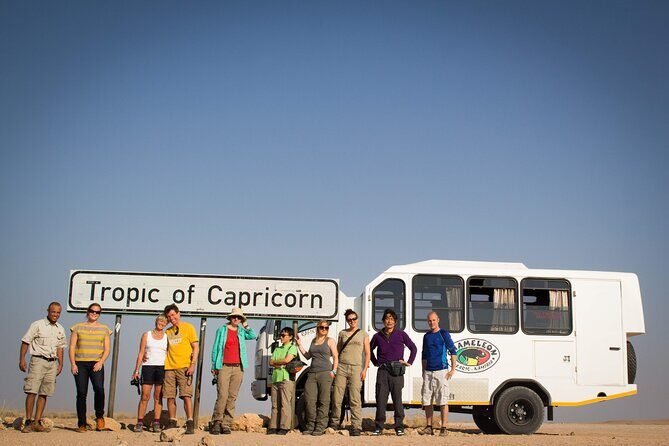
Then the day shifts back into scenery and road travel. You stop at the Tropic of Capricorn sign for photos and a short stretch, then make a quick stop at Solitaire for snacks and a bathroom break before heading to Desert Camp late afternoon.
At Desert Camp, you settle in, walk out briefly for sunset views, and have dinner prepared by your guide. This part of the trip is useful because it sets you up for the big dune day without exhausting you with endless early starts.
Day 8: Deadvlei, Sossusvlei brunch, Dune 45 photos, and Sesriem Canyon
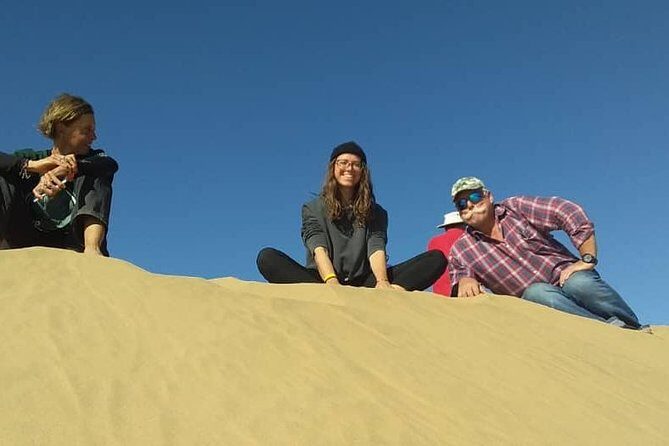
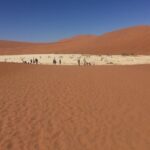
Day eight is the heart of the Namib Desert experience. You start with Deadvlei, accessed from the 4×4 carpark. The tour gives you time here (about three hours), and this is one of those places where the stark contrast—white-gray ground, dark tree trunks, and bright sand—does the work for you.
Next you travel to Sossusvlei for brunch. Sossusvlei is where people start talking in superlatives, but even if you ignore hype, you’ll likely understand why once you’re standing there. The dunes are famous for scale, and the color shifts across the day.
On the way out, you stop at Dune 45, which is the popular photo target. It’s short on time, but that’s by design—you’re not spending the whole day just on one dune when the area is full of interesting angles. Finally you visit Sesriem Canyon, a small but important water source for local wildlife.
Practical tip: canyon light can change quickly, so if you care about photos, move at a steady pace rather than lingering only at one spot.
Day 9: Solitaire cheetah learning and the return to Windhoek
Your final day includes a Solitaire Carnivore Conservation learning stop focused on cheetah. The tour provides about an hour here. Even if you don’t end up seeing a cheetah in the wild, this gives you a better mental map of how conservation links to habitat and survival.
Then you head back toward Windhoek, passing the Naukluft Mountains and arriving early afternoon. The tour notes that flights are not recommended on this day, so plan your departure later rather than gambling with timing.
Camping + lodge style: what you’re really paying for
The price is listed at $2,568.47 per person for roughly nine days, and you’re booking about a month out on average. That gives you a hint about demand and how popular this route is.
Value-wise, you’re not just buying transport. You’re buying:
- Multiple major regions: Etosha, Skeleton Coast, Swakopmund, and Sossusvlei
- Real guiding time with game drives and interpretive stops
- Meals included: the tour lists 7 lunches, 7 dinners, and 8 breakfasts
- Camping setup support: camping equipment and tap water are included
- Park-focused driving plus a capped group size
What you should budget separately: drinks (including mineral water), alcohol, and snacks. Tap water is available, but you’ll still want to plan how you’ll stay hydrated and comfortable.
Also, camping gear has a catch. Camping equipment is included, but a sleeping bag is not. If you show up without one, your comfort level will drop fast, especially when nights get cool.
My take: who this safari is perfect for (and who might struggle)
This tour is ideal if you want a Namibia sampler that still includes serious wildlife time. If you’re excited by both animals and human encounters, the mix works well—Etosha for the big-predator hunt, Himba village for cultural context, and Cape Cross plus Skeleton Coast for coastal drama.
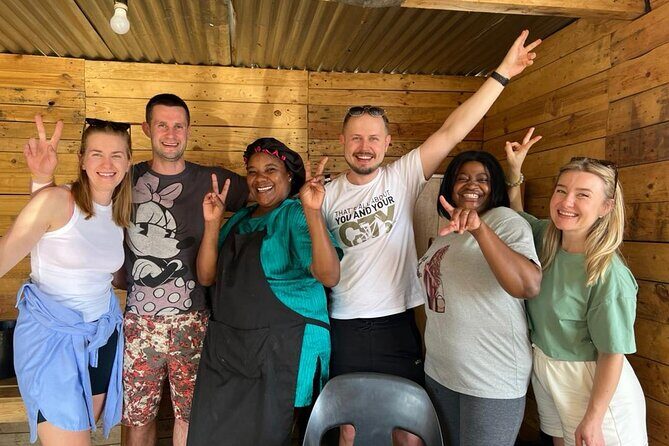
It also suits first-time campers, partly because the itinerary includes equipment support and keeps camp routines structured. Guides connected to this route, like Kennedy and Smithley, are often praised for being organized, patient, and fun at camp, which helps a lot when you’re learning how to live outdoors for a week.
You might want to choose another option if:
- You hate early mornings and long drives.
- You’re not comfortable with camping logistics and dust.
- You want nonstop creature sightings with no slower cultural or walking stops.
Should you book this 9-day Etosha, Skeleton Coast and Sossusvlei safari?
Yes, if you want a high-coverage Namibia highlights itinerary with enough flexibility to enjoy the journey, not just race through it. The route makes smart sense: Etosha first for wildlife, Himba culture for context, Skeleton Coast for atmosphere and wreck stories, Swakopmund for a reset, and Sossusvlei for the dunes that define the Namib.
Before you commit, do two things: pack a proper sleeping bag, and plan to budget for snacks and drinks since meals don’t cover everything. If you’re good with that, this is the kind of trip that leaves you with both animal memories and big-sky desert memories in the same bag.
FAQ
Where does the tour start and end?
It starts at Chameleon Safaris Ferry Street, Windhoek, Namibia and ends back at the same meeting point.
What time does the tour start?
Start time is listed as 7:00 am.
How long is the tour?
The duration is listed as 9 days (approx.).
What is the group size limit?
This tour has a maximum of 10 travelers.
What does the price include?
The tour includes 5 nights camping plus 3 nights accommodation (twin share), camping equipment, game drives in Etosha, the Himba village experience, Cape Cross seal colony visit, exploring the Sossusvlei region including Sesriem Canyon, meals (listed breakfasts, lunches, and dinners), a professional English-speaking driver and guide, transport in a custom safari vehicle with pop-up roof, tap water, and pickup/drop-off within Windhoek city limits.
What is not included in the tour price?
Not included are sleeping bag, drinks (including mineral water), soft drinks, alcohol, snacks, and personal travel insurance.
Is pickup and drop-off offered?
Yes, pickup and drop-off within Windhoek city limits is included.
Does the tour include Etosha National Park game drives?
Yes. It includes 1 full day and 1 afternoon game drive in Etosha National Park.
Does it include the Himba cultural experience?
Yes. There is an Otjikandero Himba Orphan Village experience.
Are there optional activities during the trip?
Yes. Swakopmund has optional activities available, and the tour notes you can choose activities such as skydiving and quad biking.