REVIEW · WINDHOEK
Half-Day Windhoek City and Township Cultural Tour
Book on Viator →Operated by Chameleon Safaris · Bookable on Viator
Windhoek makes sense fast when you have a guide. I love how this tour pairs major landmarks with Katutura reality, so you get more than photo stops. You’ll also get practical variety: a church interior if it’s open, independence stories near Parliament Gardens, and then real-life stops in the township. One drawback to consider: it’s only about 3 hours, so the pace is quick and you’ll have limited time at each location.
What makes it work is the setup—hotel pickup and drop-off, and a climate-controlled minivan for the moving parts. For the money (around $37.38), you’re not just buying sightseeing; you’re paying for interpretation, transport, and food tasting, with admission covered at the key stops.
I’d treat this as your orientation tour. If you want long museum time or deep, slow conversations, you may need a second day for that.
In This Review
- Key points to know before you go
- A half-day tour that gives you real Windhoek bearings
- Christuskirche: the first stop is short, but it sets the tone
- Parliament Gardens and Dr. Sam Nujoma: independence stories without a textbook
- City landmarks like Old Fort and Ink Palace, plus a viewpoint payoff
- Katutura with the Nande Explorer Cultural Township Tours: the heart of the experience
- Oshetu Community Market: Kapana, Mopane worms, and mealtime culture
- Penduka Village women’s project: work, crafts, and what that means locally
- Price and logistics: what $37.38 really covers
- Group size, timing, and why the minivan matters
- Guides who can turn quick stops into clear stories
- Should you book this Windhoek city and township tour?
- FAQ
- FAQ
- How long is the Windhoek City and Township Cultural Tour?
- What does the tour cost?
- Are hotel pickup and drop-off included?
- Is food tasting included, and are drinks included?
- What places do you visit during the tour?
- How big is the group?
- What’s the minimum age for this tour?
- Can I cancel for a refund?
Key points to know before you go
- Hotel pickup + drop-off makes it easy to fit into a short stay.
- Katutura includes social diversity, not just one street or one neighborhood type.
- Market food tasting is part of the price; drinks are not.
- Women’s craft project visit (Penduka) adds a work-and-agency angle to the story.
- Small group cap of 13 keeps questions realistic and schedules workable.
A half-day tour that gives you real Windhoek bearings
Windhoek can feel compact, but it’s not one story. This tour is built to show you the city’s “front page” and then the “back pages.” You start in central Windhoek around the Parliament area and major church landmark, then you head into Katutura, the township region where a large share of the city’s residents live.
I like tours that respect your time. Here, the rhythm is clear: quick landmark stops (usually 15 minutes each at the city side), then a longer township block, plus two shorter cultural stops. It’s not a slow stroll. It’s a focused sweep, and that’s a good thing if you only have one afternoon.
You’ll ride in an air-conditioned minivan, which matters in Namibia’s sun and wind. And because the group is capped at 13, you’re less likely to feel like a passenger in a herd.
You can also read our reviews of more city tours in Windhoek
Christuskirche: the first stop is short, but it sets the tone
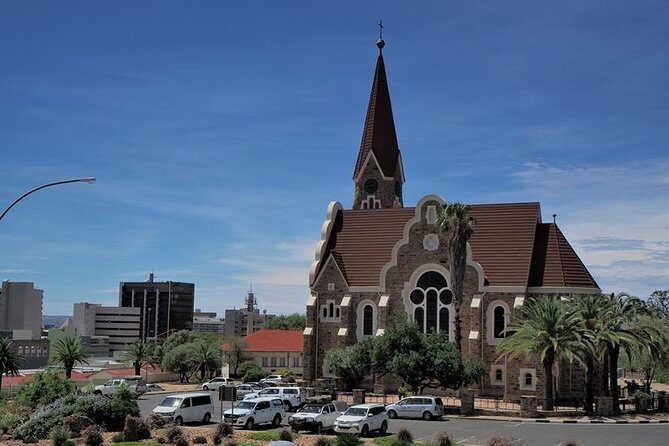
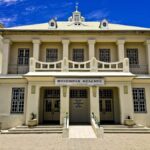
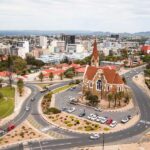
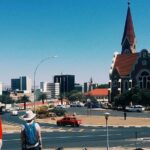
Your tour begins at Christuskirche, Windhoek’s most recognizable landmark. You’re not sent sprinting through a lineup—you get about 15 minutes here, and the goal is simple: look around the church and learn what makes it uniquely designed.
If the church is open, you can take a look inside. If it’s not, you still get context from the guide, and the stop stays short enough that it doesn’t derail the whole day.
Tip that helps: if you want photos inside, plan for the fact that openings can be unpredictable. Keep your camera ready, but don’t count on a perfect interior window.
Parliament Gardens and Dr. Sam Nujoma: independence stories without a textbook
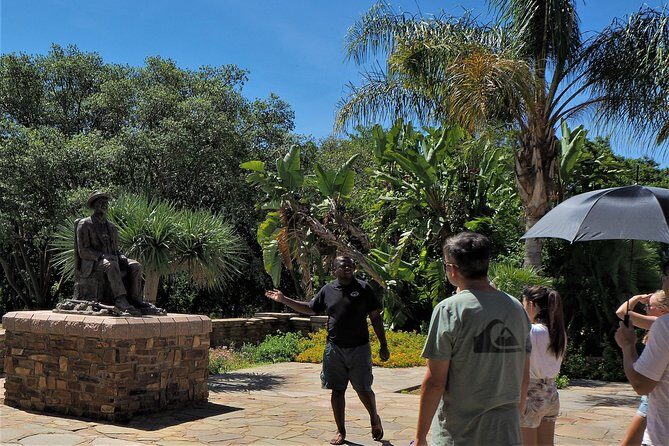
Next up is Parliament Gardens, placed so you’re close to Namibia’s Parliament house. Expect another 15-minute segment with history told in human terms—who fought for independence and what that struggle meant locally.
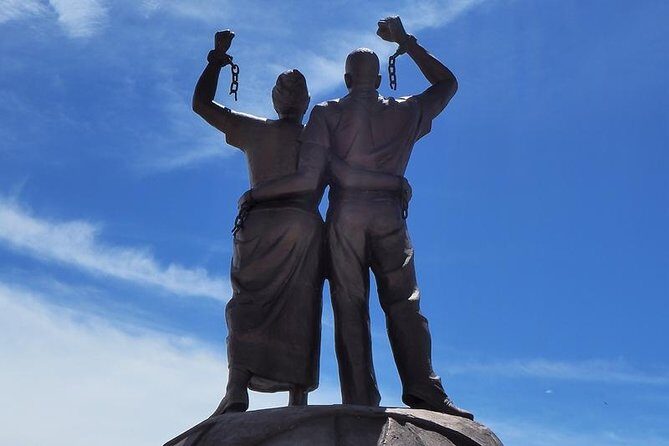
This is where names start to anchor the story. You’ll hear about Dr Sam Nujoma, often described as a founding father figure, and the independence struggle itself. The guide also ties it to the present, roughly 20 years after independence, and then adds pre-independence context, including the role of the Germans and South Africans.
I like this part because it turns geography into meaning. You’re standing in the political center while someone explains why the center matters—then you’re going to move away from the center soon after. That contrast is the whole point.
City landmarks like Old Fort and Ink Palace, plus a viewpoint payoff
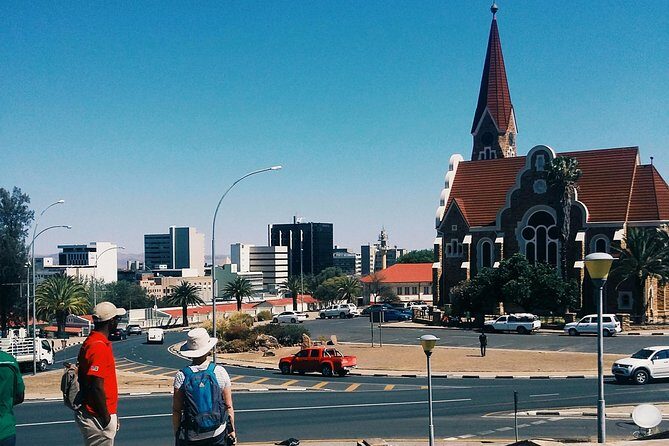
The tour isn’t only about politics and churches. It also works in Windhoek’s “known names,” including visits to Old Fort and Ink Palace, plus a look from Lover’s Hill for city views.
This matters because it gives your brain a set of reference points. When you later walk around on your own, you’ll understand what you’re seeing—what’s central, what’s administrative, and what’s built for people who live their lives there.
One practical consideration: viewpoint time can be affected by weather and light. If you’re picky about photos, bring a little patience. A great guide helps you choose the best moments, and the minivan ride means you’re not stuck waiting in the open for long.
Katutura with the Nande Explorer Cultural Township Tours: the heart of the experience
After the city stops, you head into Katutura with the Nande Explorer Cultural Township Tours segment. This is the longest part of the itinerary on the township side—about 1 hour.
Katutura isn’t treated as one single “type” of place. It’s described as a huge area with different suburbs that reflect different socio-economic levels. You’re learning how more than half of Windhoek residents live, and you’re getting a window into Namibia’s cultural diversity and traditions through the people and everyday routines you observe.
What I love here is the “both sides” framing. You’re not just told that inequality exists—you’re shown how the city’s story plays out across neighborhoods. And because the guide is working the whole time, you get answers instead of guessing.
Safety note (practical, not scary): this is a guided township visit. Stay with the group, listen to instructions, and don’t wander off to chase a view or a photo. The tour is designed to keep you in the right places at the right pace.


Oshetu Community Market: Kapana, Mopane worms, and mealtime culture
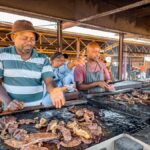
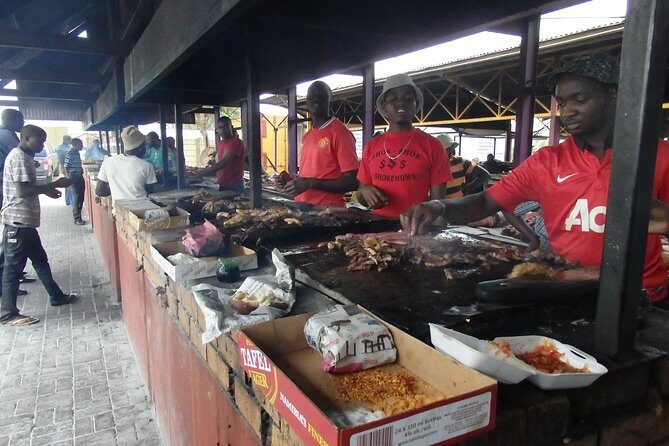
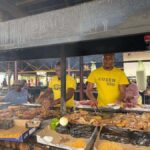
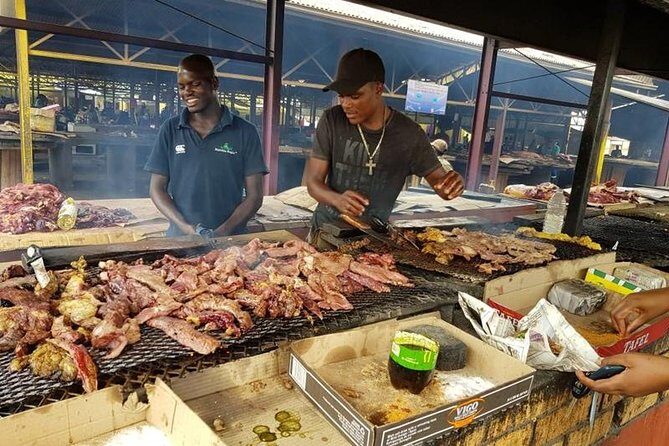
From Katutura, you go to Oshetu Community Market. This stop runs about 30 minutes, and it’s built around food tasting. Admission here is free, and the tasting is part of what you’re paying for.
You’ll likely run into a spread of local favorites such as:
- Kapana (barbecue meat)
- Mopane worms
- Mealie pap (corn porridge)
This is one of the most fun parts because it makes the culture bodily, not just verbal. You’ll taste, ask questions, and learn what people eat and why it shows up often. It also gives you a relaxed moment in the middle of heavier topics.
Two practical tips:
- Drinks are not included, so if you need water, plan to buy it separately.
- If you’re not sure about eating something, you can still watch, smell, and ask. Food culture isn’t only about forcing your taste buds.
There’s also a human side to markets: you may see people selling items alongside food. One buyer-advice note from real experience: if you’re uncomfortable with being stood near sellers, ask your guide to position you a bit away from the buying area. You’re there to learn, not to feel pressured.
Penduka Village women’s project: work, crafts, and what that means locally
Your final major cultural stop is Penduka Village, a women’s project focused on giving women work opportunities. You’ll spend about 30 minutes exploring their workshop and seeing how they handcraft items—often described in terms of batik-style fabrics and embroidery.
This stop is valuable because it connects culture to livelihoods. You’re not only buying a souvenir; you’re seeing how skills translate into income and independence. And because you’re in a workshop environment, you can ask questions about materials and processes.
If you want something to take home, this is the moment. But even if you don’t buy, it’s worth lingering for the “how it’s made” details. Crafts are a language, and this one is a practical way to understand the community’s creative work.
Price and logistics: what $37.38 really covers
At about $37.38 per person, this tour is priced for a value mix: guided interpretation + air-conditioned transport + hotel pickup/drop-off + food tasting. It also notes that taxes and handling charges are included, which reduces the usual surprise-fee headache.
What it does not include is drinks. That’s the main catch. If you’re the type who gets thirsty quickly, bring a water plan. (It’s easy to forget when you’re focused on tasting and listening.)
You should also expect it to be efficient rather than leisurely. Admission at the listed stops is free, but the time at each place is short. That’s how you fit a city day and a township visit into half a day.
Group size, timing, and why the minivan matters
This isn’t an enormous tour bus situation. The maximum is 13 travelers, and that helps with both movement and conversation. You can ask a question and actually get an answer without the guide having to repeat everything 20 times.
The schedule runs about 3 hours. That’s ideal for:
- people with a tight itinerary
- first-timers who want orientation
- travelers who don’t want a full-day commitment
The tradeoff is that you can’t linger. If you’re the kind of traveler who likes to sit and watch for 45 minutes, you might wish this lasted longer. But for an orientation-and-culture mix, it hits the sweet spot.
Hotel pickup is included, and that’s a big deal in Windhoek. It saves you time and reduces the hassle of figuring out local transport right after arrival.
You’ll also use a mobile ticket, which is convenient on the day.
Guides who can turn quick stops into clear stories
Good guides are the difference between seeing places and understanding them. This tour credits the guide experience heavily, and the names that come up most often include Shaka, Simon, Winton, Joseph, and Raymond.
Across those guides, the consistent theme is clear explanations tied to daily life—history and culture connected to what you’re actually looking at. For example, Simon is repeatedly praised for being friendly and patient with questions, and Raymond is singled out for giving solo participants extra attention and detailed explanations.
If you get assigned one of these guides (or a similarly strong one), you’ll likely feel like the tour is doing its job: helping you connect the dots fast.
Should you book this Windhoek city and township tour?
If you want a smart first look at Windhoek with the context that stops at the city landmarks alone won’t give, I’d book it. It’s especially worthwhile if you’re curious about independence-era stories near Parliament Gardens and then want the lived reality side in Katutura, plus a hands-on cultural stop at Oshetu Market and Penduka.
Skip it if you:
- want a slow, long-form experience with minimal driving
- don’t like tasting food (though you’ll still learn a lot even if you choose smaller samples)
- need more time for major attractions than a half-day allows
FAQ
FAQ
How long is the Windhoek City and Township Cultural Tour?
It runs about 3 hours.
What does the tour cost?
The price is $37.38 per person.
Are hotel pickup and drop-off included?
Yes, hotel pickup and drop-off are included.
Is food tasting included, and are drinks included?
Food tasting is included. Drinks are not included.
What places do you visit during the tour?
You visit Christuskirche, Parliament Gardens, Katutura with Nande Explorer Cultural Township Tours, Oshetu Community Market, and Penduka Village. The tour also highlights visits connected to landmarks like Old Fort and Ink Palace and includes city views from Lover’s Hill.
How big is the group?
The tour has a maximum of 13 travelers.
What’s the minimum age for this tour?
The minimum age is 5 years, and children must be accompanied by an adult.
Can I cancel for a refund?
You can cancel up to 24 hours in advance for a full refund. If you cancel within 24 hours, the amount paid is not refunded.