REVIEW · WINDHOEK
Best City Tour of Windhoek
Book on Viator →Operated by Motema Tours and Safaris Namibia · Bookable on Viator
Windhoek in four hours is real. This half-day, private route helps you get your bearings fast with major sights like the Tintenpalast and Christuskirche, then adds context through museums and a township culture stop. I like that the pace feels steady—3 to 4 hours—and you’re not left to figure out what matters on your own.
What I like most is the way the tour mixes big landmarks with hands-on learning. I especially appreciate the National Museum of Namibia for turning centuries into something you can actually picture, and I also like the Trans-Namib Railroad Museum for showing how rail shaped daily life and the economy.
The main drawback to consider is that guide quality can vary. One write-up I saw praised guide Merron as an absolute standout, but another note raised concerns about whether the guide could answer questions well—so ask lots of questions early and follow your instincts if you don’t get satisfying answers.
In This Review
- Key things to know before you go
- Getting Your Bearings in Windhoek, Without the Guesswork
- Price and What $55.75 Buys You in Real Life
- National Museum of Namibia: Where Namibia’s Timeline Comes to Life
- Tintenpalast and the Big Landmark Feel
- Christuskirche: A Beautiful Stop to Confirm Before You Count It
- Trans-Namib Railroad Museum: Infrastructure as History
- Nande Explorer Cultural Township Tours: Community Life and Craft Culture
- The Kudu Statue on Independence Avenue: A Quick Photo With Meaning
- Private Guide Reality Check: When It Clicks, It Really Clicks
- Who This Half-Day Tour Is Best For
- Should You Book This Windhoek City Tour?
- FAQ
- How long is the Windhoek city tour?
- What time does the tour start?
- Is this tour private?
- Does the tour offer pickup?
- What is included in the price?
- Where does the tour take you?
- What if the weather is poor?
- Can I cancel for a full refund?
Key things to know before you go
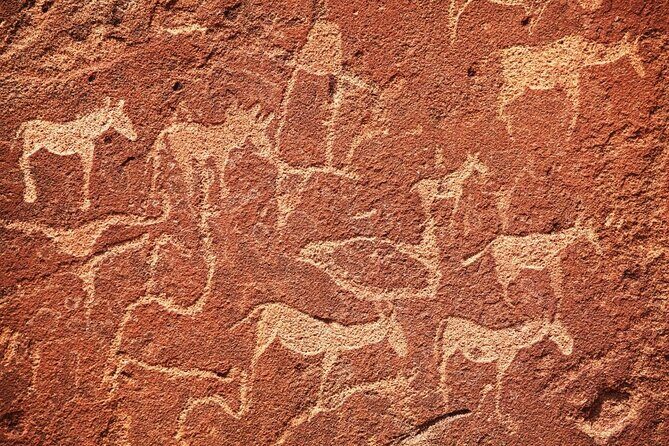
- National Museum of Namibia (1 hour): San art and tools, fossils/minerals, and Namibia’s path from colonial times to independence
- Christuskirche stop: architecture details are listed, but you should confirm what location/version you’ll actually see
- Trans-Namib Railroad Museum (1 hour): locomotives and carriages tied to German, South African, and British eras
- Nande Explorer Cultural Township Tours (1 hour): local craft markets and cultural storytelling, with community-based tourism in mind
- Kapana + bottled water included: simple comfort while you’re on the move in the city
- Private tour format: just your group, with pickup offered and a mobile ticket
Getting Your Bearings in Windhoek, Without the Guesswork
Windhoek can feel like a lot at first glance: a capital city with history layered in plain sight, but not always explained clearly if you’re walking on your own. This half-day tour is built to fix that. In a few hours you’ll see several key landmarks, then you’ll shift into the “why it matters” part through museums and local culture.
For me, the value comes from the mix of stops. You’re not just checking photo spots—you’re getting context, from prehistory and indigenous cultures to the infrastructure that helped Namibia connect its regions. And because it’s private, you can set the tone: focus on architecture, history, or culture, depending on what you personally want.
One more plus: you’re starting at 9:00 am, which tends to make the day easier. You’ll be moving through indoor stops and one or two outdoor city landmarks before the afternoon can drag.
You can also read our reviews of more city tours in Windhoek
Price and What $55.75 Buys You in Real Life
At $55.75 per person, this doesn’t read like a “cheap walking tour.” It’s priced more like a supported, ticketed city day. What makes it feel reasonable is that you’re getting more than a guide’s voice—you’re also getting museum admissions included on the listed stops and comfort items like one bottle of bottled water and Kapana meat.
Also, you’re booking a private experience. That matters in places where solo exploring is possible, but understanding takes time. With a guide, you can turn a few hours into an informed overview—especially if it’s your first time in Windhoek.
Two practical timing notes:
- The tour typically runs 3 to 4 hours, so it’s ideal when you don’t want to lose your whole day.
- It’s often booked about 32 days in advance on average, so if you want a specific day, don’t wait until the last minute.
National Museum of Namibia: Where Namibia’s Timeline Comes to Life
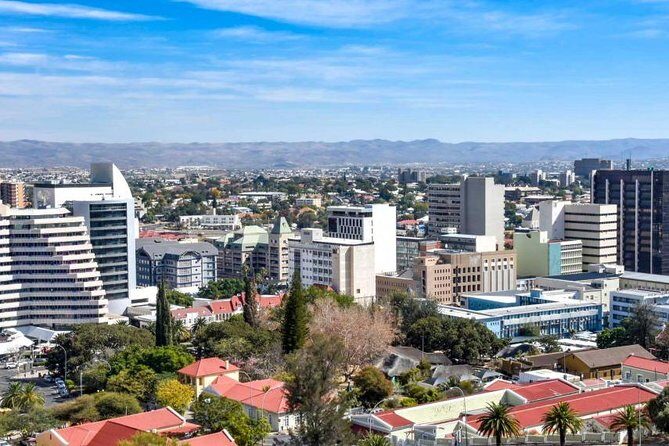
Your first museum stop sets the tone. The National Museum of Namibia is described as spanning prehistoric through modern times, which is exactly the kind of foundation that helps the rest of the day click into place.
Here’s what you can expect to look for during that ~1 hour:
- Exhibits tied to indigenous cultures, including the San people’s art and tools
- Ethnographic and archaeological artifacts that help connect objects to lived experience
- A section covering Namibia’s colonial past and its path to independence
- Natural history displays, including geological specimens, rare minerals, and fossils from the region
What I like about this stop is that it’s not history only in the abstract. Fossils and mineral specimens give you a sense of deep time. Then the cultural collections pull you into people and identity, and the independence story helps explain why the rest of what you see in Windhoek isn’t just scenery.
If museums are your thing, spend a bit of extra time asking your guide what you’re looking at. When the guide can explain the connections—between art, land, and politics—the museum becomes more than a room full of artifacts.
Tintenpalast and the Big Landmark Feel
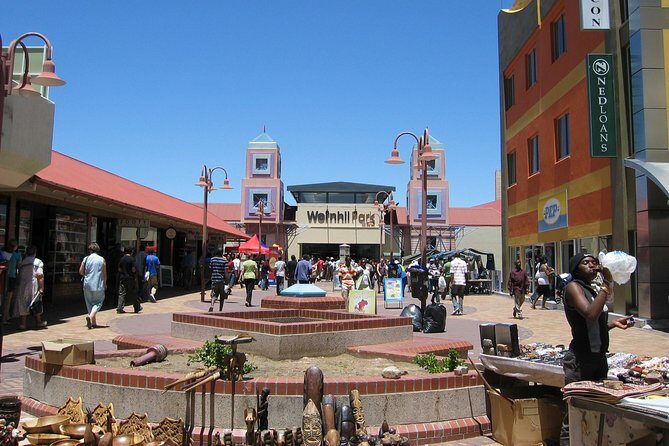
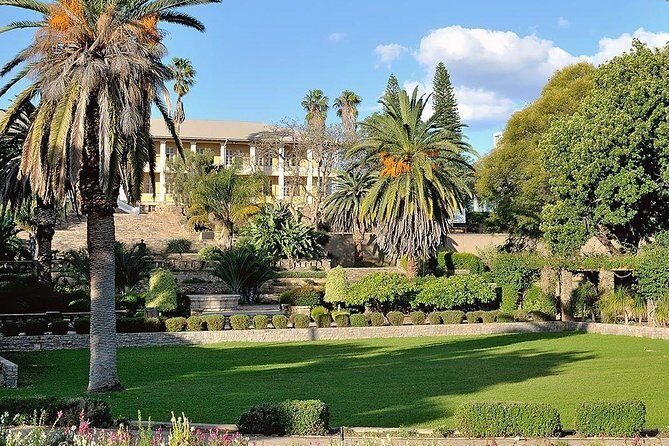
The highlight list includes the Tintenpalast, and even if your schedule shifts slightly, this is one of those capital-city anchors. Seeing it early helps you orient around the layout of Windhoek and understand where government landmarks sit relative to museums and cultural spaces.
This isn’t the type of stop where you need to be a specialist. You just need to have your eyes open for the architectural statement and the role of public buildings in a city’s identity. If you’re the type who likes taking a quick photo, this is often a good moment—then you move on while the day is still fresh.
Christuskirche: A Beautiful Stop to Confirm Before You Count It
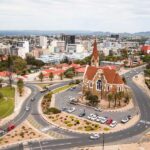
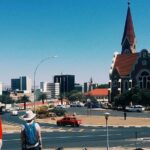
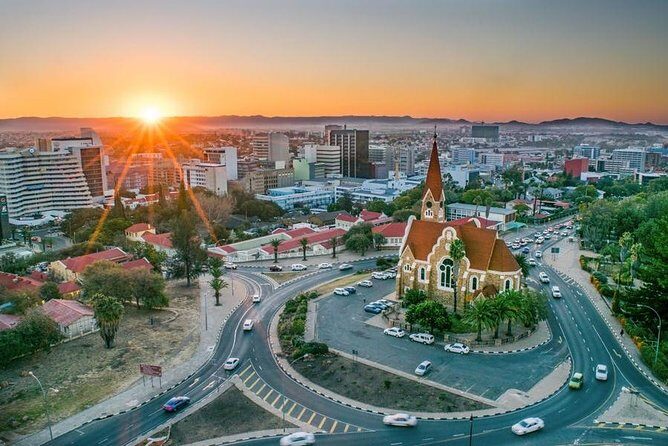
The route includes Christuskirche, and the description given points to neo-Gothic and Romanesque Revival architecture elements: towering spires, stained-glass windows, and detailed stonework, plus mention of a grand organ and a calm interior.
Here’s the important caution: the provided details for Christuskirche mention Wiesbaden, Germany. Since your tour is in Windhoek, Namibia, you’ll want to confirm what you’ll actually see on the day—especially if you’re coming with expectations about the specific church site.
How to handle it without stress:
- Ask your operator or guide, during pickup, to confirm the exact Christuskirche location and what you’ll be able to access inside.
- If it ends up being a different church than you expected, shift your focus to the elements you can observe: stained glass, stonework, and how the space feels when you step in.
If you love architecture, this is still a worthwhile stop. Just treat it like a “verify first, then enjoy” moment.


Trans-Namib Railroad Museum: Infrastructure as History
Next comes the Trans-Namib Railroad Museum. This is a museum stop that tends to work for lots of people because the subject is practical: rail.
In the museum, you’re looking at how Namibia’s railway system developed—from earlier influences during German colonial rule (noted as dating back to the late 19th century) to later development and preservation. You’ll also see preserved locomotives and carriages, including items tied to South African, German, and British eras.
What makes this museum meaningful is the framing: rail wasn’t just transport. It connected remote regions and moved goods like minerals and agricultural products, shaping infrastructure and economic patterns.
That’s why I like this stop as part of a half-day itinerary. You finish one museum (culture + deep time), then you move into something more “how the country works.” It helps you stop thinking of history as only dates and begin to think of it as systems—routes, logistics, and decisions.
Practical tip: take a few photos, but also look for the “story behind the machine.” The guide’s explanations can turn a locomotive from an object into a clue about how people lived and worked.
Nande Explorer Cultural Township Tours: Community Life and Craft Culture
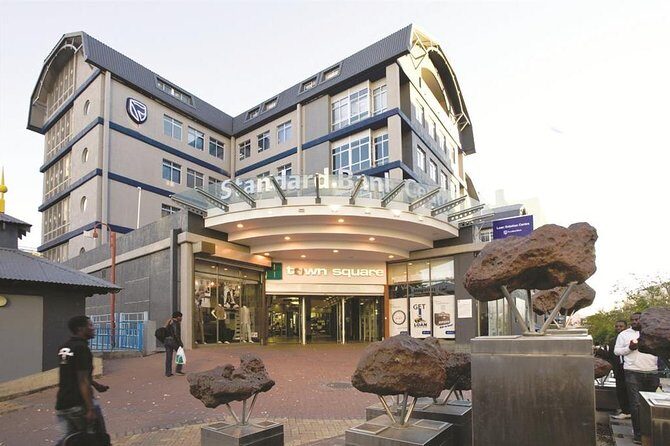
Then you shift to community-based culture with Nande Explorer Cultural Township Tours (about 1 hour). This part is about people and daily life, not only landmarks.
Based on the description, the visit includes:
- Exposure to local traditions, history, and storytelling
- Chances to see craft markets
- Opportunities to watch traditional performances
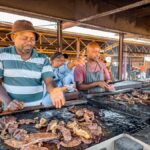
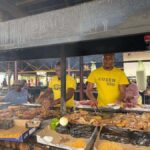
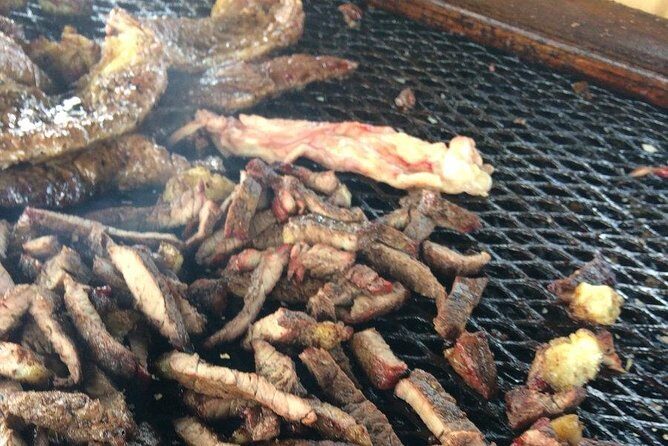
- Time to taste authentic dishes (and you’ll also have Kapana meat included as part of the tour)
This stop is a good reminder that culture in Windhoek isn’t only museum glass and church architecture. It’s living, spoken, made, and shared. Even if you keep it simple—watch, ask a couple questions, buy something small if you want—this visit usually adds human scale to the day.
One practical note: because this is community-based, how it feels can depend on the day’s flow. If you want maximum value, come ready to interact politely and listen. Your guide can help you steer questions toward what’s appropriate to ask.
The Kudu Statue on Independence Avenue: A Quick Photo With Meaning
To wrap up the city feel, the tour includes the Kudu Statue on Independence Avenue. It’s described as a bronze statue of a kudu—complete with the animal’s spiral horns—meant to represent Namibia’s wildlife and conservation importance.
This is the kind of stop that works well near the end:
- It’s easy to locate and quick to photograph
- It connects the earlier museum themes (natural history, deep time) with Namibia’s present-day identity
- It gives you a visual pause before you head back to your next plan
If you like a practical travel habit, use this moment to check your bearings one last time: where is Independence Avenue relative to the rest of your day? That simple mental map can help later when you’re ordering food, shopping, or heading to other attractions.
Private Guide Reality Check: When It Clicks, It Really Clicks
The tour promises personalized attention from a private guide. In the best scenarios, that turns the day from a list of stops into a coherent story.
One highlight from feedback I saw: guide Merron was described as incredible, and that matters because it affects what you leave with. A strong guide doesn’t just repeat facts; they help you connect the museum objects to what you see outside and answer the questions you didn’t know to ask at the start.
But I also saw a less positive note: one experience where the guide reportedly didn’t seem very strong on Windhoek and its history, with limited answers. That doesn’t mean the tour is bad—it means you should pay attention to the interaction quality.
Here’s how you protect yourself:
- Ask your first question in the first stop, not the third.
- If you care about history, ask how the sites connect to independence, German colonial influence, or rail development.
- If your guide can’t answer, you can still enjoy the sites visually—but you’ll lose the deeper meaning.
Who This Half-Day Tour Is Best For
This tour fits you best if:
- You want an overview of Windhoek with minimal effort
- You like mixing museums with culture, not just one kind of sightseeing
- You’re short on time but want context, especially around indigenous cultures, colonial history, and how infrastructure developed
- You prefer a private format with pickup and a guide who can tailor the conversation
It may feel less ideal if:
- You want a super long, slow deep history day with lots of walking between distant sites
- You expect every stop to be ultra-specific and perfectly matched to your assumptions (especially with the Christuskirche details that look inconsistent)
Should You Book This Windhoek City Tour?
If it’s your first trip to Windhoek and you want your time to count, I’d lean yes. The museum pairing alone can justify a half-day—National Museum of Namibia for culture and natural history, then the Trans-Namib Railroad Museum for how the country’s systems shaped the modern city.
The other reasons to book are simple: private tour, pickup offered, and admissions plus bottled water and Kapana meat included. That’s a lot wrapped into a 3 to 4 hour block.
Just do one small homework step: when you confirm, ask the operator to clarify the Christuskirche stop details so there’s no confusion about what you’ll see.
If you want a well-paced way to understand Windhoek beyond the postcard version, this is a solid choice.
FAQ
How long is the Windhoek city tour?
The tour runs about 3 to 4 hours.
What time does the tour start?
It starts at 9:00 am.
Is this tour private?
Yes. It’s a private tour/activity, meaning only your group will participate.
Does the tour offer pickup?
Pickup is offered.
What is included in the price?
The tour includes bottled water (one bottle) and Kapana meat. Admission tickets are included for the listed stops.
Where does the tour take you?
The route includes the National Museum of Namibia, Christuskirche, the Trans-Namib Railroad Museum, Nande Explorer Cultural Township Tours, and a stop at the Kudu Statue.
What if the weather is poor?
This experience requires good weather. If it’s canceled due to poor weather, you’ll be offered a different date or a full refund.
Can I cancel for a full refund?
Yes. You can cancel up to 24 hours in advance for a full refund. If you cancel less than 24 hours before the start time, the amount paid won’t be refunded.