REVIEW · OKAUKUEJO
Etosha National Park: Full or Half-Day Game Drive
Book on GetYourGuide →Operated by TOM SAFARI NAMIBIA · Bookable on GetYourGuide
Etosha can feel huge until you’re chasing it in an open 4×4. This guided safari runs from Anderson Gate near Okaukuejo, starting at park opening for quieter roads and better photo light. I like that the team leans hard on daily sighting-based routing, so the drive doesn’t feel like a fixed loop. I also like the way the guides work the day: people mention guides such as Ben, and multiple reviews stress how well they connect with other spotters to find animals fast. One drawback to plan for: you’ll still need luck—no one can guarantee lions on a schedule—and mornings can be brutally cold in an open vehicle.
The format is built for close viewing without turning it into a long lecture. You ride in a purpose-made open 4×4, with binoculars on board and a warm fleece poncho provided for early starts. There’s a planned one-hour midday break at a restaurant inside the park, so you’re not “on the move” the whole time. The trade-off: lunch and drinks aren’t included, and the park entrance fee is extra (paid in cash on site), so the final cost can be a bit higher than the headline price.
In This Review
- Quick, practical take
- Key Highlights You’ll Care About
- Anderson Gate Morning: Why This Start Time Matters
- The Open 4×4 Ride: Cold Mornings, Close Views, and What Helps
- How the Route Works: Sighting-Based Driving and Guide Connections
- Big Animals, Real Moments: What You’re Likely to See
- Midday Break Inside the Park: When You Regroup for the Afternoon
- Full Day vs Half Day: Which Format Makes More Sense?
- Price and Value: What You Pay, What You Don’t, and Why It Adds Up
- Practical Tips That Make the Day Easier
- Should You Book This Etosha Game Drive?
- FAQ
- How long is the Etosha game drive?
- Where do I meet for the safari?
- Is the park entrance fee included?
- Does this tour include pickup from lodges?
- What language is the guide?
- What should I bring for an open 4×4 morning?
- Are drones allowed during the safari?
Quick, practical take
If you want maximum wildlife time with minimal waiting, this is a strong way to experience Etosha. Just show up prepared for wind, cold, and the fact that animal sightings can shift the route.
Key Highlights You’ll Care About
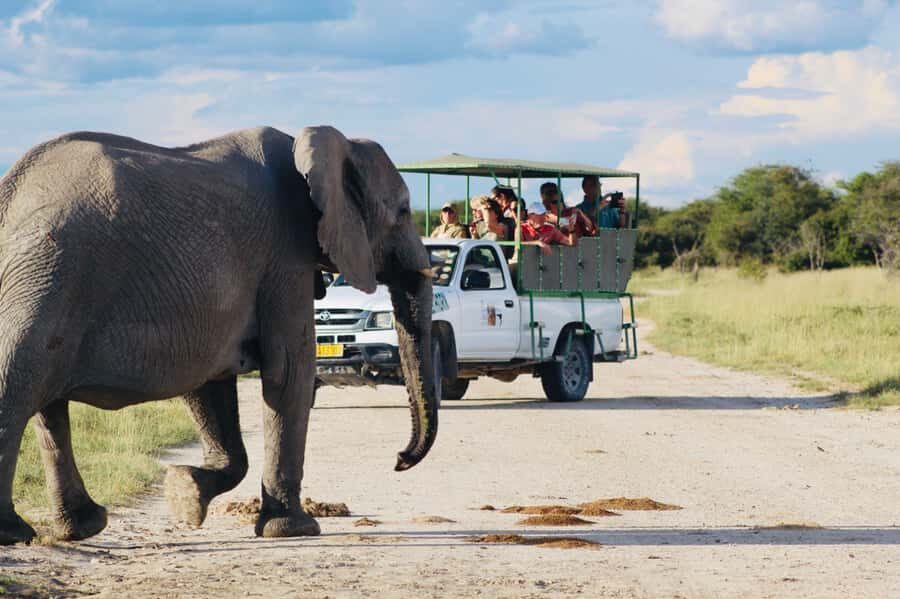
- Start at park opening from Anderson Gate for fewer vehicles and softer early light
- Open 4×4 viewing + fleece poncho makes close wildlife possible even when it’s cold
- Routes change daily based on the latest animal sightings, not a preset itinerary
- Midday break inside the park gives you a real pause (about an hour)
- Guides like Ben, Amone, and Matias get results through strong day-to-day spotting and coordination
- Cash needed for the entrance fee (NAD 150 per person), plus no drones allowed
Anderson Gate Morning: Why This Start Time Matters
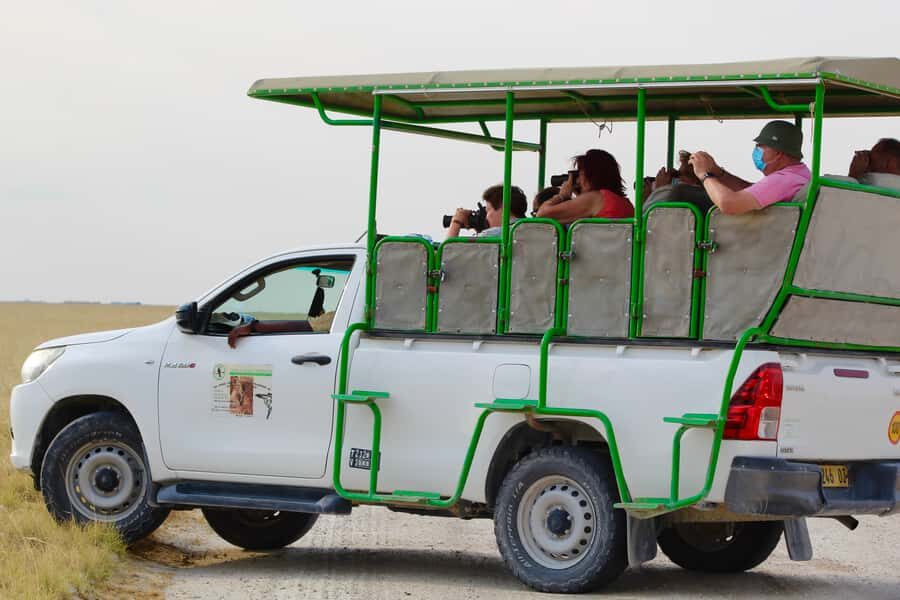
Etosha’s roads can be crowded later in the day. Starting early—park opening—changes the whole feel of the safari. You get more “space” around the animals, better chances at clear, quiet sightings, and lighting that looks good on camera without needing to fight harsh sun.
The departure point is Anderson Gate, near Okaukuejo, with free parking on-site. The practical tip here is simple: if you can drive your own vehicle to the gate, you’ll likely beat delays and get your bearings fast. One guest described meeting early, then swapping from a closed pickup vehicle to the open safari ride—exactly the kind of smart cold-weather adjustment you’ll appreciate on an early Etosha morning.
Timing also affects animal behavior. The park’s large mammals often move and feed early, and waterholes can draw big activity patterns. When you arrive at opening, you’re more likely to hit those movement windows rather than arriving after the best action has already happened.
The Open 4×4 Ride: Cold Mornings, Close Views, and What Helps
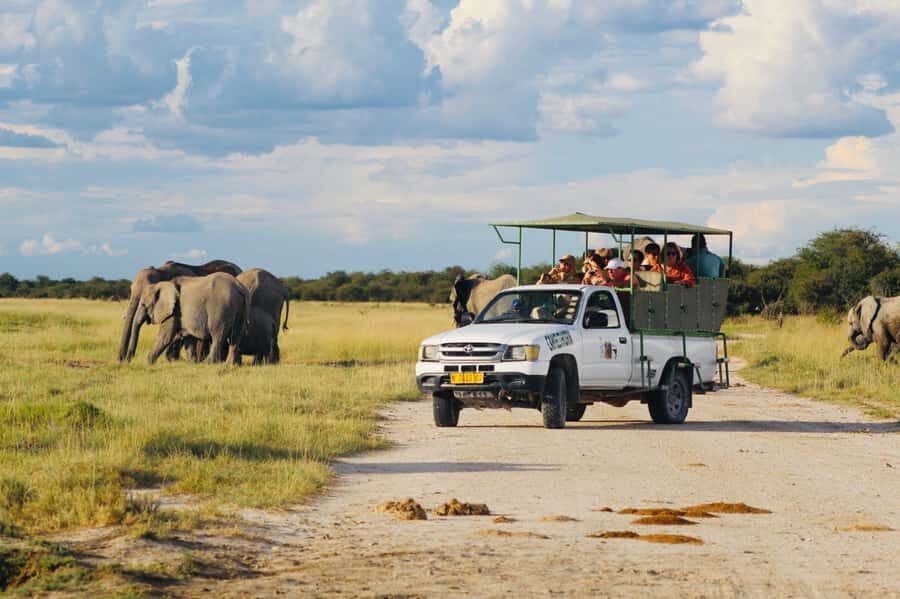
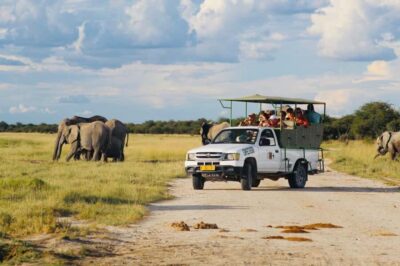
This safari is done from an open 4×4. That’s the big selling point, because you don’t feel walled off from the landscape and animals. You get a wider view, cleaner photo angles, and the sense of being right there when an animal steps into the road.
But you’re also exposed. Multiple reviews stress that warmth matters, and the information you’re given backs it up: mornings can be very cold, especially in May to August, and the open vehicle means wind chill. The good news is that you’re not left empty-handed—there’s a warm fleece poncho on board. It’s also smart to bring your own layers anyway, because wind doesn’t care about good intentions.
Here’s what I’d pack for this kind of day in Etosha winter conditions:
- Warm layers you can move in (base layer + warm mid layer)
- A windbreaker (wind is the real enemy)
- Water
- Binoculars if you have them (binoculars are also available on board for shared use)
- A hat or head covering (easy comfort upgrade)
- Cash for park entry (you’ll need it at the gate)
Also note: the vehicle can have an airflow effect while driving, so even if you’re okay at 8:00 a.m., you might feel it at 8:45 a.m. The poncho helps, but layering is still your best friend.
How the Route Works: Sighting-Based Driving and Guide Connections
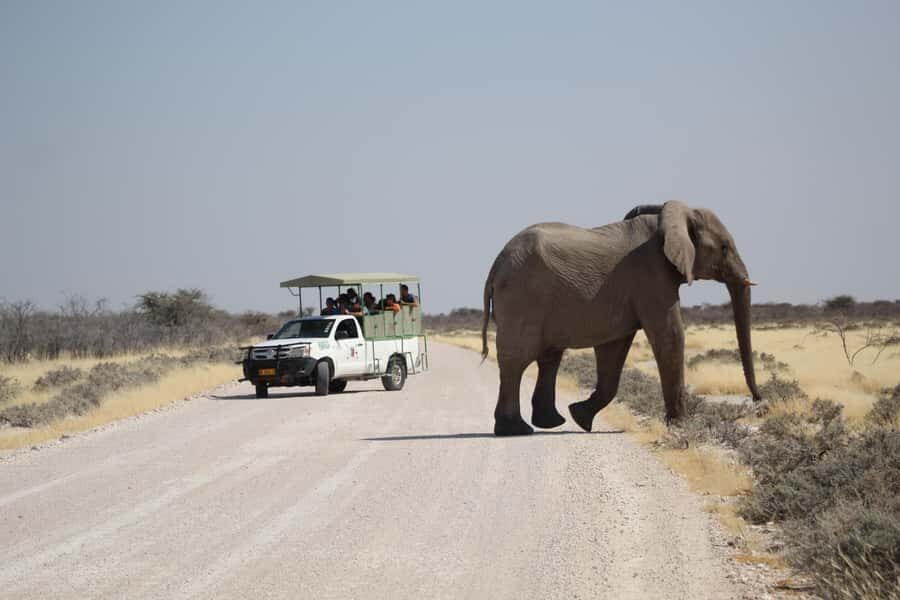
This is one of those experiences where the “route” is really the secret ingredient. The drive is not fixed. Instead, it’s adapted daily to weather and the latest animal sightings. That means you’ll spend more time where animals are, and less time doing generic scenery miles.
The guides play a big role here. Reviews repeatedly mention guides coordinating with other guides, which helps them reach good sightings quickly. You’ll feel this as you’re on the road—stops that last just long enough for a proper look, then moves that don’t waste time when something else is happening elsewhere in the park.
In past Etosha drives, the best moments often come fast: an elephant group appearing near a water source, a lion pair settling in after heat rises, or a cheetah sighting that makes the whole group go silent for a few seconds. Your best odds here come from starting early, staying flexible, and letting the guide steer the day.
One thing I appreciate: the experience framing is honest about not guaranteeing every species. Etosha is wildlife. It’s not theme-park wildlife. So even with a great guide, your sightings depend on conditions that day.
Big Animals, Real Moments: What You’re Likely to See
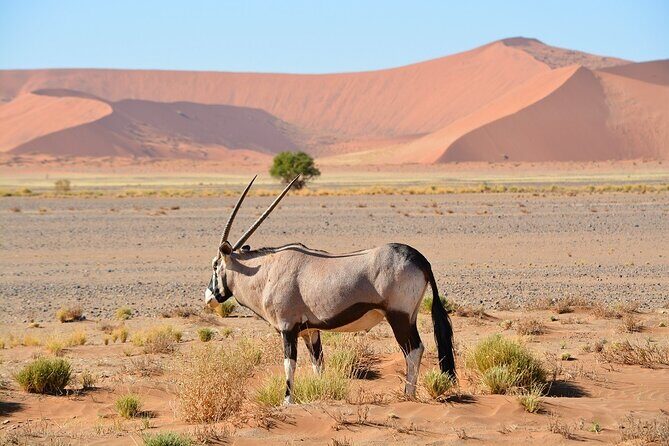
Etosha is famous for elephants and the wider mix of plains animals, and this safari aims to hit the iconic list you’d expect: elephants, lions, giraffes, zebras, and more. The day’s possible highlights also include rhinos, springboks, oryx, and sometimes even predators like leopards or cheetahs.
A practical way to think about it: Etosha is a park of patterns. Waterholes and open grassland corridors create repeat chances. The flexible routing approach helps you stay aligned with those patterns rather than forcing you into a rigid schedule.
From the reviews tied to this tour, the standout outcomes include:
- Guests seeing multiple animal types across one day, not just one highlight species
- People raving about close lion and cheetah sightings
- Stops timed well for positioning—enough time to watch, and enough driving skill to stay safe and smooth
Also, don’t ignore the smaller stuff. Birdlife and antelope species can be surprisingly rewarding when your guide slows down at the right time. Several reviews specifically mention a wide variety of game and birds, and that’s usually where your day becomes more than a checklist.
Midday Break Inside the Park: When You Regroup for the Afternoon
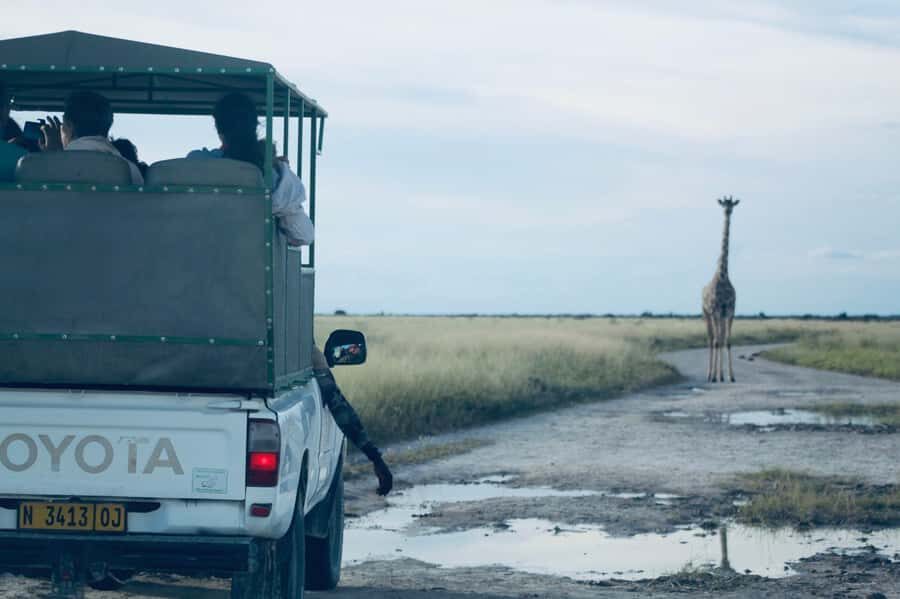
You get a one-hour midday break at a restaurant inside the park. You can bring your own lunch or eat there. Meals and drinking water are not included, so plan on buying something or packing what you prefer.
This break is actually valuable, because it gives your body a reset. Open-vehicle safaris are tiring—wind, cold, sun, and constant scanning adds up. That hour helps you come back to the afternoon with clear eyes and energy for longer viewing windows.
One small caution from real-world experience: you should assume water is not automatically included in your package. Some guides may share water bottles, but don’t count on it. Bring your own, at least a reasonable amount.
Full Day vs Half Day: Which Format Makes More Sense?
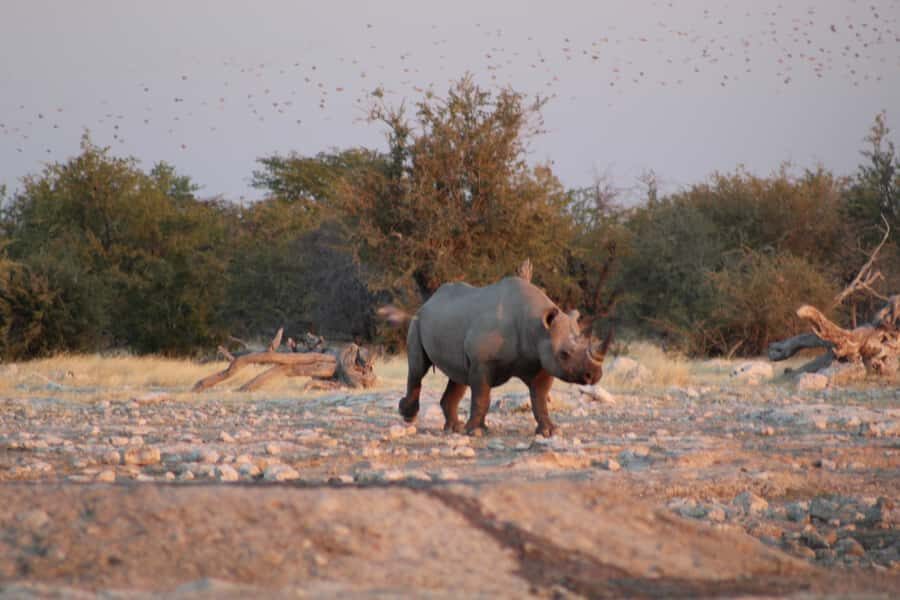
The full experience runs 5 to 10 hours, with a longer day for the full drive and a shorter block for half-day options. The biggest difference isn’t just time—it’s meeting logistics.
For half-day bookings, there’s no pick-up. You meet directly at Anderson Gate. If you like early starts and want to control your timing, half-day can work well. You’ll still get the open-vehicle safari feel, but you’ll lose the full-day rhythm that often increases your odds of multiple species.
For full-day safaris, pickup can be available from selected lodges (within a 30-minute radius of Anderson Gate). And there’s a special rule to keep in mind: if you’re staying inside the park (like Okaukuejo Lodge or Okaukuejo Camp), you may still need to come to Anderson Gate yourself in certain scheduling situations. In other words, don’t assume the staff can always collect you from inside the park without prior clearance.
If you want the best shot at a rounded day—morning sightings plus afternoon movement—choose the full-day option.
Price and Value: What You Pay, What You Don’t, and Why It Adds Up
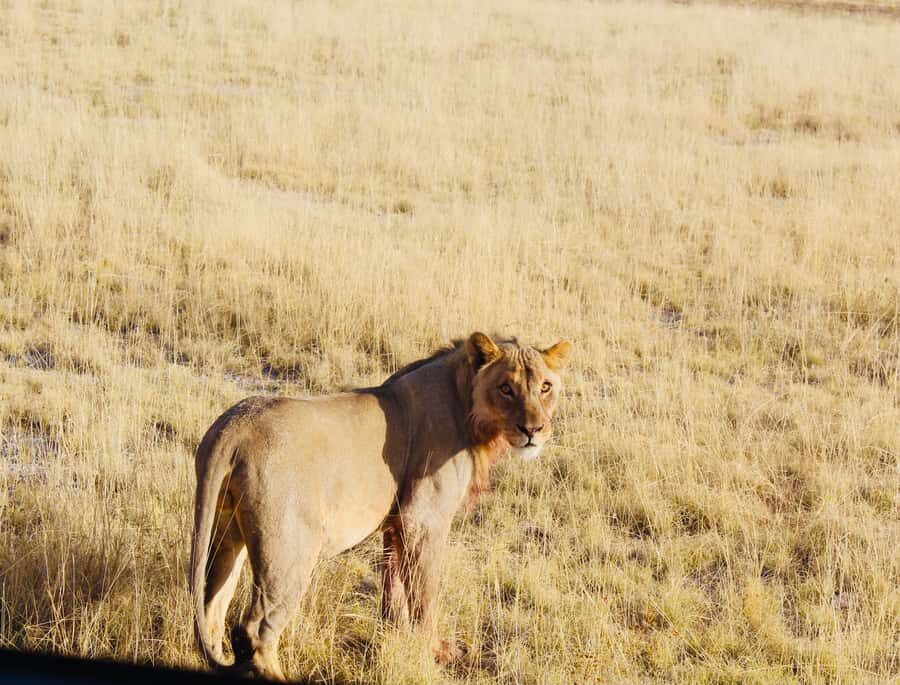
The price you’ll see is $123 per person. That number includes the safari experience itself: an open 4×4, a local experienced guide born and raised in Etosha, binoculars on board, fuel costs, and a warm fleece poncho.
The money you should budget beyond that:
- Etosha National Park entrance fee: NAD 150 per person, paid on site in cash
- Lunch/drinking water (not included)
- Extra surcharges for certain departure gates, if applicable
So is it value? In my view, it leans positive for three reasons.
First, you’re paying for the day’s “traffic control” inside Etosha—someone driving, reading the park, and positioning the vehicle for wildlife viewing. That’s not trivial when animals appear and disappear quickly.
Second, open-vehicle time is limited in many safari setups. Here, you get that open viewing plus cold-morning comfort tools (poncho).
Third, the reviews repeatedly credit guides—especially Ben—with spotting instincts and coordination that translates into more sightings in the time you have. That’s the kind of value that isn’t captured in a simple feature list, but you feel it the moment your group stops for the right reason.
If you’re traveling on a tight budget, the biggest “surprise” risk is the entrance fee and food. If you plan for those from the start, the safari price itself feels more like a fair package than a bargain that cuts corners.
Practical Tips That Make the Day Easier
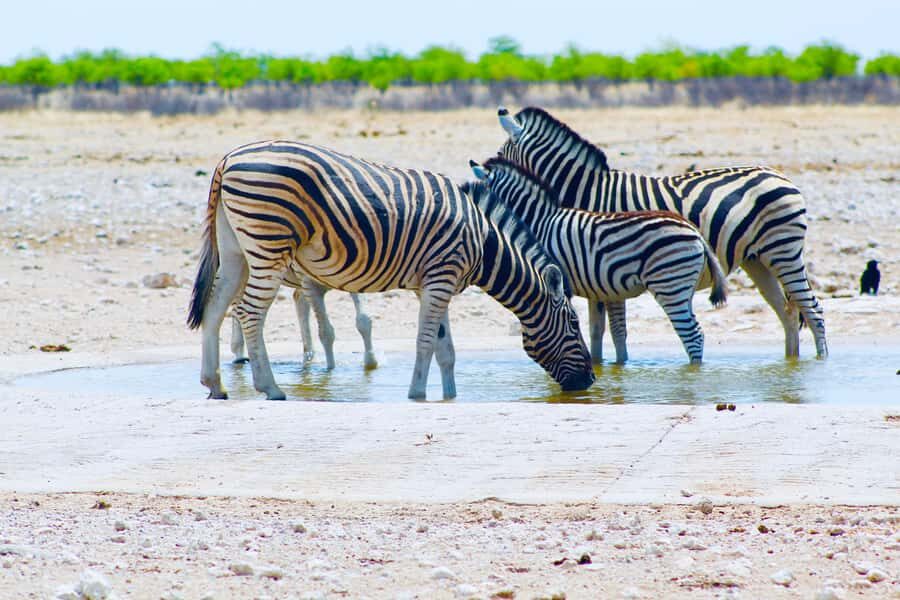
A smooth safari day usually comes down to prep. Here’s what matters most with this specific setup.
Bring cash. The entrance fee is paid in cash at the park. That’s not a small detail—it’s the one thing that can slow your day if you forget.
Dress for wind. Even with a poncho, you’ll stay more comfortable if you layer up and protect from wind.
Bring your own water plan. Water and lunch are not included. You might find a bottle offered during the ride, but I wouldn’t rely on it.
Binoculars help. Binoculars are available onboard for shared use, but if you want the ability to scan quickly and independently, bring yours.
No drones. Drones are not allowed.
If you’re staying inside the park. Know that meeting at Anderson Gate may be required depending on daily clearances.
Finally, if you’re picky about timing—who isn’t—try to be flexible about any pickup coordination. One review noted a communication issue that delayed things slightly. That’s usually fixable, but being ready for a small timing wobble keeps your expectations grounded.
Should You Book This Etosha Game Drive?
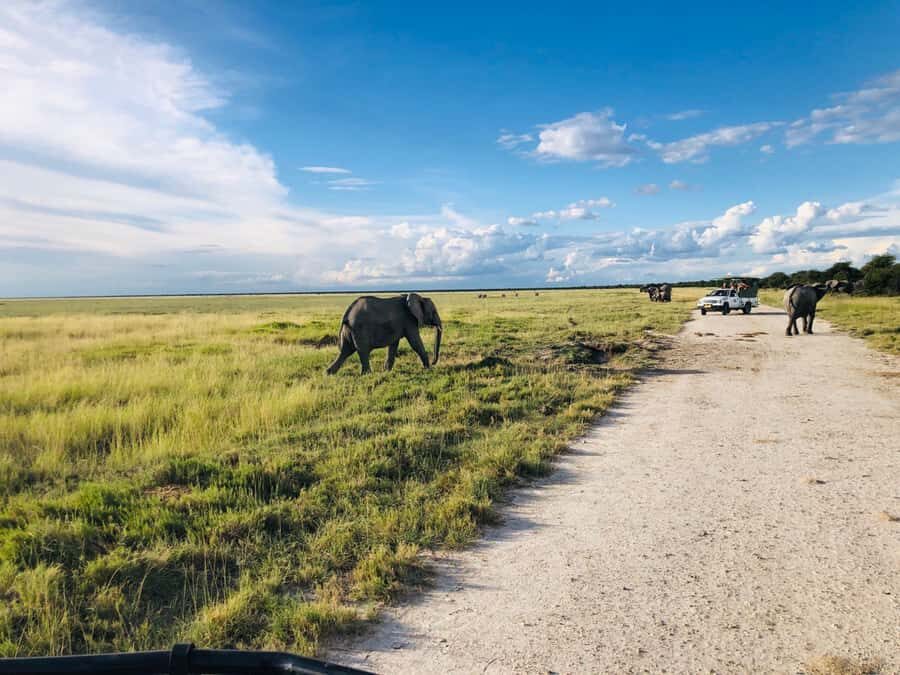
Yes, if you want an efficient, high-output wildlife day with an open 4×4 and a guide who actively targets sightings rather than following a rigid route. I’d especially recommend it if:
- You hate waiting around and want to start at park opening
- You’re traveling in cooler months and want a built-in cold-weather comfort tool like the poncho
- You care about more than one species and want the best odds of seeing predators too
Skip it—or choose a different approach—if you:
- Need food and water included in the ticket price
- Expect a guaranteed list of animals every day (Etosha won’t do that)
- Don’t want to deal with cash on site for entrance fees
For most people, though, this is a solid way to experience Etosha the way it’s meant to be experienced: driving smart, stopping for real wildlife moments, and letting the day’s sightings shape the route.
FAQ
How long is the Etosha game drive?
The duration is listed as 5 to 10 hours, depending on whether you book a half-day or full-day option and the day’s route.
Where do I meet for the safari?
The meeting point is at Anderson Gate (the entrance to Etosha National Park), with free parking available. If you book a half-day, you meet directly at Anderson Gate.
Is the park entrance fee included?
No. The Etosha National Park entrance fee (NAD 150 per person) is not included and must be paid in cash on site.
Does this tour include pickup from lodges?
Pickup can be available for some lodges within a 30-minute radius of Anderson Gate, but half-day tours have no pick-up. If you stay inside the park (such as Okaukuejo Lodge/Camp), you may still need to meet at Anderson Gate depending on clearance.
What language is the guide?
The guide provides English and Afrikaans.
What should I bring for an open 4×4 morning?
Bring warm clothing, a windbreaker, water, cash for the entrance fee, and (if you have them) binoculars. A warm fleece poncho is provided for cold mornings.
Are drones allowed during the safari?
No, drones are not allowed.