REVIEW · ETOSHA NATIONAL PARK
Etosha National Park: Full or Half-Day Game Drive
Book on GetYourGuide →Operated by Yavola tours and transfer · Bookable on GetYourGuide
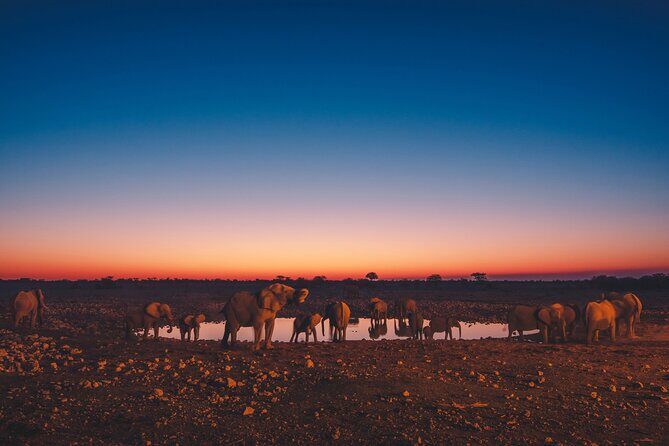
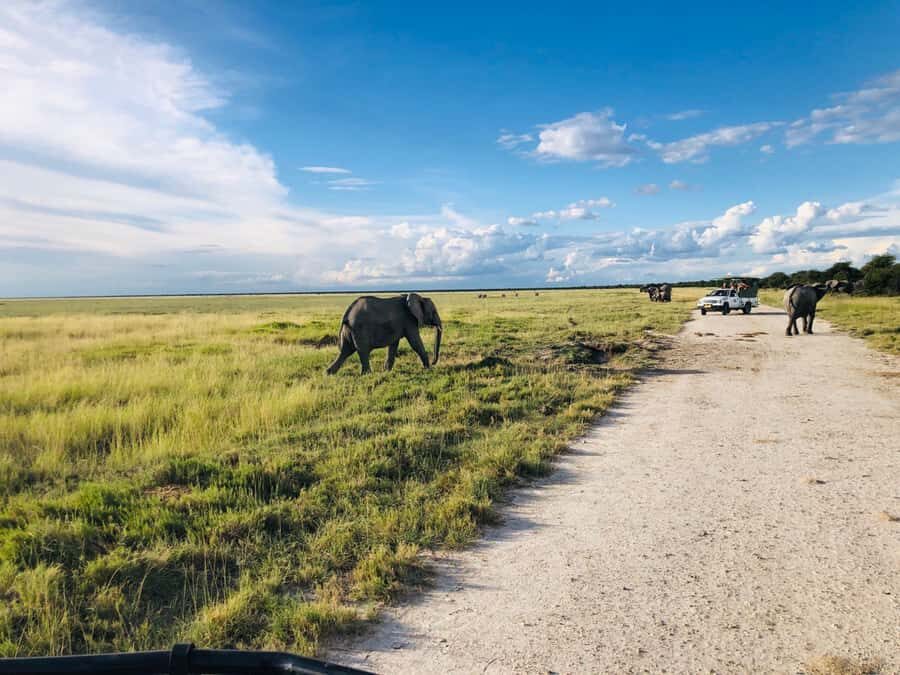
Etosha’s waterholes steal the show. This is a classic Etosha National Park game drive built around getting eyes on wildlife where animals actually gather. You ride in an open vehicle, scan for lions, rhinos, leopards, and elephants, and get picked up and dropped off from your accommodation in the area.
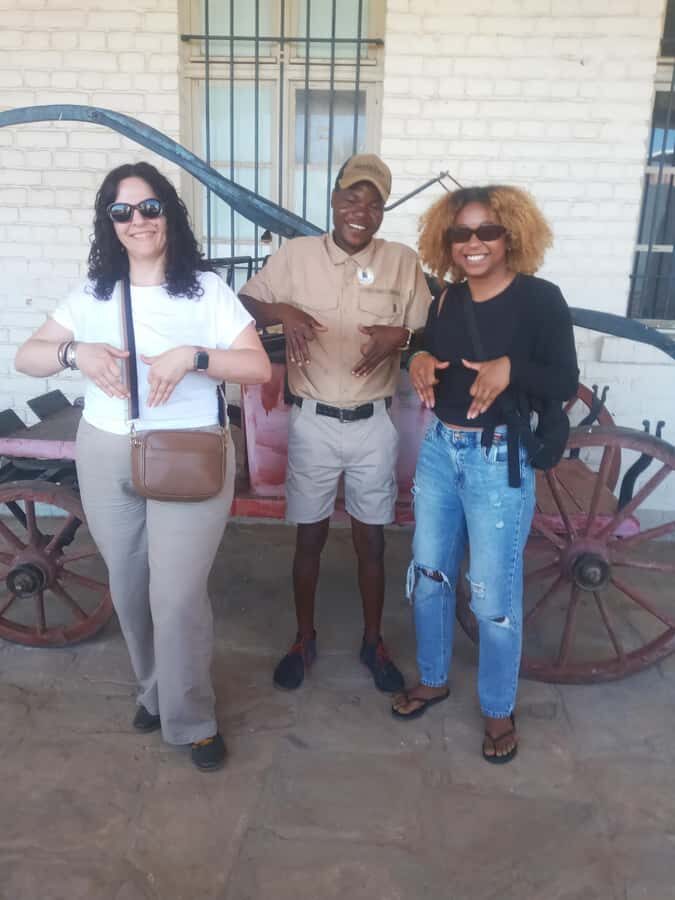
What I like most is how the day is structured around the moments that matter: early movement into the park, then stops at watering holes and other strong spotting areas. You’re not just cruising—you’re with a driver who knows where to point the vehicle, and guides like Oscar and Alfred have a reputation for finding animals and keeping the experience fun while they share what to watch for.
One thing to plan for: lunch isn’t included, and park entrance fees are also not included in the price. That means you’ll want some extra cash set aside, plus you’ll be out during hot parts of the day before the best sunset viewing window.
In This Review
- Key highlights and practical takeaways
- Etosha on an open vehicle: why waterholes matter
- Pickup points around Etosha: starting where your day makes sense
- Full vs half-day game drive: choosing the right amount of time
- The midday rhythm: lunch break and why you’ll see more after
- Sunset viewing in Etosha: the payoff window
- Price and value at $171: what you’re paying for (and what’s extra)
- What to bring for real safari comfort (not just photos)
- Wildlife chances: how the “Big Four” plays out in Etosha
- Who this tour suits best (and who might want to rethink it)
- Should you book this Etosha game drive?
- FAQ
- How long is the Etosha game drive tour?
- Is lunch included in the price?
- Are park entrance fees included?
- Is hotel pickup and drop-off included?
- Will I ride in an open vehicle?
- What animals are the tour aiming to help you spot?
- What language is the tour guide?
- Where can pickup and drop-off happen?
- What should I bring on the tour?
Key highlights and practical takeaways
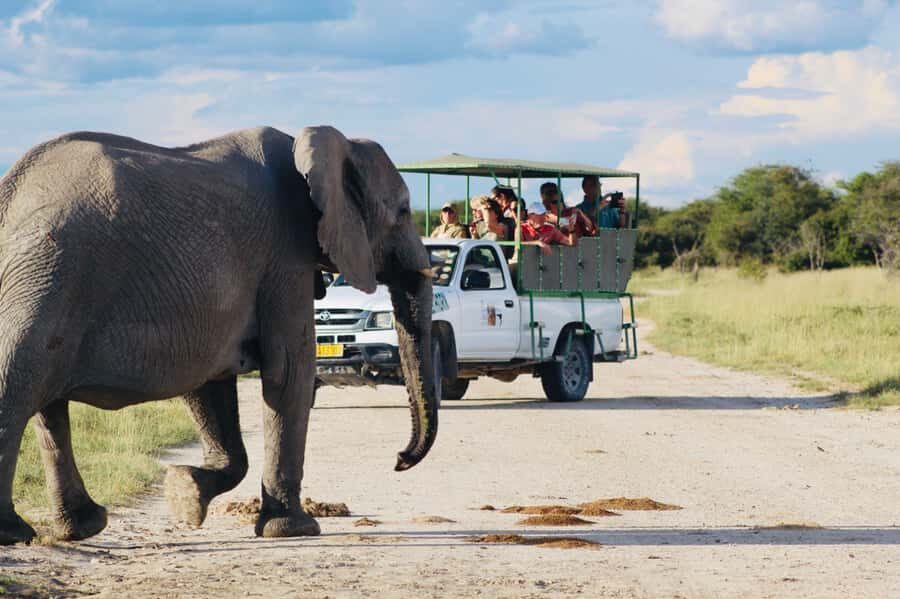
- Open-vehicle safari views for closer wildlife spotting and easier camera framing
- Waterholes are the main show—the route is designed around where animals come to cool off
- Expert guiding from experienced drivers (Oscar and Alfred show up in real-world feedback)
- Full or half-day options so you can match the drive time to your schedule
- Pickup and drop-off included from common Etosha-side accommodation points
Etosha on an open vehicle: why waterholes matter
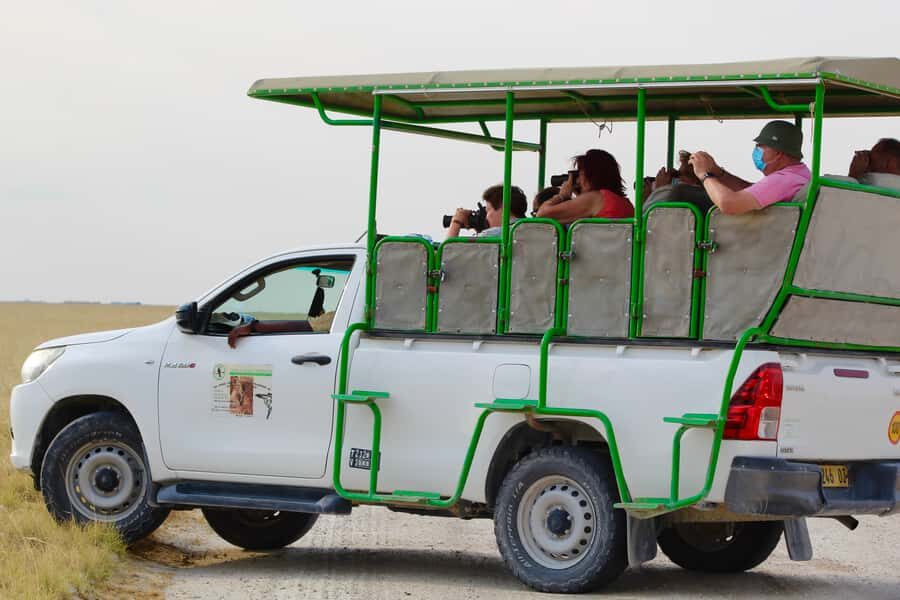
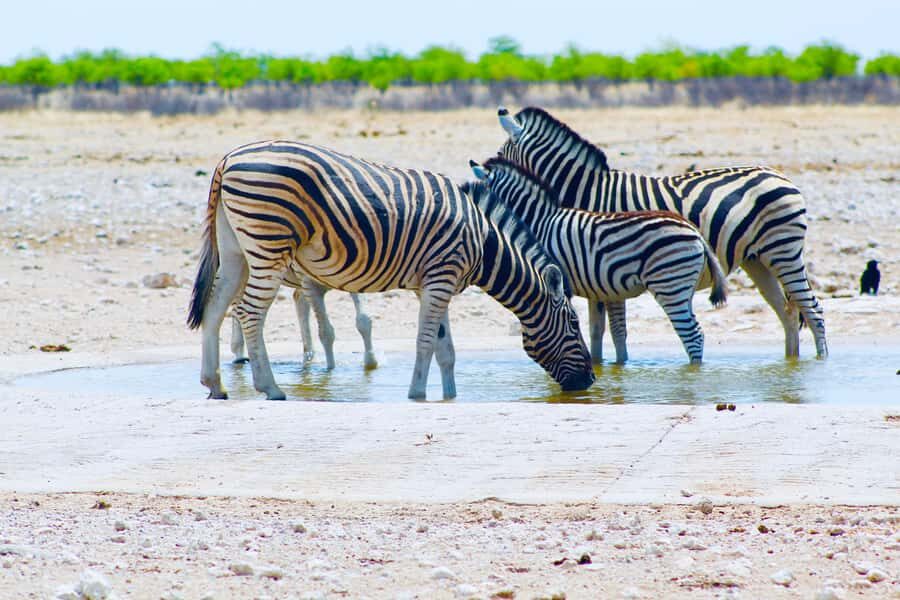
Etosha is one of those places where wildlife doesn’t spread out randomly. It concentrates. That’s why this kind of game drive spends time at watering holes and other known gathering spots.
Riding in an open vehicle helps in two ways. First, your sightlines are better—there’s less obstruction between you and the animals. Second, you can react fast when something appears. In Etosha, that fast scan is the difference between a good photo and a “where did it go?” moment.
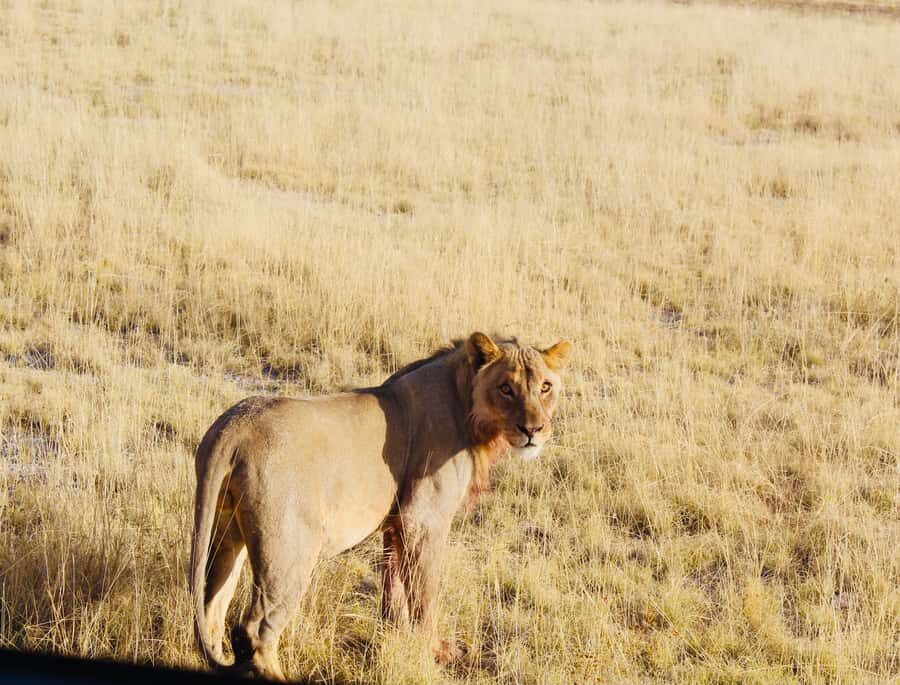
And if the goal is Namibia’s Big Four—lions, rhinos, leopards, and elephants—the guide’s job is to put your eyes on the right patch of ground at the right time. Etosha rewards timing more than luck.
You can also read our reviews of more tours and experiences in Etosha National Park.
Pickup points around Etosha: starting where your day makes sense
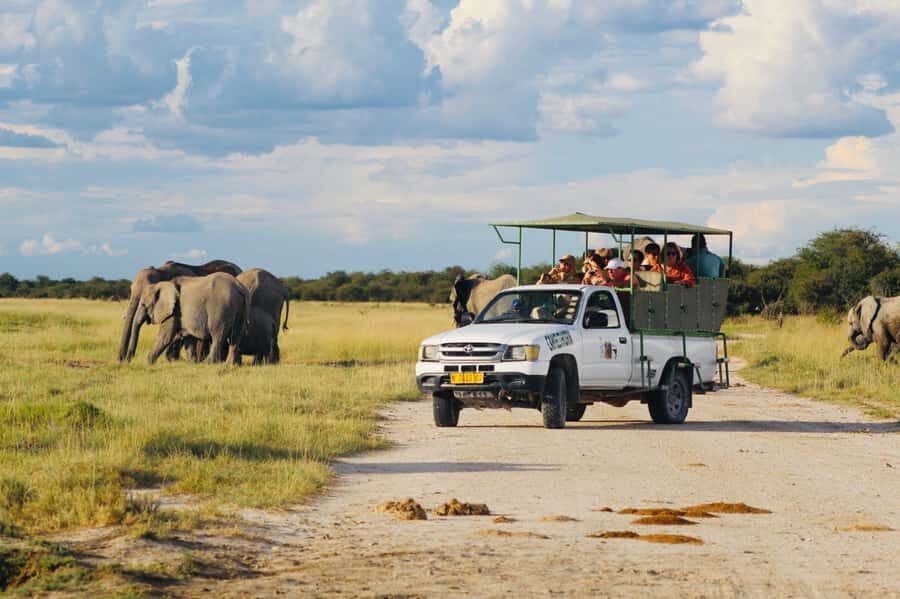
Your day starts with pickup from your accommodation in or near Okaukuejo or Ombika. From there, you head into the park by 4×4 to explore and chase the best wildlife areas.
There are also multiple pickup and drop-off location options you may see offered for routing, including:
- C38
- Anderson Gate (Southern Entrance)
- King Nehale Gate
- Etosha King Nehale
- Gondwana Collection Namibia
- Namutoni Gate
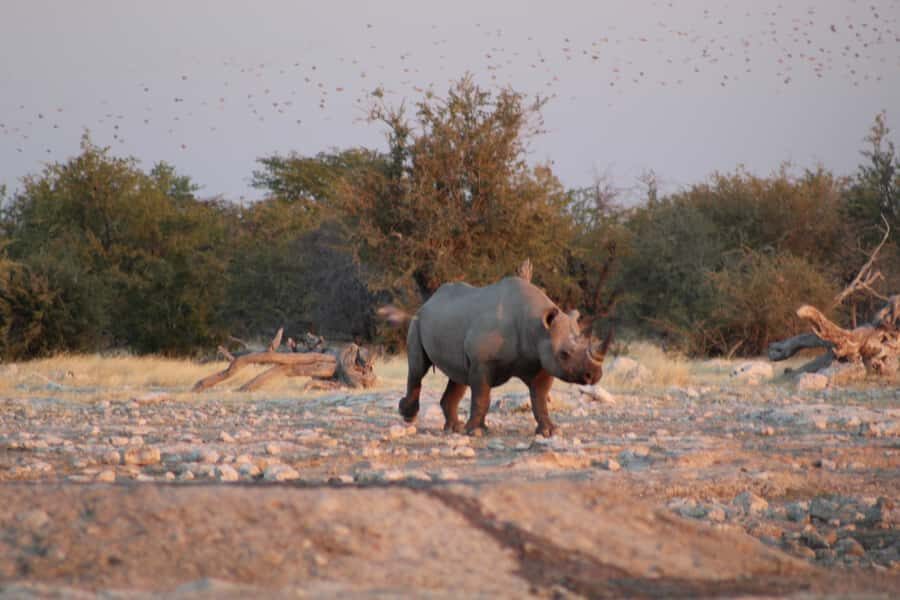
Why does that matter? Because where you start can influence what you spend your time seeing. One real example shared in feedback is that rhino sightings tend to be more associated with the Anderson Gate side, while other areas can deliver major surprises like lionesses and desert elephants. You don’t get to control everything in Etosha, but the starting side can tilt your odds.
One more practical note: pickup is arranged so you should wait outside the entrance gates for pickup. That’s a small detail, but it prevents last-minute confusion when you’re on the park edge.
Full vs half-day game drive: choosing the right amount of time
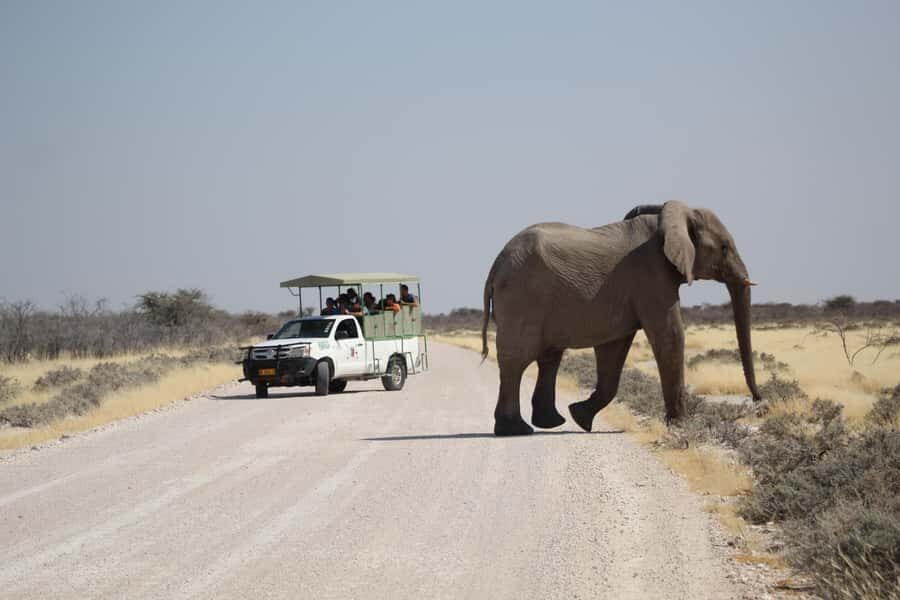
You can choose a full or half-day game drive depending on your option. The listed duration shows 10 hours for the activity, but half-day options will be shorter—so check starting times when you decide.
Here’s how I think about the time trade-off:
- If you do the full day, you get more chances to adjust your route as conditions change. Wildlife doesn’t show up neatly on schedule, and guides often have to chase the “current story” of the day.
- If you do the half day, you’re usually betting on the strongest window and cutting out some of the buffer. This works well if you’re also planning other Etosha activities or you’re trying to keep travel days lighter.
Either way, the day is built around morning spotting, a midday break, and then later viewing around cooler conditions. The half-day option can still get you big moments—just be realistic about how many “tries” you’ll have.
The midday rhythm: lunch break and why you’ll see more after
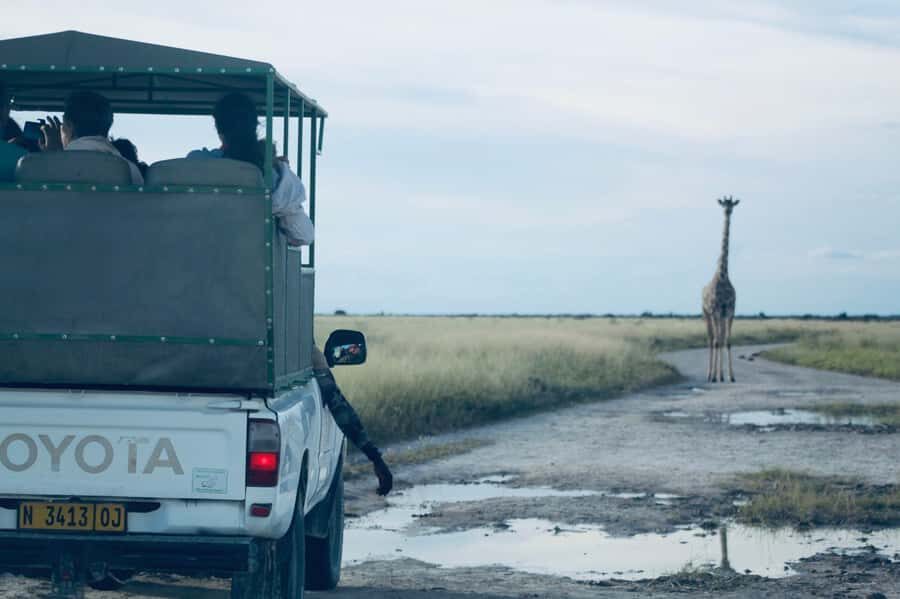
A typical rhythm on this safari looks like:
1) You’re collected and driven into Etosha.
2) There’s a planned break time of about 1 hour.
3) You stop at a lodge for lunch, then return to the game drive portion.
Lunch is an easy place to misread value. The tour includes the safari drive and water, but food/lunch isn’t included. Plan for paying for your meal at the lodge stop, and if you’re the sort of person who needs reliable snacks, bring a little something extra where allowed.
After lunch, the game drive shifts into what I’d call the cooling-off phase. Animals often become more active near watering areas as temperatures drop from the afternoon heat. That means this is when your guide may start putting you in position for easier sightings.
Also keep your expectations aligned with heat and timing. Midday can be quieter than the early and late hours, and that’s normal. The route is designed to keep you moving toward better chances rather than sitting still and hoping.
Sunset viewing in Etosha: the payoff window
Etosha can feel slow right up until it doesn’t. As sunset draws in, the guide takes you out for some of the best viewing of the day before heading back to your accommodation.
This part matters for two reasons:
- Light gets better for spotting and photography.
- Behavior often changes as animals reposition and cool down.
If you’re chasing “big” sightings—especially something like a pride of lions near a water source or elephants moving between drinking points—late-day energy is often where the payoff lands.
And yes, guides really do tailor this based on what they’ve already seen that day. The best drivers keep the momentum going without overcommitting to one idea. If you see tracks or fresh activity, they’ll often reposition you quickly.
One tip for your own mindset: treat sunset as your main event and keep your camera ready. You don’t want to be hunting for settings while something steps into view.
Price and value at $171: what you’re paying for (and what’s extra)
At $171 per person, this isn’t a bargain “sit on a bus” safari. You’re paying for a guide-led drive in an open vehicle, pickup and drop-off from your accommodation, and the time cost of getting you into the park and moving between strong spotting zones.
What’s included:
- Hotel pickup and drop-off
- Full or half-day game drive (based on your option)
- Water
- English live tour guide
What’s not included:
- Food (including lunch)
- Entrance fees to the park
So the real value equation is: does this day replace multiple smaller logistics items for you? If you’d otherwise need to figure out transport, timing, and where to go inside Etosha, the included guide and pickup can be worth it fast. Even with lunch and entry fees added, you’re still buying a structured day designed for wildlife viewing rather than DIY stress.
A smart way to budget: assume you’ll pay entrance fees plus lunch at the lodge stop, and bring enough cash for those extras.
What to bring for real safari comfort (not just photos)
You’ll get more out of the day if you prepare like you’re spending time outdoors in Namibia’s heat. Here’s what this tour specifically asks you to bring:
- Camera
- Biodegradable sunscreen
- Cash
- Charged smartphone
- Binoculars
- Closed-toe shoes
- Biodegradable insect repellent
I also recommend you keep your gear simple and close at hand. Open-vehicle safaris can mean quick changes in viewing distance. Binoculars are genuinely useful if you spot movement far off before it becomes obvious.
And since you’ll be in the vehicle for hours, closed-toe shoes are worth the choice. They’re better for comfort and safer for uneven ground when you step off briefly.
Wildlife chances: how the “Big Four” plays out in Etosha
The tour frames your aim as seeing lions, rhinos, leopards, and elephants. That’s the headline. The practical reality is that Etosha sightings depend on where animals are spending time that day.
What’s encouraging is how the day is built for likelihood:
- You’re guided close to watering holes and other ideal spotting areas.
- The schedule covers morning, midday repositioning, and late-day viewing.
- You’re in an open vehicle, so you don’t lose sightlines.
And route choice can matter. One piece of feedback highlights that if you want rhinos, the Anderson Gate side is often the better bet, while other areas can produce different major sightings like lionesses and desert elephants. You can’t guarantee any animal in the wild, but aligning your preferred wildlife with the side you choose is a smart move.
For leopards especially, don’t fixate on one moment. If your guide sees the right signs, you’ll get positioned. If not, you’ll still get a solid day of elephant and lion activity, which Etosha is famous for.
Who this tour suits best (and who might want to rethink it)
This experience is a good fit if you:
- Want hotel pickup and drop-off without DIY planning
- Prefer guided structure with an active wildlife search
- Like the idea of chasing sightings around watering holes
- Want a shared day with an English-speaking guide and an open vehicle for viewing
It may be less ideal if you:
- Are looking for an ultra-long private safari with no sharing (this doesn’t advertise private-only use)
- Plan to bring a party group—party groups aren’t allowed
If you’re traveling with limited time, the half-day option can work well. If you can handle a full day, the extra hours give you more chances to catch different wildlife behavior through the day’s temperature changes.
Should you book this Etosha game drive?
I’d book this if you want a well-paced Etosha day with pickup included and a route built around how wildlife actually behaves. The open vehicle is a real advantage for sightlines, and the emphasis on watering holes is the smart way to hunt for the Big Four, not just tick off a safari badge.
Before you go, do two things: budget for lunch and park entrance fees, and pack your binoculars and insect repellent so you’re comfortable enough to stay alert during the quieter stretches. If you care about rhino odds specifically, pay attention to the side you’re routed from—starting location can influence what shows up.
If that matches your style, this is a strong way to experience Etosha with a guide who clearly knows how to put you in the right place.
FAQ
How long is the Etosha game drive tour?
The activity is listed as 10 hours, with options for full or half-day depending on what you choose.
Is lunch included in the price?
No. Lunch is not included, though there is a lunch stop during the tour.
Are park entrance fees included?
No. Entrance fees to the park are not included.
Is hotel pickup and drop-off included?
Yes. Pickup and drop-off from your accommodation are included.
Will I ride in an open vehicle?
Yes. The game drive is in an open vehicle.
What animals are the tour aiming to help you spot?
The tour focuses on sightings of lions, rhinos, leopards, and elephants.
What language is the tour guide?
The live tour guide is in English.
Where can pickup and drop-off happen?
Pickup and drop-off options can include C38, Anderson Gate (Southern Entrance), King Nehale Gate, Etosha King Nehale, Gondwana Collection Namibia, and Namutoni Gate.
What should I bring on the tour?
Bring a camera, biodegradable sunscreen, cash, a charged smartphone, binoculars, closed-toe shoes, and biodegradable insect repellent.