REVIEW · SWAKOPMUND
Walvis Bay: Marine Big 5 Luxury Catamaran Tour
Book on GetYourGuide →Operated by Catamaran Charters · Bookable on GetYourGuide
Seals, oysters, and whale dreams in one morning. This Walvis Bay catamaran tour turns Pelican Point into a moving wildlife lounge, with real chances at the ocean’s Marine Big 5. I especially love the Cape Fur Seal action near the lighthouse and the Namibian oysters that show up as lunch at sea. One catch to plan for: you might not see every member of the Big 5 in one trip, even when you do everything right.
I also like how the day is built for comfort, not rushing. You check in at 8:30 am, depart from the jetty between 8:45 and 9:00, and you’re back around 12:30, with coffee and tea served while the crew sets up the search. A good live guide makes a big difference here, and you can end up with a talk-friendly captain and guides such as Raymond, Mirko, Bertie, or Tu Tu, all of whom seem to know how to keep people engaged.
You’ll want warm clothing even in daylight, since the coast can feel chilly on the water. And do note the rules: no high-heeled shoes and no pets, so wear grippy, practical footwear.
In This Review
- Key highlights worth planning around
- Pelican Point gives you instant payoff before you even reach open water
- The Marine Big 5: what you’ll be spotting and why it’s not just a checklist
- Dolphins in Walvis Bay: three species and three very different vibes
- The mola mola and leatherback turtle: the oddballs that make this tour feel special
- Seals and pelicans: the close-up moments that turn a boat ride into a scene
- The route through Walvis Bay: oyster farms, ships, and a logical search pattern
- Lunch at sea is a real selling point here, not a side quest
- Timing, clothing, and comfort: what to do so the morning stays fun
- Price and value: where $76 makes sense and where it might not
- Who should book this Walvis Bay catamaran tour?
- Should you book it? My take on the decision
- FAQ
- Where do I check in for the Walvis Bay Marine Big 5 catamaran tour?
- What time does the tour depart?
- How long is the tour?
- Is hotel pickup and drop-off included?
- What’s included in the price?
- What languages is the live guide available in?
- What should I bring?
- Are high-heeled shoes allowed?
- Are pets allowed?
- Is the tour wheelchair accessible?
- Do you offer free cancellation and reserve-pay-later options?
Key highlights worth planning around
- Pelican Point lighthouse and a huge Cape Fur Seal colony set the tone in the first stretch
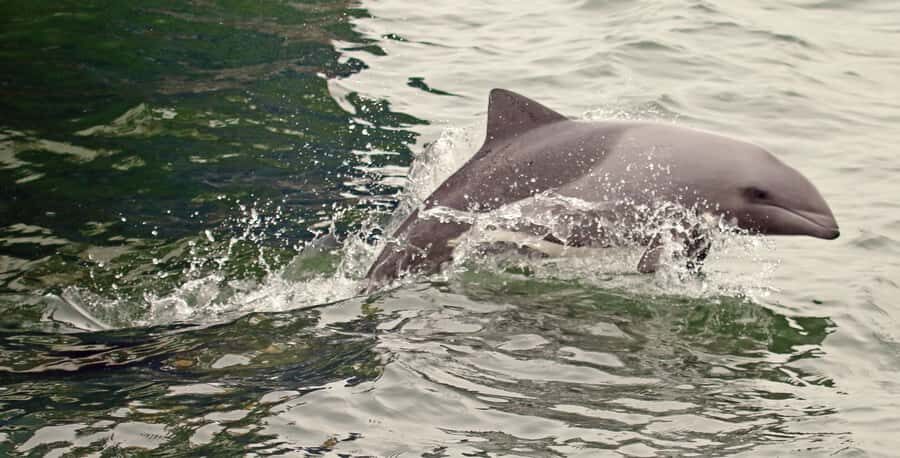
- Three dolphin types in the area, with Heaviside’s often moving in lively groups
- Mola mola sunfish sightings, including the chance to see something that looks like a fish head with a tail
- Leatherback turtles without a hard shell, plus the sort of long-distance migration story the guide can explain
- Food that isn’t an afterthought: fresh Namibian oysters with sparkling wine and plenty of snacks
- Live spotting help in English, German, and Afrikaans, which matters when animals pop up fast
Pelican Point gives you instant payoff before you even reach open water
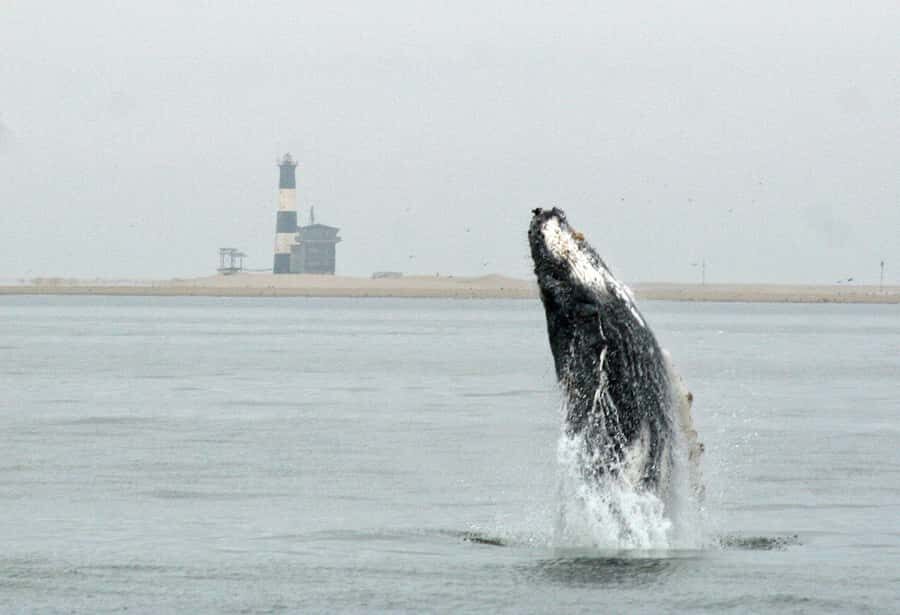
Most whale-watch days don’t start with a parade. This one does. You leave the Walvis Bay Waterfront and head toward Pelican Point, where the lighthouse is the visual landmark and the Cape Fur Seals are the early entertainment. It’s an easy way to get in the wildlife mood right away, and it makes the later search feel less like waiting and more like you’re already part of the scene.
From there, the crew rounds the point and works the open water. That shift is part of the magic: the coastline gives you birds and seals close by, then the farther stretch is where you’re hoping for whales, dolphins, and other rarer surprises. Even if the ocean is calm enough that you start to relax, the crew’s scanning keeps your attention tuned in.
One small but real value here is pacing. At about 210 minutes total, you’re not out all day. That means you can still do other things in Walvis Bay after you return around mid-day, instead of turning the trip into your whole schedule.
You can also read our reviews of more boat tours in Swakopmund
The Marine Big 5: what you’ll be spotting and why it’s not just a checklist
This tour is built around the Marine Big 5, and the best way to think about it is simple: some days deliver the full lineup, but the ocean is still the ocean. What’s more important is that you’re looking for very different kinds of animals, each with its own “tells.”
Whales are one part of the hunt, and season plays a role. In season from July to November, larger mammals such as Southern Right Whales and Humpback Whales are often spotted. Other whale types, including Gray whales and Pygmy Right whales, have also appeared. Translation for your planning brain: if you’re traveling outside that window, you might get fewer whale sightings, but you can still have an excellent morning.
Dolphins are another major target and often the most reliable thrill. They don’t always hang around long, but when they show up you get that sense of motion: fast swims, groups, and sometimes aerial behavior. Even when the bigger mammals are quiet, dolphin sightings can keep the trip exciting.
Then there’s the weird and wonderful. The tour also targets sunfish, called mola, and leatherback turtles. These are not the animals people expect, which makes seeing them feel like a bonus on top of the more famous whales and dolphins. Even the seals and pelicans that join in along the way help make the “Big 5” theme feel more alive than corporate.
Dolphins in Walvis Bay: three species and three very different vibes
You’re not just hoping for dolphins. The waters around Walvis Bay can host three types, and the guide’s job is to help you notice differences.
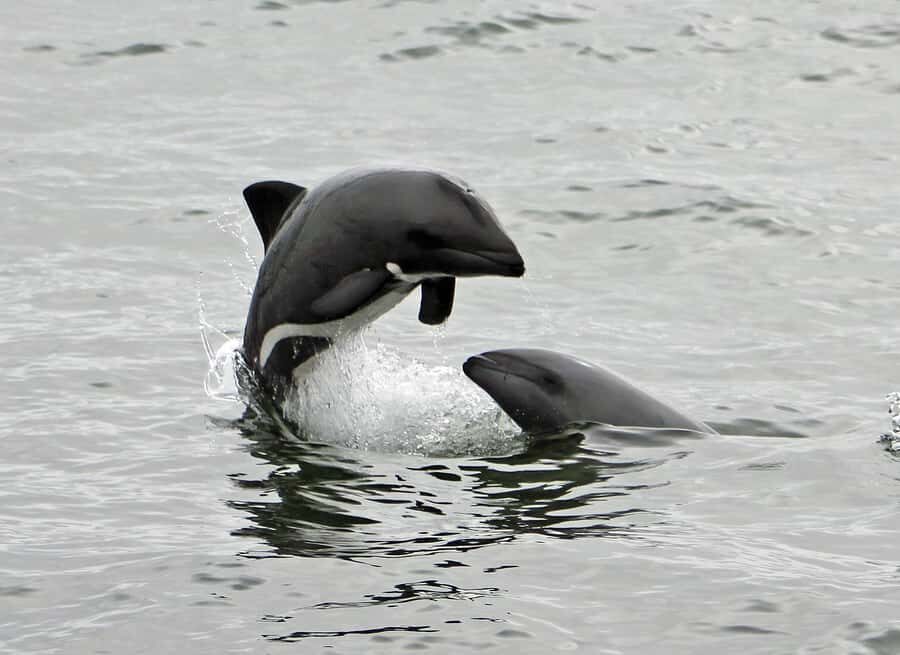
Common bottlenose dolphins are the most frequent. Heaviside’s dolphins are smaller, but they tend to be social and show up in groups of about 10 or more, sometimes moving fast and acting like they own the place. Dusky dolphins bring a different kind of spectacle: guests are often entertained by their aerial skills, meaning you might get more visible leaps and sharper, more dramatic moments above the water.
That matters for you because dolphin-watching can become monotonous if everyone just stares at water. Here, you get a framework to watch for variety. You’ll also see dolphins near the bow at times, which makes the experience feel less like distant sightseeing and more like you’re riding through their commute.
If you’re traveling with kids or anyone who needs frequent action, this is where the tour often wins. Dolphins have a way of showing up when you’re emotionally ready, not when the schedule says they should.
The mola mola and leatherback turtle: the oddballs that make this tour feel special
A mola mola doesn’t look like a normal fish, and that’s exactly the point. It’s described as bony and odd-looking, with a shape that resembles a fish head with a tail. Size is part of what makes it unforgettable too. A mola can reach weights up to about 1,000 kilograms, so if you catch sight of one, you’re looking at a truly large animal that doesn’t behave like the sleek predators people picture.
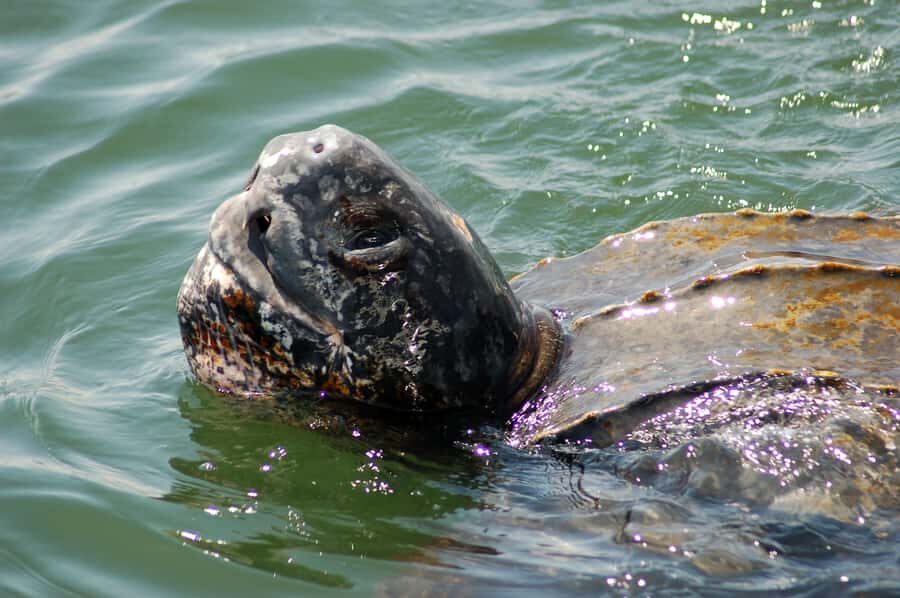
Leatherback turtles are a different kind of odd. They’re the largest living turtles, and they stand out because they lack a hard body shell. Instead, their carapace is covered in skin and flesh. If you’re the type who likes understanding what you’re seeing, this tour gives you plenty of material to connect the sight to a story—especially with the detail that leatherbacks travel huge distances to breeding grounds, with migrations of 1,000 kilometers or more mentioned.
Now, should you expect to see both mola and leatherbacks? No, not in a predictable way. But that’s what makes them worth targeting on a shorter, focused cruise. You’re not spending a full day for a single shot. You’re stacking multiple chances in one half-day outing.
Seals and pelicans: the close-up moments that turn a boat ride into a scene
Some wildlife tours stop at spotting. This one leans into interaction, in the safe, respectful way you’d want on a working ocean trip.
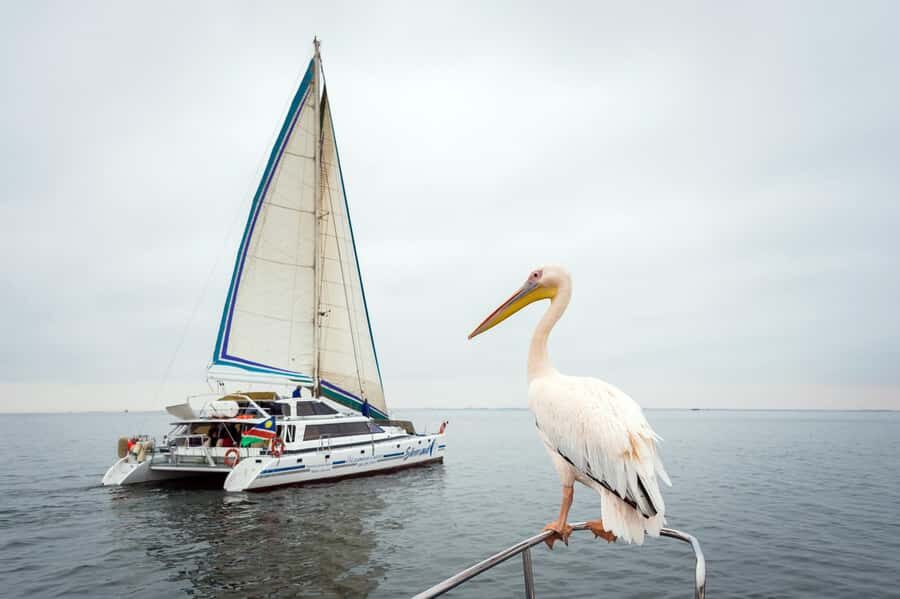
The route passes through areas where Cape Fur Seals are common near Pelican Point, and the seals can even join the boat. Pelicans can also come aboard, and when they do, it changes the mood immediately. Instead of just scanning from a distance, you get those sudden, close moments that make everyone laugh and look up at the same time.
You’ll also see seabirds using the catamaran in other ways—hitching rides or doing their own sightseeing. The birds you may spot include Kelp Gull and Hartlaub’s Gull, plus pelicans and Cape Cormorant. It’s a reminder that the marine world here isn’t just mammals and fish. The whole food web is working.
One reason this matters for value: those are the moments you’ll remember even if whales are quiet. Plenty of mornings include seals and birds, and those sightings can still feel magical because they’re close and immediate.


The route through Walvis Bay: oyster farms, ships, and a logical search pattern
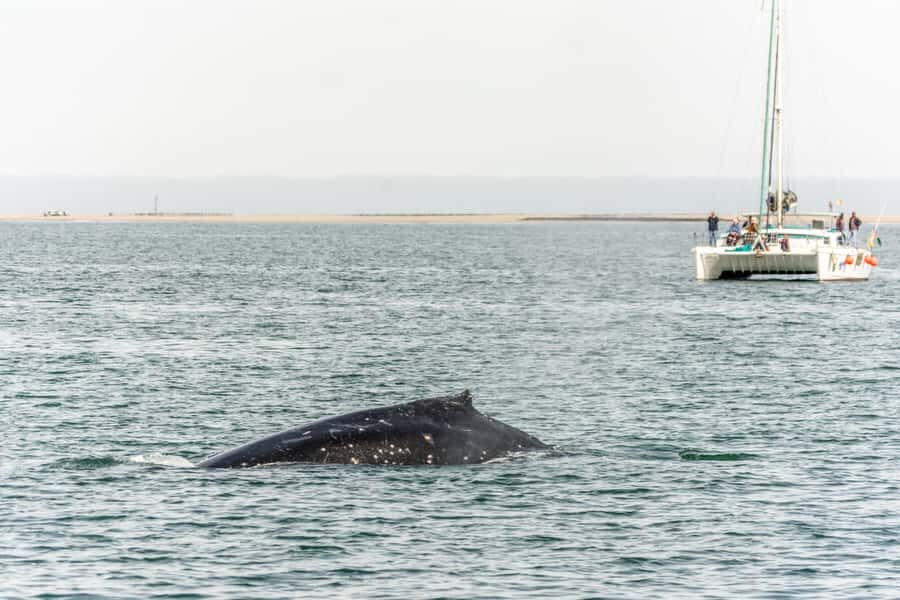
There’s a practical logic to the cruise path. After you depart, the early part of the journey takes you past oyster farms. Then you move toward Pelican Point, where the lighthouse and seal colony anchor the area visually. Once you round the point, you head into open sea for the wider search.
Along the way through the larger bay area, you may also pass interesting ships and oil rigs that visit the bay. That adds context. Walvis Bay isn’t some isolated nature postcard. It’s a working coastal ecosystem with industry nearby, and the crew’s scanning often turns “normal” bay features into part of the wildlife story.
Lunch fits naturally into that pacing too. You’re not doing it at the exact moment you most want to stare out the windows. The meal arrives as you work through the larger bay zone and keep the search going. It feels like a reset—warm food and sparkling wine for grown-ups, snacks within reach for anyone who wants to keep watching without losing momentum.
Lunch at sea is a real selling point here, not a side quest
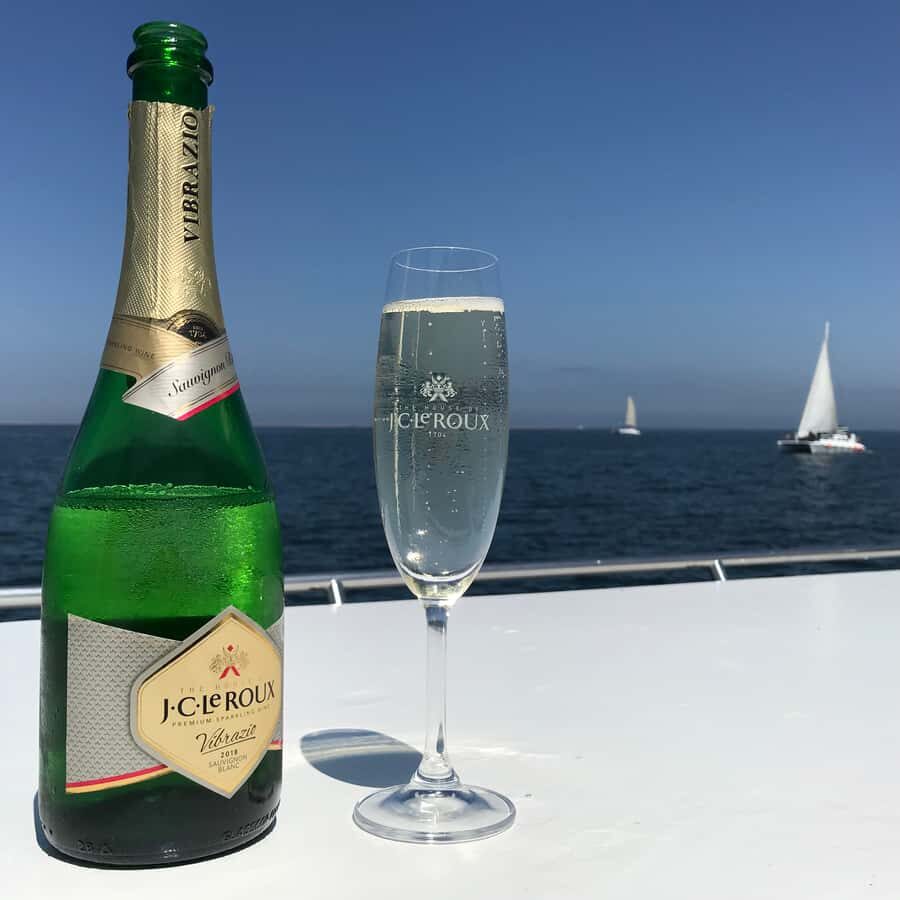
If you care about eating well while traveling, this is one of the best parts. The tour includes lunch served on board: fresh Namibian oysters paired with crisp sparkling wine, plus a mix of savory snacks and dessert pastries. You also get ice-cold Namibian beer and soft drinks, along with coffee and tea.
That combination changes the feel of the cruise. Many wildlife tours include a small snack. This one is designed like an outing meal—something you can genuinely enjoy. And oysters at sea, near the coast that produces them, are one of those food moments that don’t feel imported or staged.
One detail I like for practical planning: there’s also a steady flow of beverages mentioned by people who’ve done it, with coffee and tea up front. If you’re the type who gets chilled on the water, having something warm during the early scanning stretch helps.
Also, if you’re not an oyster person, you still have snacks, dessert pastries, and plenty of drinks. The point isn’t that oysters are the only option. The point is the tour makes the meal part of the experience.
Timing, clothing, and comfort: what to do so the morning stays fun
This is a morning schedule, not a late-afternoon cruise. Check in is at 8:30 am at the Walvis Bay Waterfront. Departure is between 8:45 and 9:00, and the tour returns around 12:30. That timing is nice because it fits easily into a trip plan without making your whole day vanish.
Because this is on open water, dress like you expect a breeze. The tour specifically asks for warm clothing, sunglasses, and sunscreen. Comfortable shoes matter too, since you’re moving on and off a boat deck. If you’re tempted to wear something dressy, don’t. High-heeled shoes are not allowed, and no pets are allowed either.
In terms of comfort logistics, there’s no hotel pickup or drop-off included. You’ll go directly to the meeting point at the waterfront, so plan for that. If you’re arriving by passenger ship, there’s a new access gate south of the passenger liner terminal that gives direct access to the waterfront, with about a 10-minute walk.
The other big comfort factor is the guide. The tour is guided live in Afrikaans, German, and English. If your group is mixed, that multilingual setup makes a difference. It keeps the information flowing instead of turning the experience into a game of catch-up.
Price and value: where $76 makes sense and where it might not
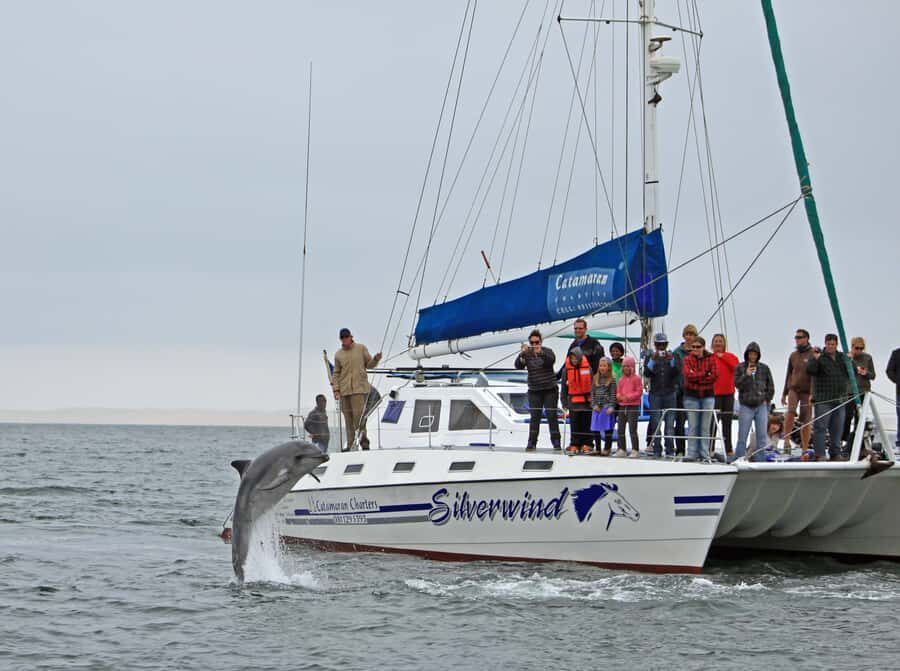
At about $76 per person for roughly 210 minutes, you’re paying for several things at once: time on the water, live guiding, and a full on-board meal. You also get refreshments across the morning, including coffee and tea, plus oysters with sparkling wine, plus beer, soft drinks, and snacks.
So does it feel fair? In most cases, yes—especially if you want more than just a wildlife glance. The included lunch alone adds meaningful value. Oysters with sparkling wine isn’t something most half-day catamaran trips hand you as standard.
Is it always perfect value? It depends on what you expect. If your only goal is a specific animal like a particular whale species, you might feel frustrated on a day when sightings are quieter. And some people do mention the price as a bit high, which tells me you should decide based on your personal priorities: food plus wildlife plus comfort, or only wildlife.
To make the price feel worth it, go in with realistic expectations. Treat it as a high-probability morning for seals, pelicans, and dolphins, with whales, mola, and leatherbacks as the exciting upside.
Who should book this Walvis Bay catamaran tour?
Book it if you want a relaxed wildlife morning with high comfort and a meal that feels like part of the day. It’s a good fit for couples, solo travelers who enjoy social group energy, and families who can handle being out on the water for a few hours while still getting food and snacks.
It also works well if you’re the type who enjoys learning as you watch. The guide format is live and multilingual, and the tour targets animals with distinct traits, from how dolphins move to why leatherbacks are different from other turtles.
If you dislike group tours, or you’re the kind of traveler who wants zero interaction and zero “schedule,” you might find the pacing too structured. But if you like a smooth, organized outing, this tour tends to deliver that.
And one more point: wheelchair access is listed, which makes it easier to plan for mobility needs than many purely outdoor, steep-steps activities.
Should you book it? My take on the decision
I’d book it if your goal is a memorable Walvis Bay morning that mixes wildlife sightings with an actually enjoyable lunch. The early Pelican Point seal action gives you a strong start, dolphins often deliver big energy, and the included oysters push the value beyond a basic sightseeing trip.
I wouldn’t book it expecting a guaranteed full Big 5 bingo card. The ocean decides some of that. But the tour’s design stacks multiple chances in one focused window, and it does it with food, drinks, and good guidance that makes waiting feel productive.
If that sounds like your kind of day, you’re in the right place.
FAQ
Where do I check in for the Walvis Bay Marine Big 5 catamaran tour?
Check in at the Walvis Bay Waterfront at the small dark blue building close to the jetty at the northern end. If you arrive by passenger ship, you can use the new access gate south of the passenger liner terminal for direct access to the waterfront (about a 10-minute walk).
What time does the tour depart?
You check in at 8:30 am, then depart from the jetty between 8:45 and 9:00 am.
How long is the tour?
The duration is about 210 minutes (around 3.5 hours).
Is hotel pickup and drop-off included?
No. Hotel pickup and drop-off are not included.
What’s included in the price?
Coffee and tea, oysters with sparkling wine, a light lunch with savory and sweet snacks, plus cool drinks, water, and Namibian beer.
What languages is the live guide available in?
The live tour guide provides commentary in Afrikaans, German, and English.
What should I bring?
Bring comfortable shoes, warm clothing, sunglasses, and sunscreen.
Are high-heeled shoes allowed?
No. High-heeled shoes are not allowed on this tour.
Are pets allowed?
No. Pets are not allowed.
Is the tour wheelchair accessible?
Yes, wheelchair access is listed as available.
Do you offer free cancellation and reserve-pay-later options?
Yes. Free cancellation is available up to 24 hours in advance for a full refund, and you can reserve now and pay later.