REVIEW · SWAKOPMUND
Cultural Tour in Swakopmund
Book on Viator →Operated by Seboa Tours and Car Hire · Bookable on Viator
Swakopmund can feel like a coastal postcard. This cultural tour turns that postcard into real human stories, with short stops that cover tribes, everyday life, and a few learning moments you won’t get from a beach stroll.
I especially like the small group size (max 6). That keeps things personal when you’re walking through the open market, meeting community members, and asking questions. I also love that the tour includes a visit to a pre-primary school and kindergarten, where you can interact with the kids and see community life up close.
One thing to consider: you’ll do a little walking during the market stop, and the experience runs on good weather, so it’s not the kind of activity to plan for when conditions are questionable.
In This Review
- Key Points I’d Plan Around
- How a 3-Hour Cultural Tour Works in Swakopmund
- The Town Centre Drive and Township Stop: Why the First Minutes Matter
- Market Walk: Learn How People Live, Not Just What They Sell
- Herero Culture Lesson With a Local Herero Woman
- Pre-Primary School and Kindergarten: The Emotional Heart of the Tour
- DRC Informal Settlement Visit: Seeing Real Life With Care
- Traditional Herbalist Stop: A Living Knowledge Moment
- Damaranama Tribe Pop-In and Optional Local Food Taste
- Pickup, Group Discounts, and Mobile Ticket: The Comfort Factor
- Value for Money: Is $105.48 Worth It?
- Best Fit: Who Will Enjoy This Cultural Route Most
- Who Leads It Matters: The Role of Guides Like Nanette and Mercia
- Should You Book This Cultural Tour in Swakopmund?
- FAQ
- FAQ
- How long is the cultural tour in Swakopmund?
- What stops are included during the tour?
- Is pickup available?
- What is the group size limit?
- Is an admission ticket included?
- Do I need a specific ticket format?
- What weather conditions are required?
- What is the cancellation window?
Key Points I’d Plan Around
- Max 6 people: enough space for questions without the crowd energy.
- Township route + multiple stops: you see several settings in just 3 hours.
- Guides Nanette & Mercia mentioned in feedback: communication and flexibility can matter a lot on the ground.
- School visit is a highlight: quick interaction, big atmosphere.
- Herero, Damaranama, and more: you get tribe-focused explanations rather than general sightseeing.
- Optional local food taste: a simple way to extend the cultural angle.
How a 3-Hour Cultural Tour Works in Swakopmund

This is a short tour by design. About 3 hours is enough time to get out of the usual tourist bubble, but not so long that everyone arrives drained or cranky. If you’re in Swakopmund for a limited window—maybe a stopover or a tight day—this kind of timed route is practical.
The format is also worth noting: it’s not one long lecture. You’ll move through town, then into a township setting, with guided explanations along the way. That pacing helps the learning stick because you’re not just hearing about culture—you’re seeing the places where life happens.
You’ll also want to come with the right mindset. This isn’t a show with a script. Some stops are more formal (like a culture lesson), and others are more lived-in (like an informal settlement). Your job is to be respectful, curious, and present.
You can also read our reviews of more historical tours in Swakopmund


The Town Centre Drive and Township Stop: Why the First Minutes Matter
The tour starts with a drive through Swakopmund’s centre and then continues into the township. Those early minutes matter because they set expectations: you’re not touring a museum. You’re moving between real neighbourhoods, and the guide’s explanations help connect what you’re seeing to people’s identity and daily routines.
Expect a detailed conversation about culture and different tribes. Even if you’ve read a bit before arriving, these guided explanations are usually what turns “I saw it” into “I understood why it matters.” You’ll get context that helps you look past surface impressions—things like how community life works, and how traditions show up in everyday choices.
Practical tip: keep your questions ready early. Once you’re in motion, the flow tends to be better if you think of what you want to ask before the stop gets busy.
Market Walk: Learn How People Live, Not Just What They Sell
There’s a short walk through an open market. This is the kind of stop that can be either generic or surprisingly educational, depending on the guide. In this tour, it’s paired with cultural explanation, so you’re more likely to notice details instead of only focusing on buying souvenirs.
Since it’s an open market, be ready for the normal reality of that setting—crowds, movement, and a bit of sensory overload. The key is to keep your pace slow and your attention on people, not just stalls. If you’re the type who likes photographing signs and textures, this stop will reward you.
Also, since the tour keeps its group small, you’re not stuck behind a big bus-load. That means you should be able to pause, look, and ask without feeling rushed.
Herero Culture Lesson With a Local Herero Woman
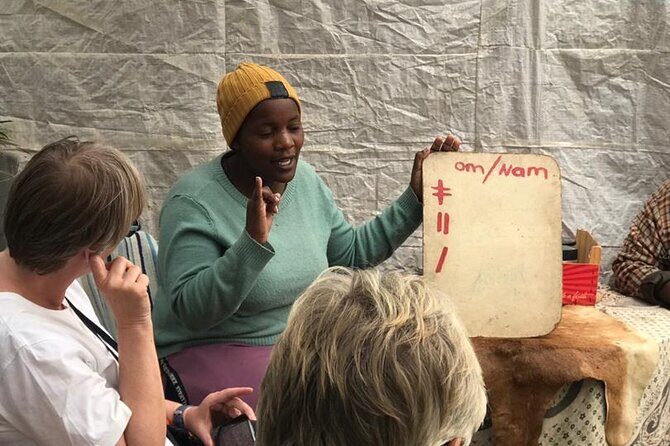
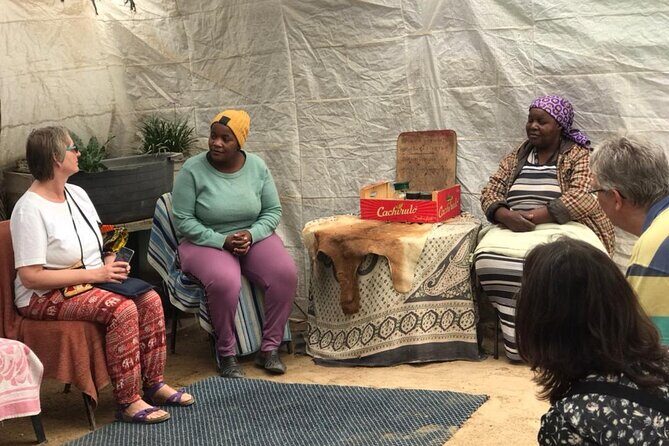
One of the most focused parts of the tour is a stop at a Herero lady who explains Herero culture and religion. This is where the tour shifts from “seeing a place” to understanding a worldview.
A private, person-to-person explanation tends to be more meaningful than generic explanations from a distance. You’ll likely hear about beliefs, values, and how traditions shape community identity. And because it’s tied to one person’s perspective, it feels more grounded than a broad overview.
How to get the most from this stop:
- Listen for what’s emphasized, not only what’s explained.
- Ask one or two questions instead of firing everything at once.
- Keep your tone gentle. Religion and identity topics deserve it.
This is also a moment where the small group size really helps. It’s easier to have a real conversation instead of standing in a line.
Pre-Primary School and Kindergarten: The Emotional Heart of the Tour
The visit to a pre-primary school and kindergarten is a standout part of the experience. You’ll be able to interact with the kids, and the whole stop has a natural warmth to it.
In feedback connected to this tour, the school visit comes up as a key highlight—people mention the happiness of the children and the fact that it’s meaningful to meet them in their own environment. That’s exactly why this stop is valuable: you’re not just watching from the edge. You’re meeting kids as kids.
Still, keep expectations grounded. This is a short visit, not a long volunteering session. You’ll get interaction time, but you won’t have hours to build big projects. The best approach is to treat it like a respectful greeting and a chance to share a moment.
A simple mindset can help: focus on kindness and patience. Kids may be curious, energetic, or shy depending on the day. Going in calm makes the whole moment better for everyone.





DRC Informal Settlement Visit: Seeing Real Life With Care
The tour then moves to DRC, an informal settlement. This kind of stop can be powerful, but it also demands care.
The tour context matters here. You’re going with a guide who’s providing explanations throughout the day, so the visit is framed as learning and observation—not gawking. Still, you should keep your behaviour thoughtful. Don’t treat people like props for photos. Ask before photographing if you have the chance to do so, and if it’s not clearly supported, skip the camera.
What I like about this inclusion is that it expands the story beyond the tourist-facing areas. Swakopmund isn’t only beaches and hotels. It’s also communities with their own realities, challenges, and strength.
If you’re sensitive to harder sights, this stop might feel intense. The fix isn’t to skip—just plan to take it slowly, breathe, and remember that you’re there to understand, not to judge.
Traditional Herbalist Stop: A Living Knowledge Moment
Next up is a visit to a traditional herbalist. Even if you’ve never thought much about herbal medicine before, this kind of stop is useful because it shows knowledge systems that exist outside formal Western categories.
You’re not just hearing about plants. You’re hearing about how people use knowledge in daily life and how tradition connects to health and well-being. The cultural explanation format makes this stop more than “look at plants.” It becomes a conversation about why certain practices exist and how they’re passed on.
One practical consideration: in these kinds of visits, don’t be overly fixated on proving or disproving anything. Approach it with curiosity. Ask questions about how knowledge is used and why it matters locally. That keeps the experience respectful and more informative.
Damaranama Tribe Pop-In and Optional Local Food Taste
The tour ends with a pop-in at the Damaranama tribe and then a taste of local foods, marked as optional.
That “pop-in” style can be a quick introduction rather than a deep, long-form lesson. Still, it’s valuable because it keeps the tour multi-tribe and multi-setting. If you’re trying to get a wider picture of cultural identity in the region, this tour’s structure helps.
Then you have the option to taste local foods. Food is often the easiest way to connect with culture because it’s sensory and immediate. Even a small tasting can give you a different perspective than photos or stories alone.
If food is offered, you can treat it like a sampling menu: try what you can, ask what it is if there’s time, and let the experience be simple.
Pickup, Group Discounts, and Mobile Ticket: The Comfort Factor
This tour offers pickup, which matters in Swakopmund. Getting picked up reduces stress, especially if you’re juggling a cruise schedule or changing plans. In feedback linked to this experience, people mentioned flexible pickup help with cruise ship hassles, which is the kind of detail you’ll appreciate when timing goes weird.
There’s also a mobile ticket, plus group discounts. Those can be small things, but small things add up—especially when you’re travelling with friends or family and want less friction.
Max 6 travellers also changes the tone. You’re not squeezed into a big vehicle with limited conversation. You get a more guided feel to each stop, and questions can actually happen.
Value for Money: Is $105.48 Worth It?
At about $105.48 per person, you’re paying for a structured 3-hour experience that includes guided culture explanations plus multiple community stops. The tour also lists admission ticket as free, which helps balance the total cost.
What makes this feel like good value is the mix of:
- real community settings (market, township area, settlement, school)
- a person-led cultural lesson (Herero culture and religion explained by a Herero lady)
- a practical, walk-and-stop format that doesn’t drag
In short: you’re buying time with a guide who can interpret what you’re seeing and take you to places you likely wouldn’t find on your own without local context. That’s the difference between “I saw Swakopmund” and “I understood part of Swakopmund.”
One more value point: the tour is booked on average 34 days in advance. That suggests this isn’t the type of activity you want to leave as a last-minute gamble if your schedule is tight.
Best Fit: Who Will Enjoy This Cultural Route Most
This tour is a good match if you:
- want more than sightseeing and beach time
- like guided explanations, especially about culture and identity
- enjoy short visits that cover a lot of ground without being exhausting
- appreciate small group dynamics where you can ask questions
You might not love it as much if you need lots of free time, prefer fully cushioned comfort, or strongly dislike informal settlement settings. But even then, the guided structure can help you process what you see.
The tour says most travellers can participate. That lines up with the walking being described as limited (a little walk in the open market), plus the overall time being manageable.
Who Leads It Matters: The Role of Guides Like Nanette and Mercia
Names come through in feedback tied to this tour: Nanette and Mercia. When guides are strong, it shows in how smoothly explanations connect to what you’re seeing. It also shows in communication and flexibility.
In a culture tour, your guide is basically the translation layer. They help you ask better questions, interpret what matters, and keep the experience respectful. With a small group, that guide-visitor relationship becomes a big part of why the tour feels worth doing.
If you’re choosing between similar tours, look for evidence of clear communication and thoughtful pacing. That’s the difference between a tour that feels rushed and one that feels human.
Should You Book This Cultural Tour in Swakopmund?
I’d book it if you want a short, meaningful culture experience that’s built around actual community encounters. The small group size, the school visit, and the Herero culture and religion lesson make the experience feel personal, not generic.
I’d think twice if you’re uncomfortable with informal settlement settings or if weather is a major concern for your travel dates. Because it requires good weather, you’ll want a backup day in your schedule if possible.
If you’re coming to Swakopmund for a limited time and you want to leave with more than postcards, this is a strong pick.
FAQ
FAQ
How long is the cultural tour in Swakopmund?
It runs for about 3 hours.
What stops are included during the tour?
You’ll visit several places including Swakopmund centre and into the township, a market walk, a Herero lady explaining Herero culture and religion, a pre-primary school and kindergarten where you can interact with kids, DRC an informal settlement, a traditional herbalist, and a pop-in at the Damaranama tribe. Local food tasting is optional.
Is pickup available?
Yes, pickup is offered.
What is the group size limit?
This tour has a maximum of 6 travellers.
Is an admission ticket included?
Admission ticket is listed as free.
Do I need a specific ticket format?
You’ll have a mobile ticket.
What weather conditions are required?
The experience requires good weather. If it’s cancelled due to poor weather, you’ll be offered a different date or a full refund.
What is the cancellation window?
You can cancel up to 24 hours in advance for a full refund. Changes made less than 24 hours before the start time aren’t accepted, and late cancellations aren’t refunded.