REVIEW · SWAKOPMUND
5 days Sossusvlei, Swakopmund and Spitzkoppe Camping
Book on GetYourGuide →Operated by Discovery Transfers & Tours · Bookable on GetYourGuide
Namibia has a talent for making you slow down fast. This 5-day camping route strings together Sossusvlei dunes, Walvis Bay birdlife, and Spitzkoppe’s granite drama without wasting hours. I especially like how much actual sightseeing you pack in, and how the small-group size (max 10) keeps explanations personal. One thing to consider: nights are spent camping, and you must plan for cold desert weather and bring a sleeping bag (it’s not included).
If you’re chasing that classic Namib-Naukluft “how is this even real?” feeling, this trip hits it hard. Plus, you get the coastal reset at Swakopmund and then the inland rock-country vibe at Spitzkoppe—so you’re not just driving in circles around the same scenery.
In This Review
- Key points I’d plan around
- From Windhoek pickup to your first desert night at Solitaire
- Namib Naukluft: Dune 45 and Big Daddy the right way
- Deadvlei to Sesriem Canyon: the value of time in the park
- Camping nights: what you’re really signing up for
- Walvis Bay flamingos and Swakopmund’s coastal reset
- Spitzkoppe granite peaks, arches, and Bushman paintings
- Okahandja wood carvings and your Windhoek arrival
- Price and logistics: does $1,400 per person make sense?
- Packing for dunes, coast, and rock country (without stress)
- Should you book this 5-day Sossusvlei–Swakopmund–Spitzkoppe route?
- FAQ
- How long is the tour?
- Where do you get picked up?
- What language is the guide in?
- How many people are in the group?
- Are meals included?
- Is a sleeping bag included?
- Are park fees included?
- Do I get accommodation on the final day?
Key points I’d plan around
- Big dunes early, not late: Dune 45, Big Daddy, Dead Vlei, Sossusvlei, and Sesriem Canyon start with an early day to make the light count.
- Small-group pacing (max 10): You get more time with your guide and fewer bottlenecks at viewpoints.
- Walvis Bay bird break: Flamingos and other bird species at the coast give you a breather after the dunes.
- Spitzkoppe is more than photos: Guided hikes, granite arches, and Bushman paintings add meaning beyond the postcard.
- Camping with real packing needs: A sleeping bag is required; you’ll want warm layers and sturdy shoes.
- Driver-guide does the heavy lifting: Transport between regions is included, plus English live guiding and an audio guide.
From Windhoek pickup to your first desert night at Solitaire
Day 1 begins in Windhoek with pickup from the reception area at your hotel or lodge. Before you hit the road, you get a proper briefing and a chance to meet your private guide. For a trip like this, that matters: you’re going from city streets into huge, remote spaces where a small navigation mistake turns into a long detour.
Then it’s a drive toward the Sossusvlei area, with meals handled for you—breakfast, lunch, and dinner—and an overnight camp at Solitaire Lodge or a similar option (subject to availability). This stop isn’t just a bed. It’s your first taste of the Namib’s rhythm: long distances, big skies, and the way temperatures drop after sunset.
Practical note: even if daytime looks manageable, the desert cool-down is real. Warm clothing pays off immediately, not “tomorrow morning.”
A few more Swakopmund tours and experiences worth a look

Namib Naukluft: Dune 45 and Big Daddy the right way
Day 2 is your full-on Namib Naukluft day in early-start mode. The point of going out early is simple: dunes photograph better in softer light, and you avoid the hottest part of the day. You’ll hit a sequence that most people only see in separate trips—here it’s threaded together.
You’ll see:
- Dune 45, a classic climb that’s not technically “easy,” but it’s very doable with steady footing
- Big Daddy, the bigger, tougher-feeling cousin that people talk about for a reason
- Dead Vlei and Sossusvlei, the surreal clay-and-sand contrast that makes the Namib feel cinematic
- Sesriem Canyon, where the scenery turns from open dune fields to a more carved, textured world
What I like about this structure is that it builds variety. You start with dune climbing (expect to walk sand, not carpet), then you shift into the bowl-like views at Dead Vlei and Sossusvlei, and you end with Sesriem Canyon for a change of pace.
The meal plan is also full on this day: all meals are included. That reduces stress in a place where the nearest shop is a long way away. Just plan your water and snack habits around long walks and bright sun, even if you’re getting meals later.
Deadvlei to Sesriem Canyon: the value of time in the park
In a route like this, the biggest hidden cost is time. The good news is you’re not doing a scattershot approach. You’re using one long day to cover the central highlights of the Namib Naukluft area, which means you spend more time where it counts and less time in transit.
Here’s how I’d think about it if you’re booking: Dune country is a game of patience. Your legs will get the workout, and your eyes will do the rest—waiting for the light shift, watching shadows move across sand ridges. If you rush, you miss what makes it special.
Bring the basics that work everywhere in Namibia, especially here: sunscreen, a sun hat, comfortable shoes, and a towel for the camp routine. Insect repellent is also on the list for a reason—conditions can change between dry dunes and camp areas.
And yes, plan for warmth at night again. Desert cold has a way of showing up fast.
Camping nights: what you’re really signing up for
Your overnight stays include camping, with meals mapped out in the schedule. Day 1 camps near the Solitaire Lodge area, Day 3 camps in Swakopmund, and Day 4 camps near Spitzkoppe.
This is the moment where you either feel prepared or you feel annoyed. The tour is set up so you won’t be scrambling for food and logistics, but you are responsible for comfort items—especially bedding.
Key point that can make or break the experience: a sleeping bag is not included. You’ll want to bring one, or you can hire one on-site for USD 30. If you hate sleeping cold, don’t gamble with thin blankets. Pack for night temperatures, not just the daytime.
If you’re wondering whether you’ll be fine without a towel or with flimsy shoes—don’t. You’re walking sand and rock, then dealing with dust. Comfortable gear means you enjoy the day instead of fixing your feet at sunset.
Walvis Bay flamingos and Swakopmund’s coastal reset
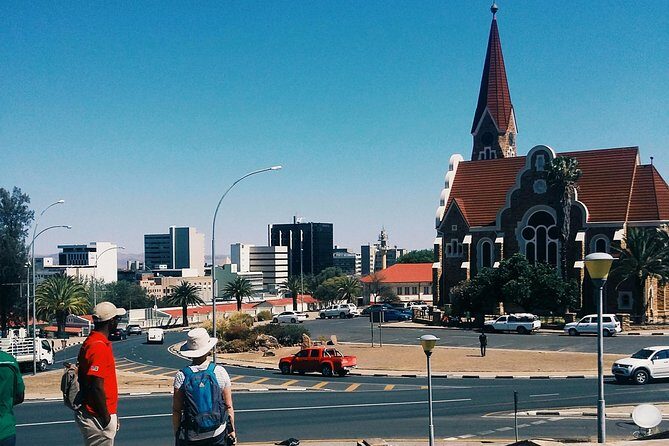
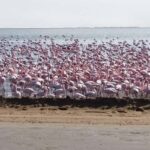
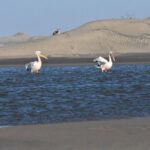
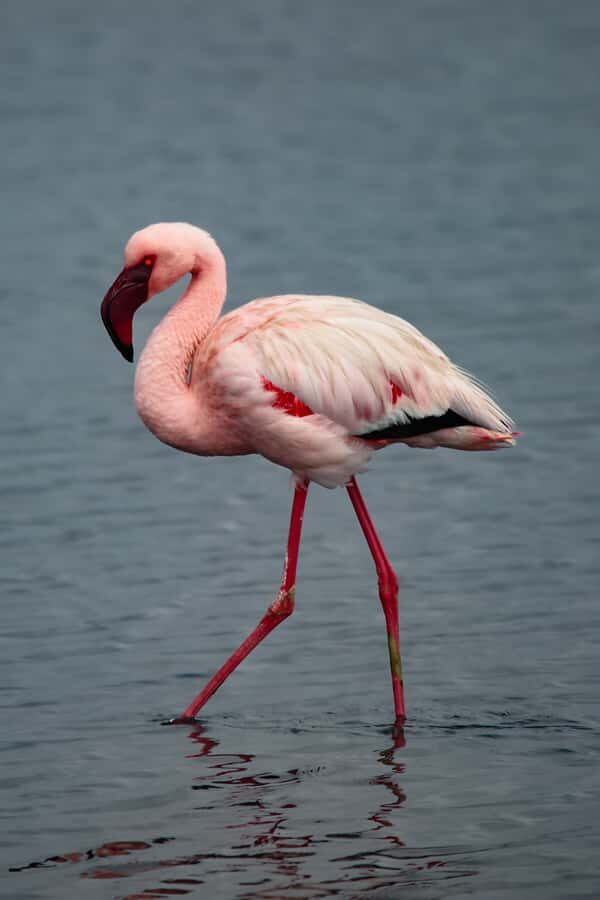
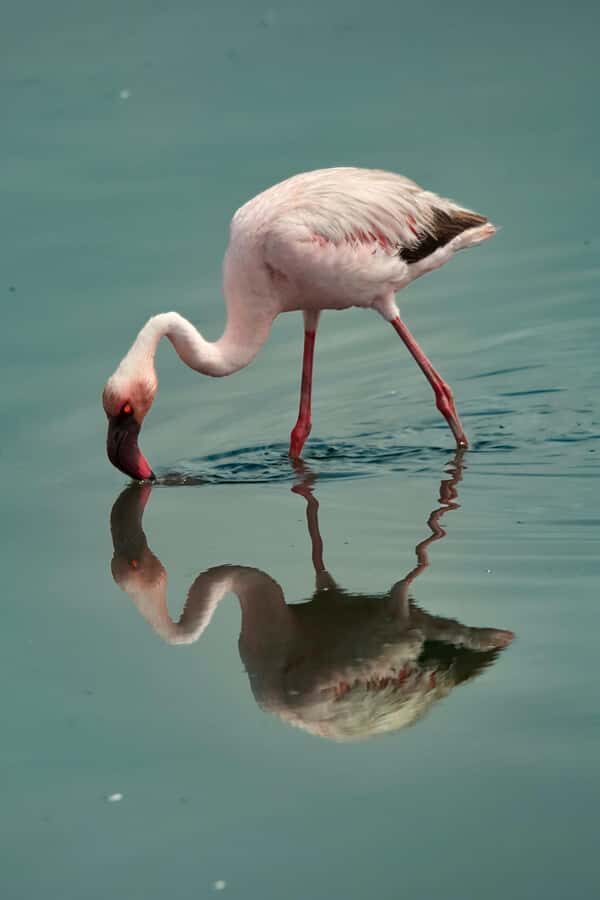
Day 3 turns the page from dunes to coast. You’ll head to Walvis Bay for flamingos and other bird species, then continue on to Swakopmund for one night.
This day is smart because it breaks the “all desert all the time” cycle. The coast gives you a different kind of sensory overload: more birds, different light, and a change in the pace of the environment. It’s also a good day for resetting your body after long walking days.
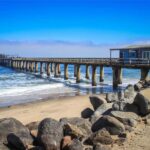
In Swakopmund you get breakfast and lunch included, and you can arrange extra activities at your own cost. The fact that options are optional is a plus. After two dune-focused days, you may want rest, a short stroll, or a casual meal rather than another packed schedule.
I’d also use this day to think about your next gear needs for Spitzkoppe—warm layers, water planning for hikes, and camera batteries if you’re shooting early and late.


Spitzkoppe granite peaks, arches, and Bushman paintings
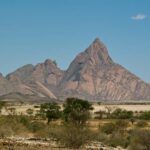
Day 4 moves inland to Spitzkoppe, one of Namibia’s most photogenic rock areas. This isn’t just a scenic drive and a quick stop. You’ll have time for guided experiences like hikes, exploring granite arches, and visiting ancient Bushman paintings. Photography is part of the flow too, which makes sense because the granite shapes are a built-in subject.
Overnight is at a scenic campsite near Spitzkoppe, with breakfast, lunch, and dinner included. That full meal coverage is handy because the area can eat up your energy. Hiking on rock country takes a different kind of effort than dune walking—your footing and balance matter, and the sun can still be strong even when the air feels cooler.
This day’s real value is perspective. Dunes make you think about time and wind; Spitzkoppe makes you think about stone and humans—how long it takes for rock to shape, and how long art can outlast climate. Even if you’re not a history person, it’s the kind of stop that makes you look longer than a normal photo stop.
Okahandja wood carvings and your Windhoek arrival
Day 5 is the return journey to Windhoek, with a stopover at Okahandja Wood Carving. It’s a practical final stop: you can pick up something locally made without adding a whole extra day to the schedule.
Meals included on this last day are breakfast and lunch. You’re expected to arrive at your preferred hotel or lodge in Windhoek late afternoon, and that’s where the tour ends—so there’s no accommodation included on Day 5.
This matters if you’re planning onward travel. Give yourself buffer time for check-in and dinner, since getting back from the bush can leave you tired in that good, satisfied way—or just tired.
Price and logistics: does $1,400 per person make sense?
At $1,400 per person, this trip sits in the “serious highlights” tier. The honest way to judge value is to look at what you’re getting that you’d otherwise pay for separately.
Included (big-ticket items):
- Park fees for non-residents
- All transportation
- Professional driver/guide
- All activities (unless labeled optional)
- Accommodation (camping throughout, unless upgrades)
- Meals as specified across the days
- Taxes/VA
- English live guiding plus an audio guide
- Small group limited to 10 participants
Not included (where you should plan ahead):
- International flights
- Any extra accommodation before and after the trip
- Drinks
- Some meals (only those not listed in the day-by-day plan)
- Personal items and travel extras like insurance or visas
- Sleeping bag (bring one or hire for USD 30)
So is it worth it? If you price this like a DIY trip, the two things you’d struggle to recreate are (1) the multi-region routing without wasting driving hours and (2) the guided structure that keeps stops efficient in remote areas. When you’re spending money on long drives, park access, and guiding, the per-person cost becomes easier to justify—especially for a small group.
Where I’d be cautious is with expectations around communication and confirmation. In one case tied to scheduling confusion, a passenger didn’t get picked up as expected and had to wait. You can avoid most of that risk by doing two simple things:
- double-check your exact pickup date and start time before departure
- keep your booking details handy so any mismatch can be fixed quickly
Also, drinks aren’t included, so budget for water and any extras you want along the way.
Packing for dunes, coast, and rock country (without stress)
Based on the practical requirements listed, I’d pack like this:
Must-haves
- Passport
- Comfortable shoes with solid grip
- Warm clothing and layers for cold nights
- Sun hat and sunscreen
- Insect repellent
- Toiletries and personal medication
- Towel
The sleeper item
- Sleeping bag not included. Bring yours, or plan to hire one on-site for USD 30.
Small tip that saves time
- Keep camera and chargers accessible. You’ll shoot dunes early and maybe want quick power management during transitions between regions.
And yes, you can overpack for a camping trip. But underpacking for warmth is the classic mistake. Desert nights don’t care about your plans.
Should you book this 5-day Sossusvlei–Swakopmund–Spitzkoppe route?
Book it if you want a tight Namibia sampler that hits the headline highlights: Dune 45, Big Daddy, Dead Vlei, Sossusvlei, Sesriem Canyon, plus the coastal birdlife at Walvis Bay, and the granite-and-art stops around Spitzkoppe. The small group size and the guided pacing are the biggest reasons it works.
Skip it or reconsider if:
- you’re not willing to handle camping conditions
- you hate the idea of walking sand and rock (even if the views are worth it)
- you’re counting on drinks being included (they’re not)
- you’re the type who needs ultra-flexible scheduling day by day (this trip runs on a defined route)
If you do book, do this before you go: confirm your pickup details for your start date, bring (or plan to hire) a sleeping bag, and pack warm layers. Get those right, and this route turns into one long string of scenery stops that actually feel connected instead of rushed.
FAQ
How long is the tour?
The tour runs 5 days.
Where do you get picked up?
Pickup is included from the reception area at your hotel or lodge in Windhoek.
What language is the guide in?
The live tour guide is English, and an English audio guide is included.
How many people are in the group?
This is a small group limited to 10 participants.
Are meals included?
Meals are included based on the day-by-day plan: Day 1 (breakfast, lunch, dinner), Day 2 (all meals), Day 3 (breakfast and lunch), Day 4 (breakfast, lunch, dinner), and Day 5 (breakfast and lunch). Drinks are not included.
Is a sleeping bag included?
No. A sleeping bag is not included. You should bring your own or hire one on-site for USD 30.
Are park fees included?
Park fees are included for non-residents.
Do I get accommodation on the final day?
No. Day 5 includes the return journey and arrival in Windhoek, but no accommodation is listed for that day.