REVIEW · WINDHOEK
3 Day Sossusvlei Camping Schedule and Sandwich Habor
Book on Viator →Operated by People Tours and Safari cc · Bookable on Viator
The dunes feel endless, even when you only have three days. This Namib Desert camping safari links big-name sights like Dune 45 and Big Daddy with Deadvlei and Sesriem Canyon, then ends at the Walvis Bay wetlands at Sandwich Harbour. I especially like that camping comes with real comforts, and that the guide energy matters—people talk about Leonard as punctual, helpful, funny, and an easy driver.
I also like how the trip is built for learning, not just photos: you get time to understand the local ecosystem and geology as you move between dune, pan, canyon, and coast. One thing to consider is the pace: you’ll start early for the dunes, and some days include long stretches of driving, so you’ll want to bring water, layers, and patience for the roads.
In This Review
- Key highlights you’ll actually feel
- Why this Namib route is a smart 3-day choice
- Day 1: Dune 45 and your first night in the oldest desert
- A realistic expectation for Day 1
- Day 2: Sossusvlei early start, Big Daddy climb, Deadvlei, then Sesriem Canyon
- Sossusvlei: time to look, not just move
- Big Daddy: the climb that earns your bragging rights
- Deadvlei: the white clay pan contrast
- Sesriem Canyon: the river-shaped cut with water year-round
- Day 2 pacing: what to watch
- Day 3: Sandwich Harbour and the Walvis Bay Wetlands shift the mood
- What you’ll likely notice on this day
- Who should like this part most
- Camping comfort and the meals you don’t have to plan
- What you’ll still need to bring
- The small-group effect: better timing, less waiting, more guidance
- About any off-road driving
- Price and value: what you get for the time you spend
- Who should book this tour (and who might not)
- Should you book this Sossusvlei camping-and-wetlands trip?
- FAQ
- Is pickup included?
- How many travelers are on the tour?
- What meals are included during the 3 days?
- Are entrance tickets included for the main sights?
- How long are the main activities?
- What happens if the weather is bad?
- What’s not included in the tour price?
Key highlights you’ll actually feel
- Max 8 travelers for real guide attention (and less time waiting around)
- Camping with included meals—dinner, breakfast, and lunch throughout the trip
- Sossusvlei classics in the right order: Sossusvlei, Big Daddy, Deadvlei, then Sesriem Canyon
- Climb your bragging rights dune: Big Daddy reaches about 325 m in the Sossusvlei area
- Sandwich Harbour wetlands with Ramsar-level wildlife value
- Walvis Bay admission is free for your stop at Sandwich Harbour / Walvis Bay Wetlands
Why this Namib route is a smart 3-day choice
Sossusvlei gets most of the headlines, and for a reason. The dunes are dramatic, the light is otherworldly, and the terrain forces you to slow down and pay attention. What I like about this itinerary is that it doesn’t treat the Namib as one single stop. It stacks sand formations, dry clay pans, a river-cut canyon, and then finishes at a coastal wetland where birds and wildlife are part of the scenery.
That combination also makes your time feel efficient. Day 1 plants you near the action with a stop at Dune 45 and an overnight in the desert area. Day 2 concentrates on the Sossusvlei zone early in the day (when the dunes are easier to read visually and the light helps with the big shapes). Day 3 shifts your senses from desert heat to sea breeze and wildlife watching at the Walvis Bay Wetlands.
Another plus: the trip is framed around small-group guiding, with a guide who adjusts to the group. In past experiences, guides like Leonard and Fanuel have been praised for being skilled, helpful, and good company—exactly what you want when you’re spending hours in a vehicle and then stepping out into shifting sand.
A few more Windhoek tours and experiences worth a look
Day 1: Dune 45 and your first night in the oldest desert
Your first day is a quick hit to get you oriented and excited. You’ll pass through the Namib Desert and Namib-Naukluft Park area, then stop at Dune 45—the star dune in the Sossusvlei region.
Here’s what makes Dune 45 special in practical terms. Its name comes from its position: it’s at the 45th kilometre of the road connecting the Sesriem gate to Sossusvlei. That makes it easy to follow on the route, and it also explains why it’s such a recognizable dune from photos and guides.
You’ll spend about 35 minutes here with the admission ticket included. That sounds short, but it’s enough for the classic viewpoint, plus time to absorb the scale before your eyes get used to it. Then you overnight in the area often described as the oldest desert, which sets up the rest of the trip nicely. Sleeping out there changes your sense of time—especially if you like the stillness after sunset.
A realistic expectation for Day 1
This day is about positioning and momentum. You’re not doing a huge trek; you’re starting with a landmark and then getting settled for the next day’s early start.
Tip for comfort: desert nights can cool off fast. Even if the day feels warm, plan for layers at camp.
Day 2: Sossusvlei early start, Big Daddy climb, Deadvlei, then Sesriem Canyon
Day 2 is the core of the trip. You go early to visit the dunes and spend meaningful time in each distinct place, instead of rushing through everything in one long walk.
Sossusvlei: time to look, not just move
You’ll have about 5 hours at Sossusvlei, with admission included. This is where you get that big, open feeling: dunes stretching out, the sense of scale, and the visual contrast between wind-shaped sand and the quieter, flatter areas nearby.
I like this timing because it gives you breathing room. In the Namib, the dunes can look similar if you only glance for a minute. With several hours, you start noticing how ridges align, how wind patterns create curves, and how distances play tricks on your sense of height.





Big Daddy: the climb that earns your bragging rights
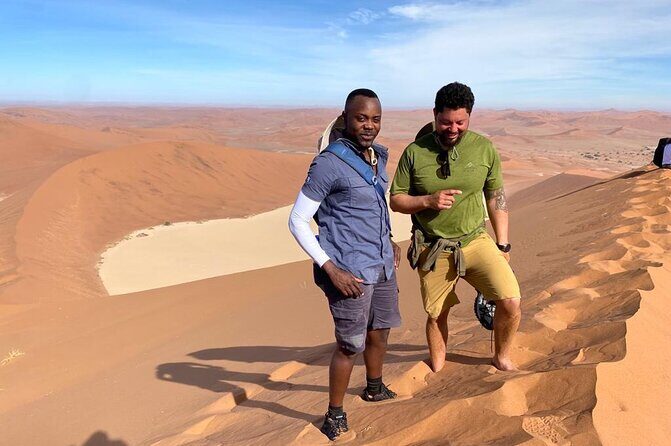
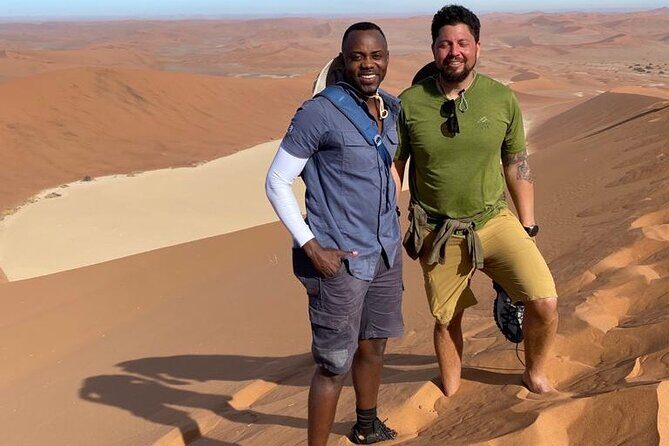
Next comes Big Daddy Dune, with around 2 hours on the sand and admission included. It’s famous for a simple reason: it’s one of the biggest dunes in the Sossusvlei area, sitting between Sossusvlei and Deadvlei. The altitude is about 325 m, and the view from the top gives you the classic Deadvlei-to-dunes perspective.
The tour also frames Big Daddy in the bigger Namib story. It may be the highest dune in the Sossusvlei area, but the highest in the Namib Desert has been measured at Dune 7 at 388 m. Dune 7 earns its name by being the 7th dune along the Tsauchab River, which is a fun detail that helps you connect place names to a bigger geographic system.
If you choose to climb, make it count. This is not a quick stroll—it’s effort in fine sand. You’ll want water, steady pace, and realistic expectations about how long sand walking takes.
Deadvlei: the white clay pan contrast
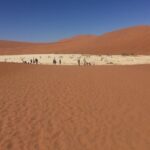
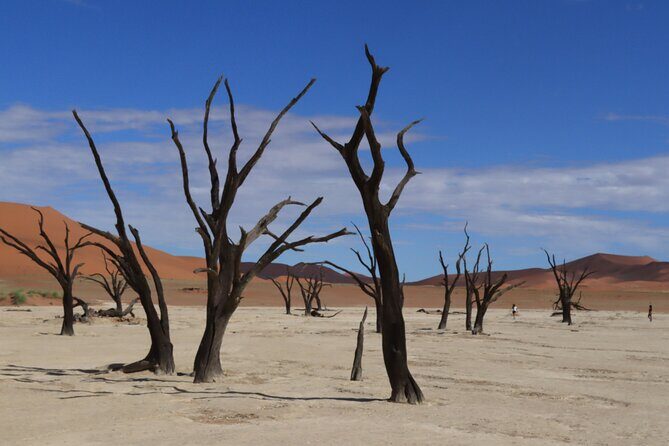
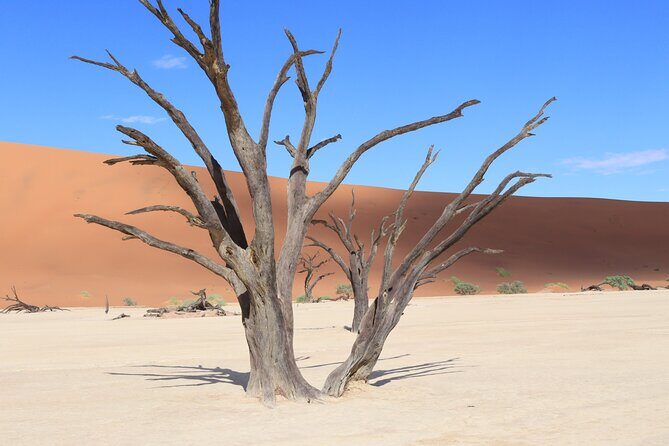
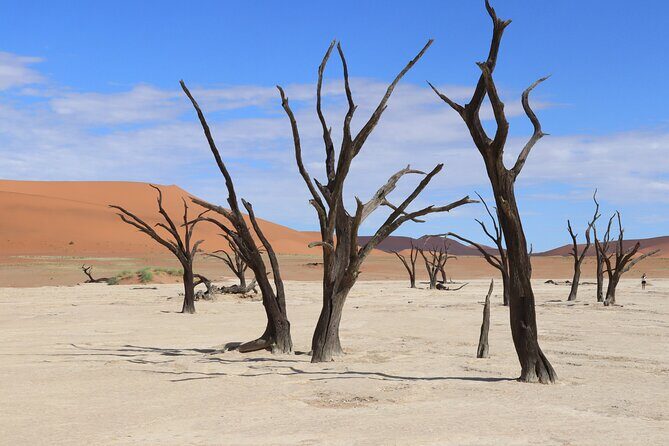
Then it’s on to Deadvlei, a white clay pan near the more famous salt pan of Sossusvlei, inside Namib-Naukluft Park. Your time here is about 30 minutes, with admission included.
Deadvlei works because it looks like a scene from nowhere. The stark color contrast makes the dunes feel even taller. It’s also a good stop to slow down after the harder dune climb, because the ground at a clay pan gives you a different walking experience.
Sesriem Canyon: the river-shaped cut with water year-round
Finally, you visit Sesriem Canyon, about 4.5 km from the Namib-Naukluft Park entrance. This is shaped by the Tsauchab River over millions of years. The key detail here is also practical: it’s described as one of the few places in the area that holds water all year round.
Your time is around 30 minutes with admission included. It’s not a long hike day, but the canyon stop breaks up the dune-only feel and gives you a reminder that this region isn’t just sand—it’s geology doing real work.
After that, you travel on toward Swakopmund for the next day.
Day 2 pacing: what to watch
Day 2 combines a big dune climb with multiple stops. That’s thrilling, but it also means your energy management matters. If you’re sensitive to heat or exertion, plan your pauses and don’t treat the climb time as guaranteed easy.
Day 3: Sandwich Harbour and the Walvis Bay Wetlands shift the mood
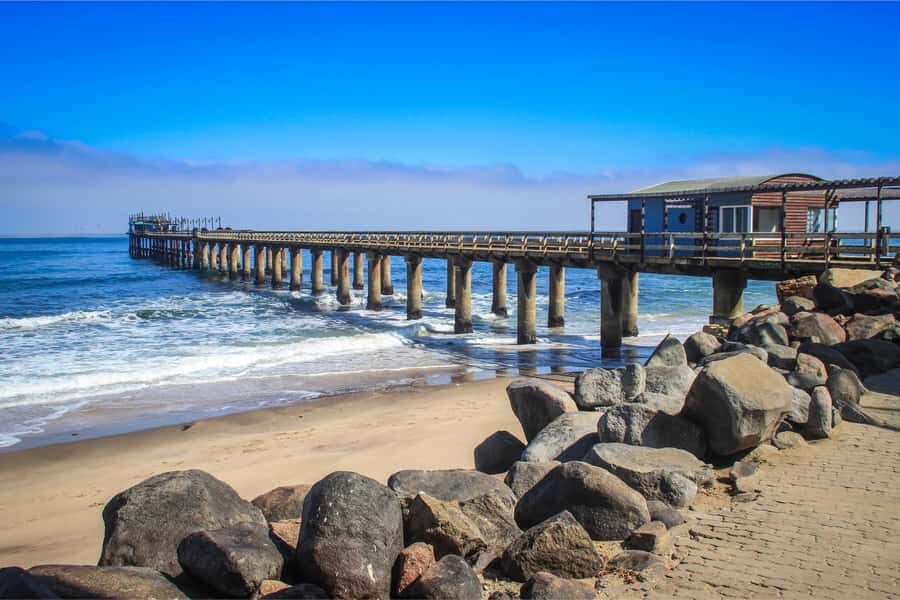
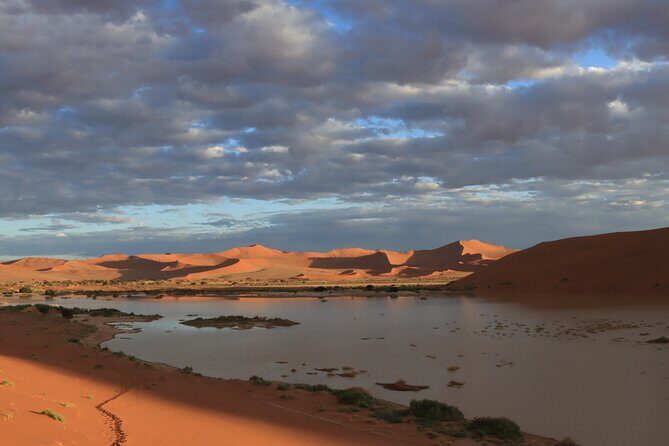
Day 3 changes the whole atmosphere. Instead of focusing on towering sand shapes, you head to Sandwich Harbour, part of the Namib Naukluft Park, also tied to the Walvis Bay Wetlands area.
This stop is described as one of Southern Africa’s most important coastal wetlands, and it’s listed as a Ramsar site in Namibia. In plain terms, that means it’s a high-value habitat, not just scenery.
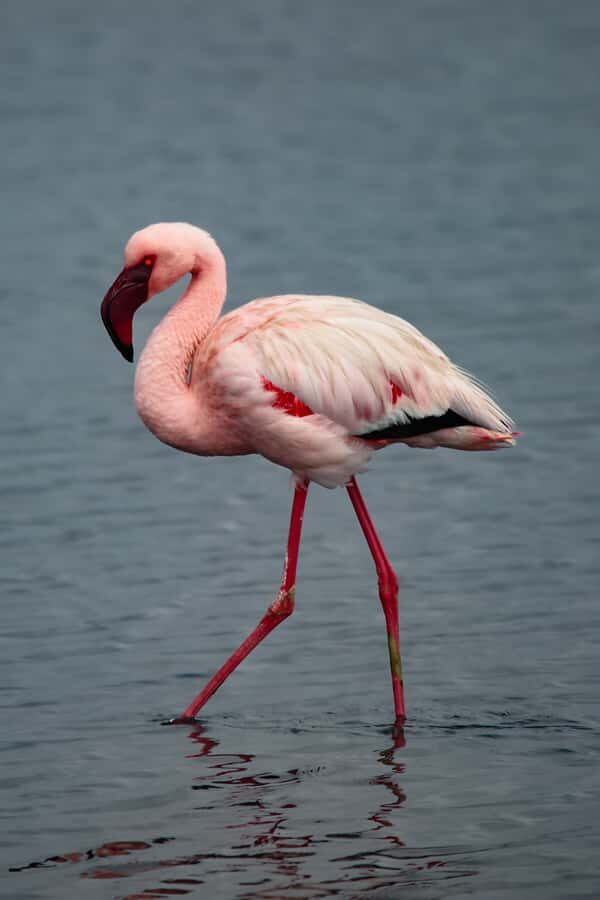
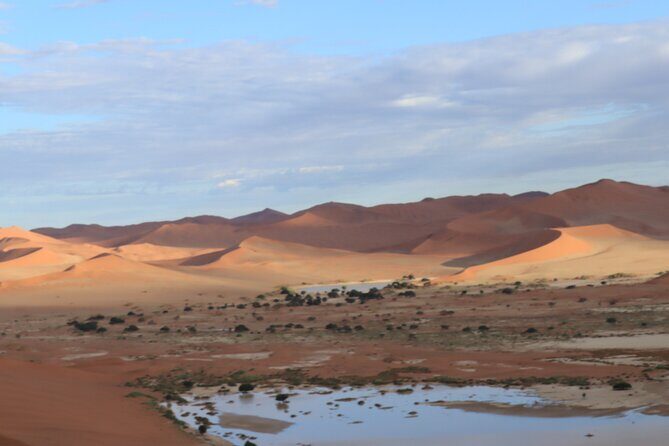
You’ll have about 4 hours here, and the admission is free for this stop. The area includes a lagoon, salt pans, and a bird sanctuary. You also see that signature visual idea of dunes pushing toward the ocean—giant sand forms that run into the coastline.
What you’ll likely notice on this day
Even if you’re not a hardcore birder, wetlands tend to reward patient watching. You’ll probably spend more time standing and looking than hiking. That makes Day 3 a good day to reset after sand effort from Day 2.
Who should like this part most
If you want contrast—desert to coast—this is your payoff. If you only came for dunes, you might feel the switch is abrupt, but the wetland stop explains why Namibia’s protected areas are worth the drive.
Camping comfort and the meals you don’t have to plan
One of the biggest reasons this tour gets strong satisfaction is that you’re not stuck in the usual desert problem: no food planning and no real comfort. Camping accommodation and meals are included.
The meals listed are:
- Breakfast (2)
- Lunch (3)
- Dinner (2)
You can picture how that works across three days: lunch covers your in-between movement days, and dinner plus breakfast keep you fueled for early starts.
A standout detail from earlier experiences is that the camping setup can include showers, bathrooms, and plenty of hot water. That is genuinely useful in the Namib, where sand gets everywhere and you’ll want a reset at camp.
What you’ll still need to bring
Even with food covered, desert days require your own basics. Pack layers for temperature swings, sun protection, and a water plan you can stick to—especially around dune climbs.
Also, if you’re the sort who hates muddy gear, bring a way to separate clean clothes from dusty ones.
The small-group effect: better timing, less waiting, more guidance
This tour keeps your group small—maximum 8 travelers. That matters more than it sounds. When your group is small, the guide can keep track of pace, spread attention across the group, and help you choose where to spend energy.
In past trips, guides like Leonard have been praised for being punctual, funny, and accommodating. Another guide mentioned is Fanuel, described as skilled and experienced for this style of multi-stop desert route.
For you, that usually translates to fewer moments where you’re waiting behind someone or missing the best window for photos and views. It also means you can ask questions during the walking parts and actually get answers, instead of being rushed along by a big schedule.
About any off-road driving
One experience description also mentions four-wheeling, which fits the reality of covering Namib terrain outside perfect pavement. If you’re prone to motion sickness, consider how you handle long vehicle days and bring whatever helps you cope.
Price and value: what you get for the time you spend
The price shown here is $0.00, which likely isn’t your real checkout number. But the value setup is clear from what’s included.
This itinerary bundles the big-ticket pieces that make desert travel expensive or time-consuming on your own:
- park-area admission tickets for key inland stops (Dune 45, Sossusvlei, Big Daddy, Deadvlei, Sesriem Canyon)
- camping accommodation
- all meals across three days
It also includes pickup offered, plus mobile ticket and confirmation when you book. And the Walvis Bay wetlands stop is noted as admission free for that segment.
So when you judge value, don’t just look at a headline cost. Look at the full package: lodging + meals + multiple guided stops over three days. That’s where this tour earns its keep.
Who should book this tour (and who might not)
This is a great fit if you:
- want a guided Namib Desert experience without having to coordinate transport and meal logistics yourself
- like seeing multiple environments in a short trip: dunes, pan, canyon, and coastal wetlands
- enjoy camping travel when it comes with basic comforts like hot water and facilities
- prefer small-group dynamics
You might reconsider if:
- you dislike long car days and early starts
- you don’t like walking on sand (Big Daddy is a climb)
- weather sensitivity is a deal-breaker. The experience notes it requires good weather and may be changed or refunded if conditions force cancellation.
Should you book this Sossusvlei camping-and-wetlands trip?
If your dream is to see classic Sossusvlei highlights—Dune 45, Big Daddy, Deadvlei, and Sesriem Canyon—while still having a meaningful coastal wildlife finale, this is a strong choice. The pacing makes sense for three days, and the included meals plus camping comfort make it feel like a real trip instead of a rushed checklist.
For me, the best reason to book is the combination: you’re not just chasing dunes. You’re learning how the region’s geology and water shape the places you’re standing, and then you’re ending at Sandwich Harbour to see what a coastal wetland looks like when the ocean meets sand.
FAQ
Is pickup included?
Pickup is offered.
How many travelers are on the tour?
This tour has a maximum of 8 travelers.
What meals are included during the 3 days?
Dinner is included twice, breakfast is included twice, and lunch is included three times.
Are entrance tickets included for the main sights?
Admission tickets are included for Dune 45, Sossusvlei, Big Daddy Dune, Deadvlei, and Sesriem Canyon. The Walvis Bay / Sandwich Harbour stop is listed as free.
How long are the main activities?
Dune 45 is about 35 minutes. The Sossusvlei visit is about 5 hours. Big Daddy Dune time is about 2 hours, Deadvlei is about 30 minutes, and Sesriem Canyon is about 30 minutes. Walvis Bay / Sandwich Harbour is about 4 hours.
What happens if the weather is bad?
The experience requires good weather. If it’s canceled due to poor weather, you’ll be offered a different date or a full refund.
What’s not included in the tour price?
Airport or departure tax is not included.