REVIEW · SWAKOPMUND
3-Day Scenic Sossusvlei Adventure in Namibia from Swakopmund
Book on Viator →Operated by Desert Dunes and Dust Tours · Bookable on Viator
Sossusvlei looks unreal until you’re there. This 3-day Namib Desert adventure from Swakopmund mixes geology stops, desert plants, and dune walks with a stay in luxury tented camps and private pool time. One day feels like you’re on another planet, then the next day hits you with vast dunes and canyons.
What I like most is the tight flow: you’re not just rushed to the big sights, you get real context at the Moon Landscape and the Welwitschia Plains. I also like that meals and lodging are handled, so you can focus on the sand, the photos, and the cool-downs. The main consideration: it’s a heat-and-walking tour, and the dunes are at your own risk, so bring the right gear and be honest about your stamina.
In This Review
- Key highlights at a glance
- Setting off from Swakopmund: how the day 1 timing really works
- Moon Landscape and the lichen fields: a fast lesson in why the desert works
- Welwitschia Plains: the two-leaf plant moment you’ll remember
- Solitaire and the camp handoff: the comfort stop that resets the day
- Day 2 at Deadvlei: choosing your pace before the heat peaks
- Sossusvlei, Dune 45, Dune 40, and Elim: a photo route with built-in recovery
- Sesriem Canyon and the six-thongs story: the most human moment of the trip
- Moon Mountain camp and pool time: luxury that actually earns its place
- Price and value: is $827.07 worth it for most people?
- Guide style and small-group attention: why it feels more personal
- What to pack and how to handle the heat (without turning it into a survival movie)
- Who this tour suits best—and who should consider a different fit
- Should you book this 3-day Sossusvlei adventure from Swakopmund?
- FAQ
- When does the tour start and how long is it?
- How many people are in the group?
- What meals and accommodations are included?
- Is there a pool at the accommodation?
- Do I need a moderate fitness level?
- Is a vegetarian option available?
- Will I get a German guide?
- What if I cancel or the weather is poor?
Key highlights at a glance
- Moon Landscape views paired with quick lessons on desert life and ancient geology
- Welwitschia Plains stop to see the famously small two-leaf plant and learn how it’s pollinated
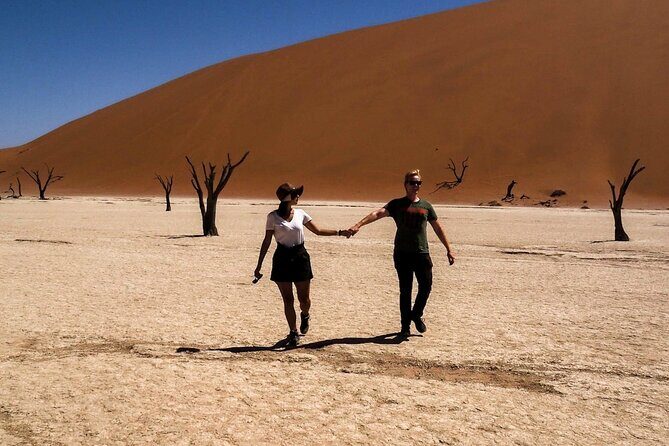
- Deadvlei’s 2 km dune walk to silent, ancient thorn trees (then you choose how far to push)
- Big Daddy option (380 m) for the fit, with clear guidance to take water and sun protection
- Sesriem Canyon short walk through an old riverbed, including the six-thongs story
- Luxury tented camp with private pool time so you can cool off after the day’s heat
Setting off from Swakopmund: how the day 1 timing really works
This tour is built for a full “desert day” feel without turning it into a sprint. You start early (the tour lists an 8:00 am start), then you roll out from Swakopmund and spend the first hours heading inland toward some of the most dramatic scenery in the Namib Naukluft area.
Expect a lot of time on the road, but it’s not empty road time. The itinerary keeps breaking up the drive with stops that matter—lichen and plant life, desert wildlife chances, and short refresh moments like the Solitaire service station. For a lot of people, that balance is the secret sauce: you’re never stuck staring out the window the whole day.
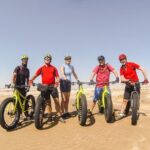
Small-group size helps a lot too. The maximum is 12 travelers, which usually means fewer bottlenecks at viewpoints and more attention when you ask questions about dunes, rocks, or local plants.
A few more Swakopmund tours and experiences worth a look
Moon Landscape and the lichen fields: a fast lesson in why the desert works
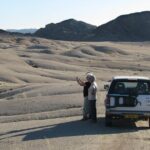
The first real wow moment is the Moon Landscape stop, after a quick stop at the Lichen Fields. This is one of those rare setups where you don’t just take pictures—you learn what you’re seeing.
Here’s what makes it interesting:
- You’re shown desert fauna and flora right away, so the trip doesn’t feel like sightseeing with no meaning.
- Then you drive through gravel plains and view dolomite rocks and lava dykes.
- The Moon Landscape area is described as around 400 million years old, which gives the place a heavy “geology time” feeling.
The vibe is quiet and wide-open. You’ll notice how the scenery changes with distance—gravel plains stretch far, rocks look sculpted by time, and the lack of noise makes even short stops feel like they last longer.
Practical note: bring your camera thinking. This is a good place for early light photos, and it’s also easier to stay patient here before the day gets hot.
Welwitschia Plains: the two-leaf plant moment you’ll remember
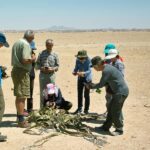
After Moon Landscape, the tour shifts from rocks to living things at the Welwitschia Plains. This stop is built around a single star: Welwitschia, the age-old desert plant known for producing only two leaves.
What you learn (and why it matters):
- The plant has male and female forms.
- Small bugs are involved in pollination.
- The stop is also tied into broader desert research and mining discussion, so it’s not just “look at the plant,” it’s “why does it survive.”
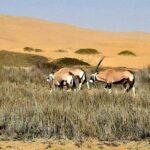
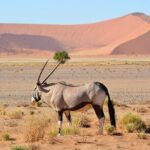
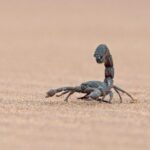
Then you drive through the Namib Naukluft Park with hopes for desert wildlife like oryx, springbuck, or ostriches. You might spot them; you might not—but either way, it’s the kind of area where knowing what to look for makes the drive feel alive.
Lunch also happens “en route” during the day, described as a light lunch in the Namib desert. That’s a nice practical detail. You’re less likely to feel like you’re constantly planning meals while trying to keep up with the scenery.
Solitaire and the camp handoff: the comfort stop that resets the day
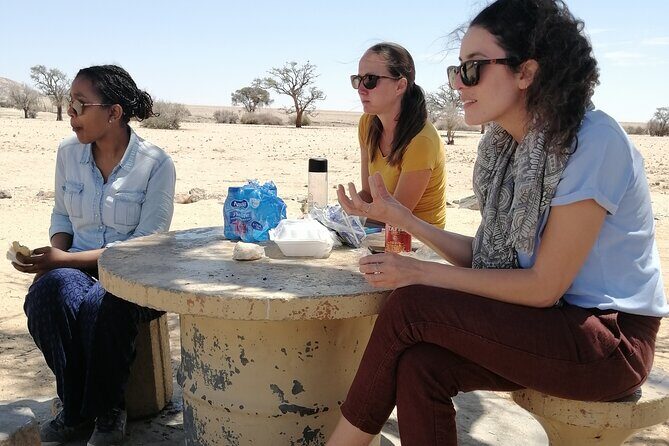
Solitaire is a tiny desert service station, and yes, the apple pie is part of the draw. It’s the kind of stop that keeps the day human. You refuel, stretch a bit, and grab something warm and sweet before heading to the overnight spot.
From Solitaire, it’s about half an hour to your Moon Mountain luxury tented camp. This is where the itinerary turns from “big scenery” into “rest after big scenery.”
The camp setup is a major selling point:
- Each unit has its own bathroom and double beds
- You’re promised breathtaking views, sunset time, and clear starry skies
- There’s a refreshing private pool right at your accommodation
That private pool detail sounds small until you’ve done a heat-filled day of walking. Then it feels like you planned your whole life around it. After dunes and sun, being able to cool down on your own schedule is a real value-add.
Day 2 at Deadvlei: choosing your pace before the heat peaks
Day 2 starts with an early breakfast and you pack a light lunch for later. That matters. Sossusvlei and Deadvlei can roast you, and the plan is clearly set up to reach the walking part before it gets too hot.
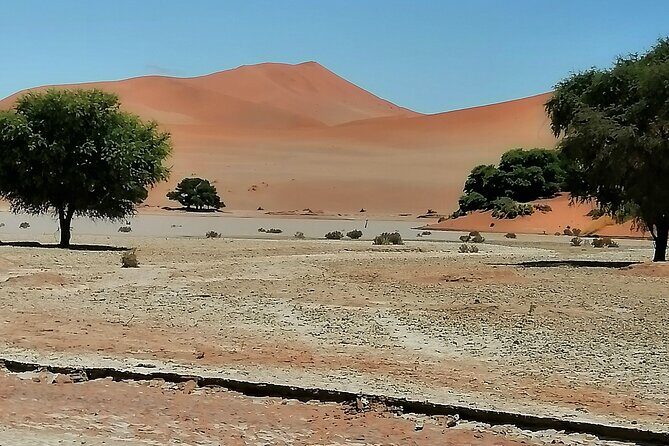
You head to Deadvlei first, then take a 2 km dune walk to see old thorn trees that died hundreds of years ago. These trees don’t look like much from the road, but up close they feel ghostly—standing where life is gone, in a place defined by silence and sand.
You’re also given the option of pushing harder:
- Big Daddy is listed as 380 m
- It’s described as one of the highest dunes in the world
- The climb is specifically framed as “fit can challenge,” and it’s at your own risk
The tour also makes the essentials clear: bring water, sunscreen, a hat, and good walking shoes. I take that seriously because dune terrain is not just “walkable sand.” Sun hits fast, and loose footing can drain you quicker than expected.
My advice: if you want to enjoy the views without racing your fatigue, consider saving your energy for the photos and shorter walks. The best day isn’t the one with the longest climb—it’s the one where you still feel good enough to look around.
Sossusvlei, Dune 45, Dune 40, and Elim: a photo route with built-in recovery
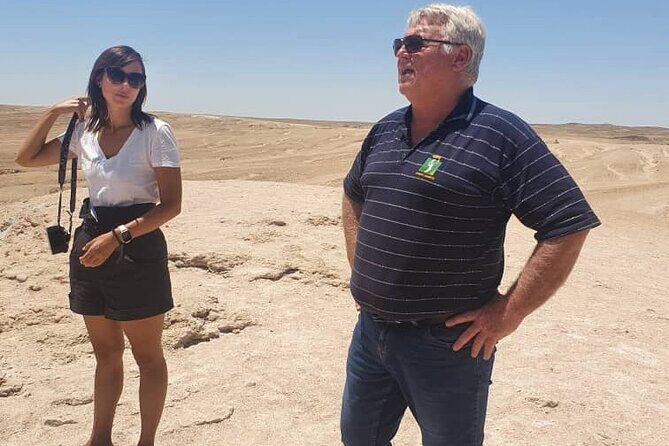
After Deadvlei, you drive to Sossusvlei for photos, a walk, and a rest under huge camelthorn trees. That camelthorn shade moment is important. It gives you a place to pause, reset your breathing, and let the day’s heat drop a notch before the dune viewing continues.
Then the itinerary cycles through classic dune stops:
- Dune 45: photo time or a walk up the dune (30 minutes)
- Dune 40 and Elim Dunes: additional photo stops and viewpoints
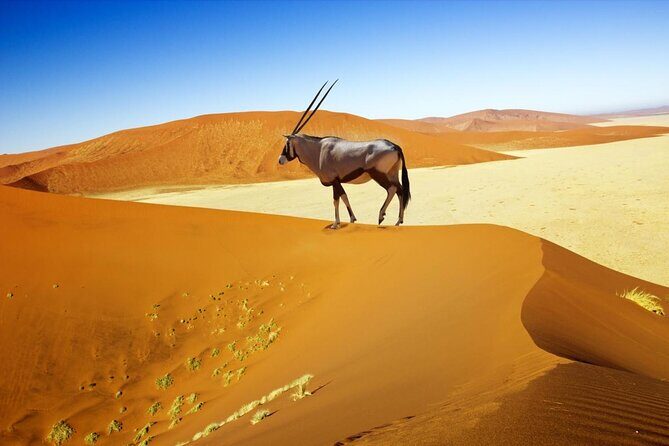
Elim Dunes are described as a place to look for oryx and springbuck, and maybe a lonely ostrich. Even if wildlife doesn’t show up, the dunes themselves do what dunes do: they give you that gradient-and-shadow effect that’s hard to match anywhere else.
The timing on this section is also realistic. You don’t get hours and hours at a single dune. You get a sequence—enough variety for photos, but with enough movement to keep things from feeling like one long slog.
Sesriem Canyon and the six-thongs story: the most human moment of the trip
Late in the day, you stop at Sesriem Canyon. This is a shorter walk, but it’s also the kind of stop that sticks with people because it has a story.
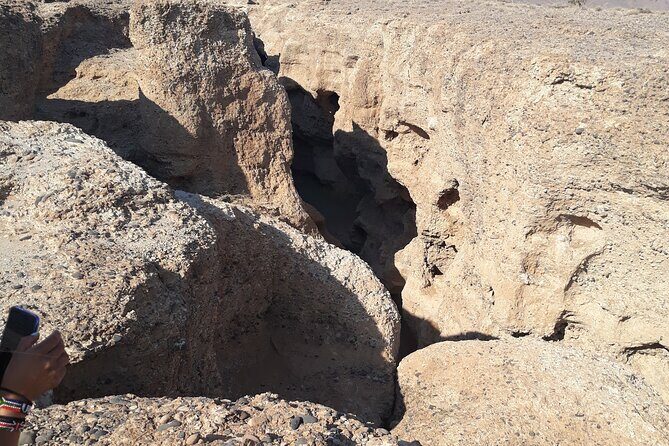
Sesriem Canyon is an old riverbed eroded deep down. The itinerary notes some places reach about 10 m, and in some spots there may be a trickle of water. When you’re standing there, it helps to remember that this wasn’t always just rock and sand—it was a system that shaped the ground.
The tour also shares the Afrikaans origin of the name: Sesriem means six thongs. The explanation given is that when farmers first discovered the canyon in 1908, they tied six cattle thongs together to reach water for their cattle.
That is the sort of detail that turns a canyon from a pretty feature into a place with human memory.
After this, you leave the park at midday and head to enjoy a cool splash pool at the lodge. Then you make your way to Moon Mountain Lodge again for dinner and sunset views. The pool time and dinner timing aren’t random. They’re the “reward” part of the plan.
Moon Mountain camp and pool time: luxury that actually earns its place
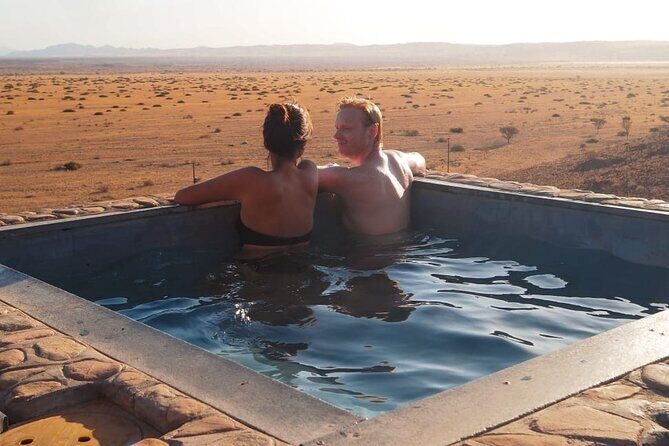
By Day 2, you’ll understand why this itinerary spends money on comfort. The camp is described as luxury tented accommodation, with a cool pool waiting after dune walking. You’ll also have sunset time and open-sky star viewing.
The operator reserves the right to use another lodge if the planned one is fully booked. That’s normal in travel, but what you can take from the info is this: the trip is designed around having a place to cool off after heat, not just a bed to sleep in.
The private pool at your accommodation on Day 1 and the splash pool moment later create a pattern. You don’t have to wait until the end of the day for relief.
And the dinner timing after all the outdoor time means you’re not rushed into a restaurant schedule. After a long day under a big sky, the best meal is the one that feels earned—and that’s how this one is set up.
Price and value: is $827.07 worth it for most people?
At $827.07 per person for a 3-day trip, you’re not paying for “transport only.” You’re paying for:
- A small-group format (max 12)
- Multiple structured stops (Moon Landscape, Welwitschia Plains, Deadvlei, dunes, Sesriem Canyon)
- Luxury tented accommodation
- All meals included (breakfast, lunch, dinner)
- Cooling downtime at pools
That last point is a sneaky value driver. If you compare similar self-drive itineraries, the cost difference often shows up in comfort after the dunes, not just in entry fees. Here, the package-style approach reduces the mental load. You don’t have to plan lunch logistics between long drives, and you’re not hunting for where to sleep while juggling sand, sun, and time.
One trade-off: alcoholic beverages aren’t included. If that matters to you, plan on bringing a budget for drinks or grabbing non-alcoholic options where available.
Guide style and small-group attention: why it feels more personal
The guide work is a highlight in the reviews, and it shows up in how the experience is described: guides know when to explain more and when to give you time to indulge in the scenery.
You may meet guides such as Viktor and Uwe. The key difference isn’t just facts—it’s pacing. Desert places are visual and quiet. If a guide talks nonstop, you miss the point. If they know the rhythm, you get the stories and still get space to breathe.
Language note: German guides are limited and not guaranteed. If German is important, you’ll want to book early and understand first-come, first-served applies.
What to pack and how to handle the heat (without turning it into a survival movie)
The itinerary repeatedly points to sun and hydration needs, especially around Big Daddy and the dunes. So pack like you’re serious about being comfortable.
At minimum, take:
- Water (the tour explicitly says water for the dune challenge)
- Sunscreen and a hat
- Good walking shoes
- A way to keep your phone/camera charged for photo breaks
Also, think footwear and gait. Dune sand can feel “loose” underfoot even when it looks gentle. If you’re careful, you’ll enjoy more. If you push too hard, you’ll lose the pleasure part.
Heat management is part of the value of the itinerary too. Leaving for Deadvlei before it gets too hot is a big deal. It means you spend your effort when conditions are friendlier.
Who this tour suits best—and who should consider a different fit
This is a great match if you want:
- Classic Sossusvlei views with a plan that includes downtime
- A small-group vibe with real desert education moments
- Luxury tented comfort and pool time after walking
It may feel wrong if:
- You hate walking in hot conditions
- You want lots of free time with no schedule at all
- You need guaranteed German guiding
If you’re moderately fit and you’re okay with a dune walk and the possibility of a taller dune challenge, you’re in the sweet spot. If you’d rather keep things easy, choose your dune effort carefully. The itinerary gives you options, not forced heroics.
Should you book this 3-day Sossusvlei adventure from Swakopmund?
I’d book it if you want the right mix of big Namib sights, guided context, and real comfort at night. The combination of Moon Landscape stops, Welwitschia Plains plant learning, Deadvlei walking, and Sesriem Canyon history feels like a complete introduction to the area—not just a box-tick to see dunes.
The decision hinges on one thing: can you handle heat and walking? If yes, the small group, included meals, and pool downtime make the price feel fair. If no, you might still love the scenery, but you’ll want a different pace or a shorter, less active option.
Either way, go in with sun protection and a camera mindset, and you’ll come home with photos that look like they were edited—because the desert really does look that dramatic.
FAQ
When does the tour start and how long is it?
The tour starts at 8:00 am and runs for about 3 days.
How many people are in the group?
This tour has a maximum group size of 12 travelers.
What meals and accommodations are included?
Lunch, dinner, bed and breakfast are included, with breakfast (2), lunch (3), and dinner (2). The accommodation is included as part of the luxury tented camp stay.
Is there a pool at the accommodation?
Yes. The itinerary includes time at the refreshing private pool at the Moon Mountain luxury tented camp, and it also mentions a cool splash pool at the lodge after Sesriem Canyon.
Do I need a moderate fitness level?
Yes. The tour says travelers should have a moderate physical fitness level. There is a 2 km dune walk at Deadvlei, and there is also an optional Big Daddy dune challenge for fit participants.
Is a vegetarian option available?
Yes. A vegetarian option is available—tell the provider at the time of booking.
Will I get a German guide?
German guides are limited and not guaranteed. Allocation is first come, first serve.
What if I cancel or the weather is poor?
You can cancel for a full refund up to 24 hours before the experience starts. The tour also requires good weather; if it’s canceled due to poor weather, you’ll be offered a different date or a full refund.