REVIEW · SWAKOPMUND
Swakopmund: “UP CLOSE” Living Desert E-FatBike Tour
Book on GetYourGuide →Operated by Swakopmund Fat Bike Tours · Bookable on GetYourGuide
Cycling into the Namib feels close-up. In Swakopmund, an E-fatbike gets you near the oldest desert life in the world, with a low-noise, low-fuss way to cover dunes and shoreline. I especially like the living-desert focus: you don’t just look at sand, you learn how the flora and fauna survive there, with stops that actually teach you what to notice.
The tour is about 3.5 hours and can include proper sand-and-gravel riding, so on a hot Swakopmund day it may feel more like a workout than a stroll. Also, water isn’t included, so you’ll want to plan ahead and bring comfortable shoes (or at least footwear you trust on uneven ground).
In This Review
- Key things to look forward to (and why they matter)
- Why the Namib Desert is best experienced by bike
- The 3.5-hour route: Swakop riverbed to dunes to the beach
- Your guide’s job: spotting tracks and teaching survival
- E-fatbike comfort: what makes dunes doable
- Wildlife encounters you can expect to care about
- Eco-friendly in the practical sense
- Price and value: what you’re really paying for at $65
- Who should do this tour (and who should skip it)
- Should you book it? My practical take
- FAQ
- How long is the Up Close Living Desert E-FatBike Tour?
- What route does the tour follow?
- Is the bike and helmet included?
- Is water included?
- What should I wear or bring?
- Is transport from my accommodation included?
- What’s the minimum age for kids?
- What language is the tour offered in?
- Can the guide tailor the tour to my interests?
- What is the cancellation policy?
Key things to look forward to (and why they matter)
- A 3.5-hour ride that threads Swakopmund, the Swakop riverbed, gravel plains, dunes, and even the beach
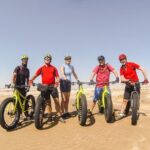
- E-fatbike power with fat tires, which helps you glide over sand and keep your attention on wildlife signs
- Guides like Hanjo who teach you to read the desert, not just point at it
- Real track-and-sight experiences, including reptiles and small desert creatures you might otherwise miss
- Time that can bend toward your interests, so you can lean more plant-focused or more animal-focused
- Helmet and a snack included, but you’ll need to handle water and your own transport to the start
Why the Namib Desert is best experienced by bike
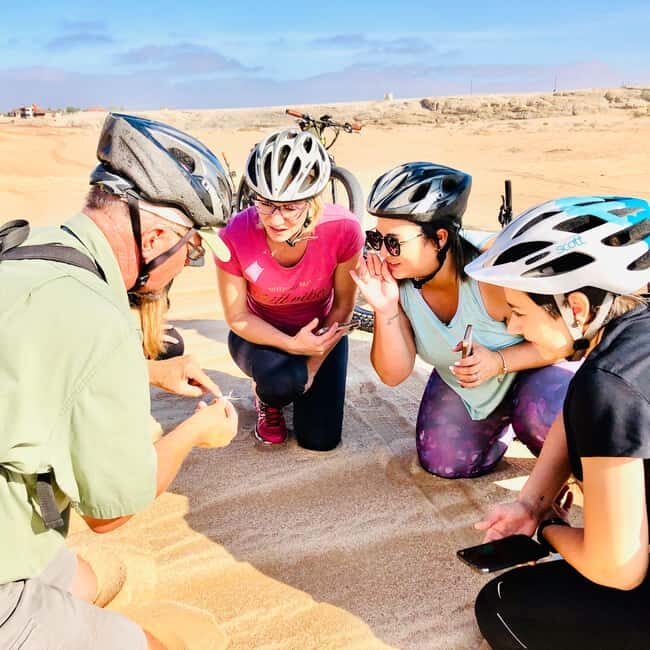
The Namib is famous for being old. What surprised me is how much “life” you can find without leaving Swakopmund’s immediate region. On this tour, the whole point is getting up close to the desert’s daily story—tiny survival strategies, subtle tracks, and plants that look plain until your guide explains them.
An E-fatbike changes the feel fast. You still pedal and steer, but the assist helps you keep moving over sand without fighting the terrain the whole time. That means you can slow down at the right moments, stop for wildlife clues, and look closely without turning the day into a full-body grind.
You can also read our reviews of more tours and experiences in Swakopmund.
The 3.5-hour route: Swakop riverbed to dunes to the beach
This tour runs for about 3.5 hours, and the route is built to show you different “faces” of the desert and its edges: riverbed, gravel, dunes, then the beach.
First, you’ll ride out through Swakopmund and into the Swakop riverbed area. This segment matters because riverbeds in arid places often concentrate the best clues—scrapes, subtle tracks, and plant growth where conditions collect just enough moisture. It’s also a good warm-up zone for getting comfortable on the bike and listening to your guide’s first key lesson: what the desert leaves behind.
Next comes time over gravel plains. Gravel looks uniform from far away, but up close it’s full of micro-signs: disturbed grains, tiny footprints, and dry plant structure that helps you understand how life is laid out on the ground. This is usually where the guide can explain why certain plants appear in bands or clusters, and how animals take advantage of that.
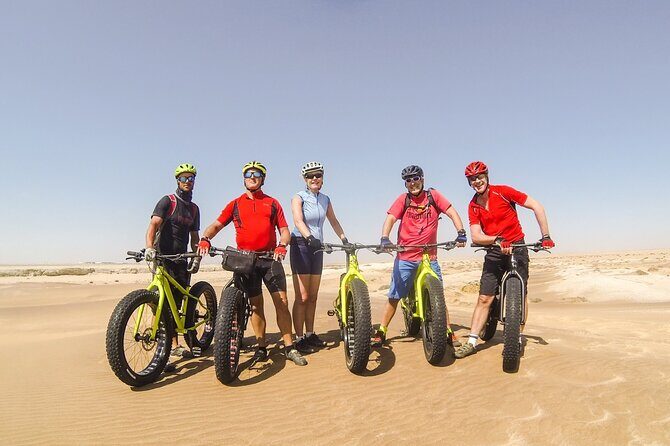
Then the fun ramps up: riding over dunes. Dunes are the big attraction because they bring the thrill—slopes, soft sand, and that moment when you realize the bike’s traction makes the challenge manageable. The drawback is simple: dunes plus heat can add up. If the day is unusually warm, expect the ride to feel longer and more effortful than the same route on a cooler morning.
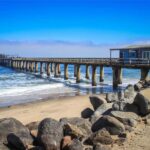
Finally, you’ll head along the beach. The beach-to-dune edge is where you often get a sense of how the Namib connects different habitats. It also gives you some visual scale: you see just how wide the desert can feel, even when you’re still close to town.
Your guide’s job: spotting tracks and teaching survival
The best part of this experience is the guide-driven learning. In particular, the named guide Hanjo shows up in multiple accounts as friendly and highly prepared, with a broad grasp of country geography plus desert plants and animals. Even when an animal isn’t visible, you usually get a payoff through what the guide can read from the ground.
This is where “living desert” becomes real. The desert doesn’t announce itself with loud wildlife encounters. It leaves hints. You may hear explanations about how plants manage scarce water, or what certain trail patterns mean. You also get coached on where to look: small movement, tiny tracks, and even the kinds of places reptiles and other creatures choose.
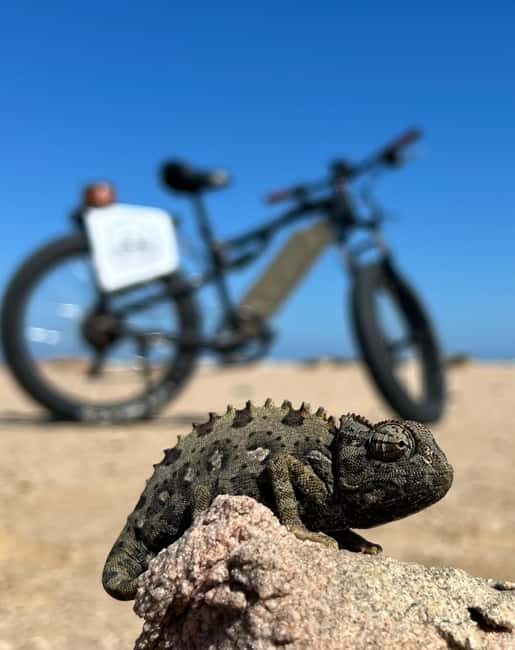
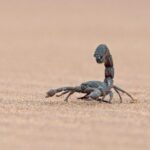
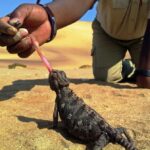
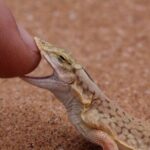
A couple of the most memorable kinds of sightings or clues include reptiles like sand vipers and geckos, and other small creatures such as a slow worm and desert spiders. Sometimes you may even notice a spider’s web in an unlikely spot, which is a neat reminder that “desert” doesn’t mean “empty.” One more highlight that often gets attention is the chance to find a chameleon—but like all wildlife, it depends on conditions and timing.
There’s also a respectful approach to animals. The guide’s role isn’t to force contact. It’s to observe, learn, and avoid disturbing animals that are already doing their best to survive quietly.
E-fatbike comfort: what makes dunes doable
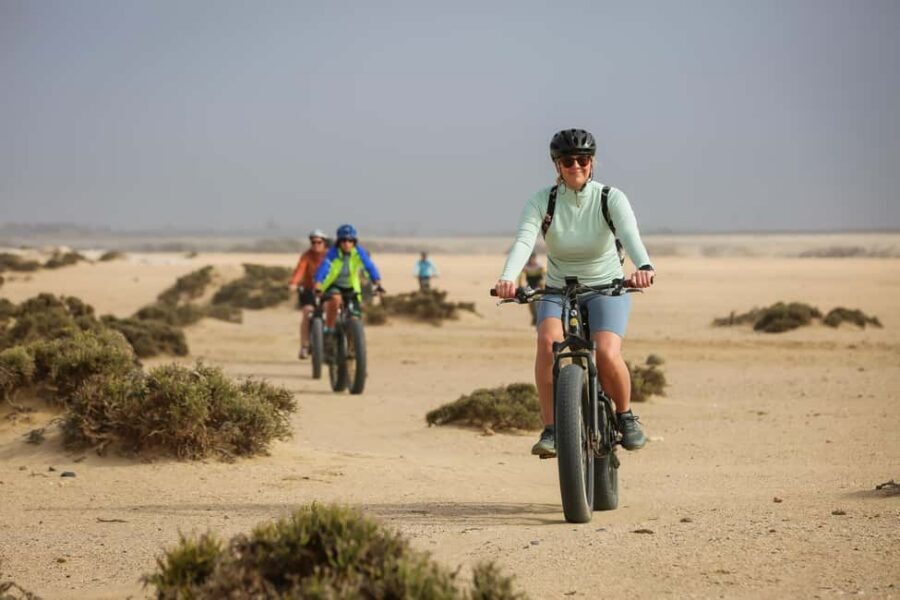
I like that this isn’t sold as an extreme stunt ride. It’s an adventure, yes, but the fat tires and the E-assist help most people stay in the ride instead of constantly dismounting.
That matters for two reasons. First, it keeps your focus where it belongs: on scenery and wildlife signs, not on surviving the next patch of soft sand. Second, it helps the tour fit a wider range of fitness levels. Even when the dunes add challenge, people with average fitness can usually handle it, as long as they’re comfortable riding a bike over uneven ground.
Two practical notes from the setup:
- Wear comfortable shoes for gravel and dune surfaces.
- Bring your own water plans. The tour includes a snack, but not water, so you’ll want to buy water on-site or fill a reusable bottle at the office.
Helmet use is included, which is exactly how it should be. You’ll also get a short orientation that helps you feel steady before the dunes really start.
Wildlife encounters you can expect to care about
Let’s set expectations honestly. Wildlife sightings aren’t guaranteed on any desert outing. What this tour does well is giving you a chance to see animals and, just as importantly, learn what you’re looking at when you do.
From what’s consistently described, you might encounter things like:
- Sand vipers (spotting them is all about guide skill and timing)
- Geckos and other small reptiles
- A slow worm and other ground-dwelling creatures
- Spider webs and other evidence of smaller predators and builders
- Animal signs like hyena tracks and other indirect clues
One reason I think this tour is worth your attention is that it teaches you to interpret signs instead of treating every sighting like luck. When a guide pauses to show you why a track matters—or how a plant’s shape connects to survival—you’ll leave with the kind of knowledge you can reuse on future desert walks.
And if you don’t see the chameleon on the day, you can still come away with a lot of desert literacy. That’s the real value: you learn how to see the desert, not just how to ride it.
Eco-friendly in the practical sense
This tour is described as an ecological way to get close to nature, and the key idea is simple: you’re riding an E-bike with minimal air or noise pollution compared to motorized options. The practical benefit for you is also emotional. It feels quieter. You notice more. You’re less rushed.
Also, because you’re on a bike and not in a vehicle, you often get the small, grounded views that make desert wildlife possible. Tiny tracks and small plants become part of the story rather than background details.
And yes, you’ll still get that classic Namibia dune thrill. You just won’t have the same exhaust-and-noise feeling that can break the mood in a sensitive environment.
Price and value: what you’re really paying for at $65
At $65 per person, this tour sits in the “good value” range for a guided, gear-included half-day activity in Swakopmund. Here’s why.
Included basics:
- E-fatbike
- Helmet
- Experienced guide
- Snack
Not included:
- Water
- Transport to and from your accommodation
You’re paying mostly for guided time and the use of the bike and safety gear. That’s the core cost. The snack helps, but it’s water that can catch people off guard, especially on warm days. If you’re budgeting, treat water as a must-buy add-on.
If you already have a plan to get yourself to the start point in Swakopmund, then $65 becomes a very fair trade: a guided route through multiple desert environments, plus the chance to learn about fauna and flora up close.
Who should do this tour (and who should skip it)
This is a great match if you want nature without a car ride. You’ll probably enjoy it if you like:
- wildlife and plant learning (with your guide doing the heavy lifting)
- riding dunes and gravel without going full technical or extreme
- a short outing that fits into a busy Swakopmund schedule
It’s said to be suitable for the whole family, with one clear limit: it’s not suitable for children under 12. If you’re traveling with teens or older kids, it can be a fun way to mix movement with learning.
If you dislike sand riding, or if you’re expecting a calm, flat bicycle ride, you might feel underwhelmed. The dunes portion is the highlight, and it does take effort.
Also, English is the language. If you don’t speak English, you’ll be stuck here, since the tour is listed as English.
Should you book it? My practical take
I’d book this tour if you want a guided way to understand the Namib beyond the obvious photos. The combination of E-fatbike access, a route that hits riverbed, gravel, dunes, and beach, plus a guide who can point out what to notice makes it feel like more than just transportation.
I’d think twice if:
- you’re traveling on a day you expect heavy heat and you’re not good with warm outdoor activity
- you won’t be able to get water before and during the ride
- you’re looking for a purely easy, flat ride (the dunes are part of the promise)
If you’re the kind of traveler who likes learning while moving, and you want to get up close to desert life with less fuss, this is a strong choice.
FAQ
How long is the Up Close Living Desert E-FatBike Tour?
It’s approximately 3.5 hours long.
What route does the tour follow?
You cycle through Swakopmund, along the Swakop riverbed, across gravel plains, over dunes, and along the beach.
Is the bike and helmet included?
Yes. The tour includes an E-fatbike and a helmet.
Is water included?
No. You can buy water or fill a re-usable water bottle at the office.
What should I wear or bring?
Bring comfortable shoes. Closed, comfortable footwear will help on gravel and sand.
Is transport from my accommodation included?
No. Transport from and to your accommodation isn’t included.
What’s the minimum age for kids?
It’s not suitable for children under 12 years.
What language is the tour offered in?
The tour is offered in English.
Can the guide tailor the tour to my interests?
Yes. The tour can be tailored to individual interests, such as focusing more on plants or animals.
What is the cancellation policy?
You can cancel up to 24 hours in advance for a full refund.