REVIEW · WINDHOEK
10 Day Discover Namibia Small Group Safari
Book on Viator →Operated by Lark Journeys Namibia · Bookable on Viator
Namibia’s best hits in 10 days. This safari threads Sossusvlei’s dunes to Etosha’s waterholes with a live, English-speaking Namibian guide and lodge-based comfort, all in a group capped at 7. I like that the route isn’t just “photo stops.” You get time to walk (Dead Vlei, Sesriem Canyon), slow down to watch animals at waterholes, and actually meet people in community conservancy areas.
One thing to consider: some wildlife moments are best-effort, not guaranteed. Desert elephant sightings on the riverbeds, in particular, depend on timing, weather, and animal movement. Add early mornings for dune access and full Etosha game drives, and this itinerary is “go see it” more than “lie in all day.”
In This Review
- Key things that make this safari worth your time
- Windhoek Day 1: Easy start, optional town tour, low stress
- From Windhoek into the Namib Desert: Elim Dunes and that first “wow”
- Sossusvlei and Dead Vlei: the hike you’ll remember (and Big Daddy if you feel brave)
- Solitaire, Capricorn, and the coastal shift to Swakopmund
- Swakopmund full day: choose adventure or coast time
- Skeleton Coast to Damaraland: shipwreck shock and desert conservancy life
- Desert elephants and Twyfelfontein: two different kinds of awe
- Etosha National Park: waterholes set the rhythm (and the night can help)
- Onguma sunrise and your final stops before Windhoek
- Price and value: what your $3,850.61 covers (and what it doesn’t)
- Pace and comfort: long drives, smart timing, and how to pack for it
- Who this safari suits best (and who should adjust expectations)
- Should you book this 10-Day Namibia small-group safari?
- FAQ
- How many travelers are in the group?
- Where does the tour start and what time?
- Are airport drop-offs included when returning to Windhoek?
- Is pickup and transportation included?
- Which meals are included?
- Are national park entry fees included?
- Do I need to book my own flights?
- Are desert elephant sightings guaranteed?
- What optional activities are available in Swakopmund?
Key things that make this safari worth your time
- Max 7 travelers means fewer bottlenecks and more guide attention.
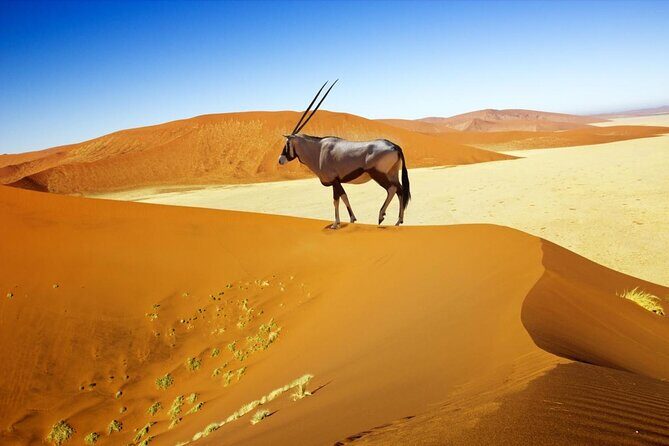
- Pre-dawn dune access sets you up for cooler light and less heat at Sossusvlei.
- A real coastal reset day in Swakopmund with optional activities if you want adrenaline.
- Damaraland + UNESCO Twyfelfontein gives you culture and geology, not just animals.
- Etosha’s waterhole strategy builds wildlife viewing into the schedule, including night-time waterhole chances.
- Onguma sunrise game drive adds one more wildlife hit before you fly out.
Windhoek Day 1: Easy start, optional town tour, low stress
Most Namibia trips start with a scramble. This one starts with something calmer: pickup after you arrive at Hosea Kutako International Airport (meeting start time is 12:00 pm). From there, you’ll transfer into Windhoek, check in, and get a chance to stretch your legs before the safari proper begins.
You’ll likely find the day works well for jet lag. There’s an optional 3-hour City & Township Tour with a local guide if time permits. If you’d rather keep the day light, you can simply relax at the hotel pool or head out on your own for dinner at places within walking distance.
Practical take: keep Day 1 flexible. Windhoek is your gear and pacing check. If you’re the type who likes to be fully rested before big drives and early mornings, you’ll appreciate that this itinerary doesn’t shove the desert at you immediately.
A few more Windhoek tours and experiences worth a look


From Windhoek into the Namib Desert: Elim Dunes and that first “wow”
Day 2 is your first big switch in scenery. You head out after an early breakfast, then roll through Rehoboth and past the Naukluft Mountains into the Namib Desert. This is classic Namibia travel: long roads, frequent changes in terrain, and then—suddenly—you’re in sand-country.
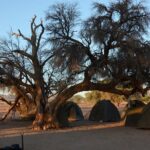
Your first night is at Elim Dunes. After checking in, lunch comes first, then you get breathing room. There’s time to swim, siesta, or just sit and watch the light change over camp. Later, you take a short walk to catch Elim’s Dune at sunset, then dinner follows.
Why this part matters: Elim isn’t just a staging stop. It’s the first moment you understand how Namibia’s desert works with light and distance. Even before the headline dunes, you learn how quickly the sky and sand can shift in color. If you’re a photographer, you’ll want a compact tripod or at least steady hands for sunset shots.
Sossusvlei and Dead Vlei: the hike you’ll remember (and Big Daddy if you feel brave)
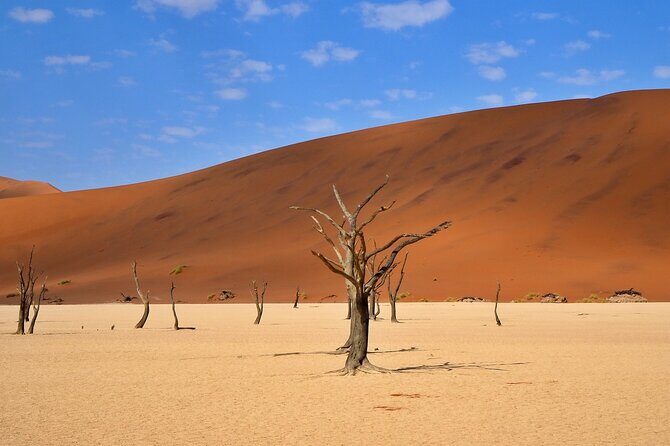
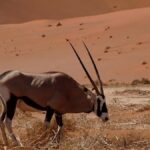
Day 3 is the main event of the trip’s desert section. You start very early with a pre-dawn breakfast, then drive into the dune field toward Deadvlei. Along the way, you’ll have opportunities to take photos as the dunes change color with the sunrise. The timing here is practical, not just romantic: starting before the heat usually makes the walking much more comfortable.
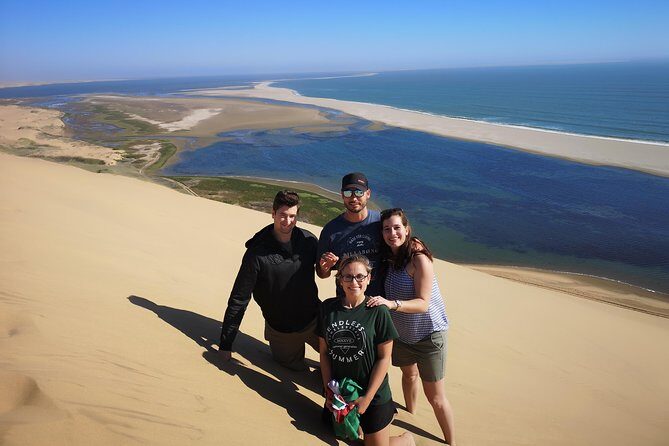
Once you reach the 4×4 area, you continue on foot. The hike is about 1 km across to Dead Vlei, where your guide explains why this place looks so strange and special. You can explore freely after the intro, take photos, climb Big Daddy (described as the highest dune in the area), or simply enjoy the stillness.
After that, you move onward to Sossus Vlei for snacks and a break at picnic benches under shade, then the day continues with a nearby stop at Sesriem Canyon in the late afternoon. Sesriem Canyon is smaller than it sounds, but it’s important because it was once a key water source for people and wildlife. You’ll have time to explore and even climb down and walk along the canyon to learn its geology.
Two practical notes:
- Wear shoes you can trust on sand and uneven ground. The walking is short, but it’s not flat.
- If you’re thinking about climbing Big Daddy, go slow and conserve water. The effort is part of the reward.
Solitaire, Capricorn, and the coastal shift to Swakopmund
Day 4 breaks the desert rhythm. After breakfast, you pack and head toward the coast. Your first stop is Solitaire—not a big city, more of a small settlement made famous for its apple pie and a car collection. It’s the kind of stop that feels odd in a good way. You get a quick palate-reset before the drive turns scenic again.
You continue with short stops at the Tropic of Capricorn, plus Gaub Pass and Kuiseb Canyon, before arriving at Walvis Bay. The Walvis Bay Lagoon is a major breeding site and a Ramsar-listed wetland for aquatic birds—especially flamingos. If the timing is right, you’ll see why people rave about this stretch of Namibia’s coastline.
Then you head north to Swakopmund, arriving mid-afternoon. Here you get a short town orientation and check in. The rest of the day is built for choice: you can relax, walk the beach, or use the time to join optional activities.
Swakopmund full day: choose adventure or coast time
Day 5 is a full day in Swakopmund. This is smart scheduling. After days of drives and dune walking, you actually get room to breathe. If you want action, you’ll find options listed such as sky diving, sand boarding, quadbiking, sea kayaking, and Sandwich Harbour tours. There are also biking choices (including fat biking) plus boat cruises and a Living Desert type tour.
If you’re not in an adrenaline mood, you can still enjoy Swakopmund at a gentle pace: late breakfast, city strolls, beach time, and that classic coastal vibe where the air feels different from the desert.
My advice: treat this day like a buffer for the whole itinerary. If your feet are tired from dunes and canyon steps, use Swakopmund to recover. If you feel great, pick one optional activity, not five.





Skeleton Coast to Damaraland: shipwreck shock and desert conservancy life
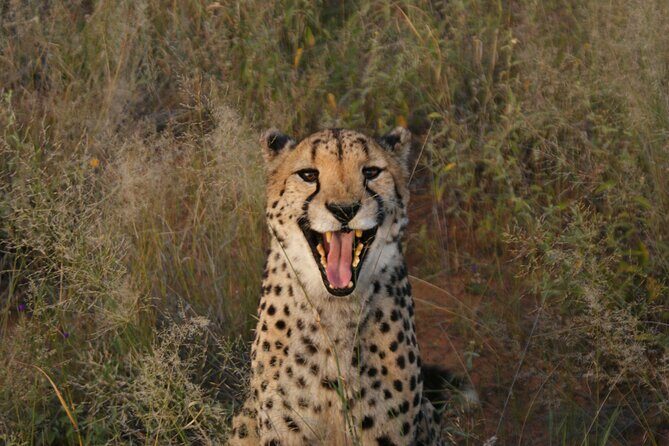
Day 6 starts with a shift to the Skeleton Coast. After breakfast, you head north along the coast and stop at the Zeila Shipwreck, described as the recent victim of the Benguela current, as recently as 2008. Even if you know nothing about maritime history, wreck sites tell you something immediately: the coast can be beautiful and brutal at the same time.
From there, you move inland toward Damaraland. You’ll travel across gravel plains, passing through places like Henties Bay, and you’ll reach the region known for community conservancies, where people and wildlife share the land. It’s not just a wildlife stop. The itinerary gives you chances to meet people and see roadside markets run by communities connected to the Himba, Herero, and Damara.
You’ll have time to talk, shop for small curios, and learn from the lived context of conservancy life. This is where your trip gains weight. Namibia can be easy to reduce to “animals and dunes,” but this part reminds you that the country is also about communities managing their relationship with nature.
Desert elephants and Twyfelfontein: two different kinds of awe
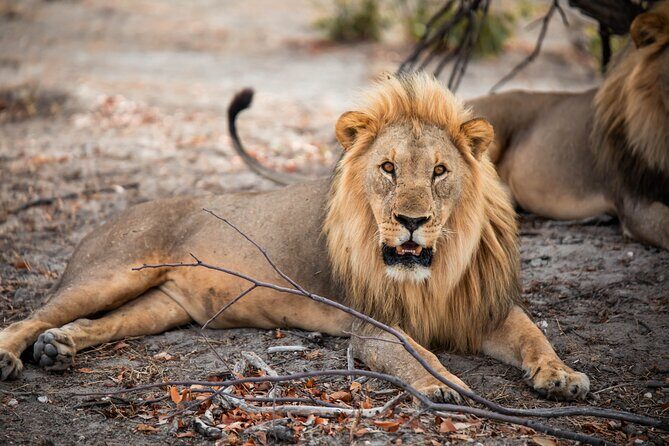
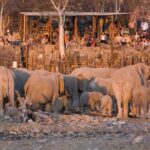
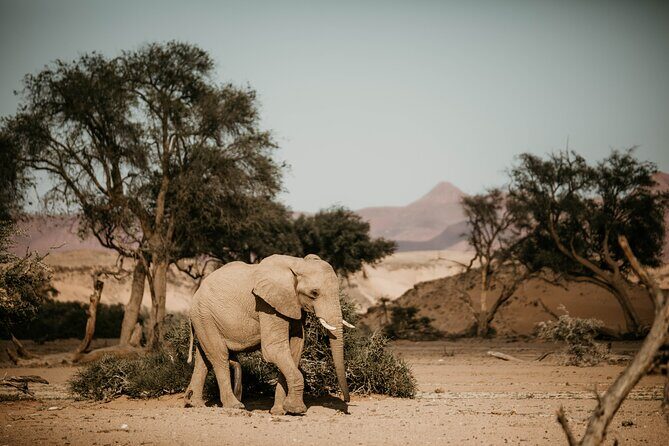
Day 7 is another early start. The morning is aimed at desert elephants through riverbeds, an area where Namibia is home to free-roaming elephants that adapted to survive in harsh desert terrain. There’s an important reality check: sightings can’t be guaranteed. Still, the point of this activity is the effort. You’re going where the elephants tend to move, and you’re doing it with a guide who knows the terrain.
After the morning drive, you return toward “civilisation” and visit Twyfelfontein, a UNESCO World Heritage Site known for very old rock engravings. Your local guide takes you through the art collection and explains how rock art mattered then—and still matters today.
This pairing works well because it gives you two different learning modes:
- Morning: wildlife behavior in a tough environment.
- Afternoon: human expression shaped by land and time.
If you only cared about big animals, this day might feel like a detour. But if you want Namibia to feel three-dimensional, it’s a key piece.
Etosha National Park: waterholes set the rhythm (and the night can help)
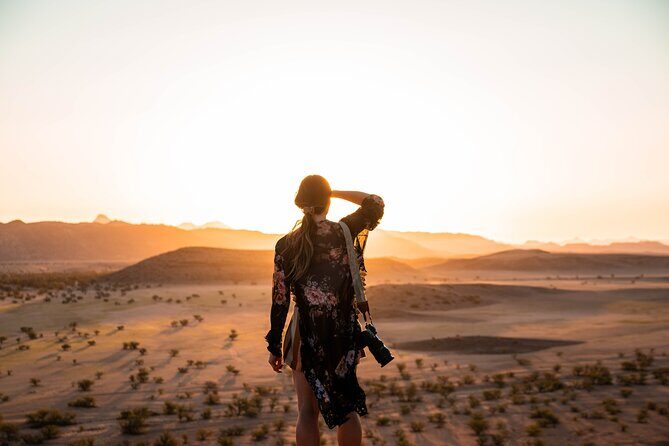
Day 8 is your big wildlife transition. You enter Etosha National Park via the western Galton gate and drive through the afternoon to Okaukuejo, your base for the night.
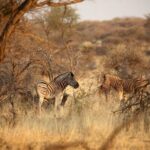
Etosha is vast—22,270 km²—and named for the salt pan at the heart of the park (the Etosha Pan is described as making up about 23%). Most of the time the pan is dry, but in strong rainfall years it fills enough to become a breeding ground for flamingos migrating between places like Walvis Bay and areas in Botswana. Even without rainfall, the ecosystem concentrates around water sources, which is why your schedule focuses on driving between them.
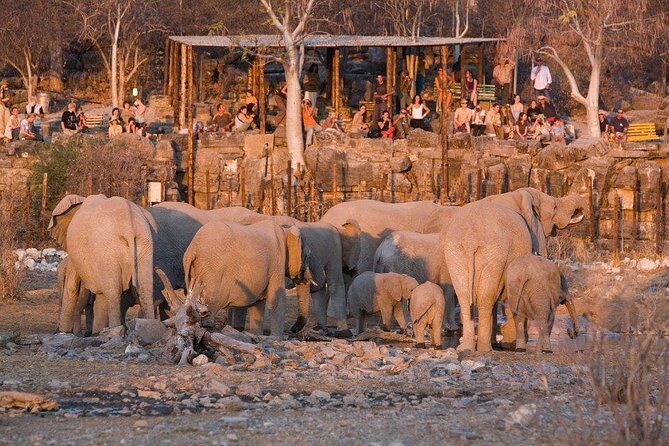
In the late afternoon, you’ll arrive at your lodge and then enjoy the chance to watch animals at a floodlit waterhole. This matters. Etosha often rewards you for sticking around at dusk and night, not only for long drives.
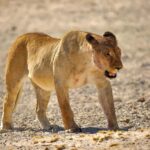
Day 9 builds on that: a full day of game driving across the park, working waterholes throughout the day. Your route moves from Okaukuejo toward Halali and Namutoni, then you exit late afternoon and head to Onguma Private Reserve.
A tip from the itinerary logic: waterholes often become predictable gathering points. In winter months, your chances for wildlife at these watering spots can improve because animals concentrate their needs closer to water.
Onguma sunrise and your final stops before Windhoek
Day 10 starts with a sunrise game drive on Onguma Private Reserve (about 2 hours). Sunrise is a good time to be out because animals are often active with cooler temperatures and lower glare.
After that, you drive back toward Windhoek with a time-permitting cultural stop: the Okahandja Mbangura Woodcarvers Craft Market. This is a straightforward place to buy last-minute gifts and wooden carvings if you want something handmade instead of a standard souvenir.
Then you aim to arrive back in Windhoek by 17:00, with drop-off at accommodation or at the airport for onward travel. Flights earlier than 20:00 aren’t planned for.
Practical note: if you can, schedule your next travel day for comfort. The safari is physically tiring even when everything goes smoothly.
Price and value: what your $3,850.61 covers (and what it doesn’t)
At $3,850.61 per person, this is a serious chunk of travel money. But the value comes from what’s included.
You’re covered for:
- Air-conditioned vehicle
- English-speaking guide
- Mineral water in the vehicle
- National park entry fees
- Lodge-based accommodation
- Meals: 9 breakfasts, 8 lunches, 6 dinners
- Several guided experiences (like the Twyfelfontein visit)
What’s not included:
- Flights
- Personal travel/medical insurance
- Snacks and drinks beyond what’s provided
- Optional activities
- Tips/gratuities
- Personal items
So where does the money really go? Into the long-distance logistics: getting you through Namibia’s desert-to-coast-to-north circuit, paying park fees, and running a small-group schedule with accommodation and meals already handled. If you’d pay a la carte for driving, park access, guides, and most meals, this kind of cost structure can actually start to look reasonable.
One more value consideration: guaranteed departures and no minimum number. That reduces the risk of a popular itinerary not running when your dates are set.
Pace and comfort: long drives, smart timing, and how to pack for it
This tour is “active sightseeing.” The itinerary repeatedly uses early starts for the places that demand them—especially the Namib dunes and full Etosha days.
That doesn’t mean you’re constantly exhausted. The rhythm is more like this:
- Start early for the best conditions.
- Do a focused activity (walk, drive, guided visit).
- Land at a lodge and eat well.
- Use Swakopmund as your true reset day.
For comfort, the included air-conditioned vehicle helps on transfer days when you might otherwise feel cooked. Also, you get mineral water provided in the vehicle, which is a small detail that matters when you’re walking in sandy heat.
Packing advice based on the activities described:
- Closed-toe shoes for Dead Vlei walking and Sesriem Canyon steps.
- A hat and sunscreen for dunes and canyon time.
- A light layer for sunrise drives (cool air can surprise you).
- A swimsuit if you plan to use the swim time at Elim Dunes.
Who this safari suits best (and who should adjust expectations)
This itinerary is a great match if you want a classic Namibia sampler:
- Big dunes with walking time
- Coast and shipwreck scenery
- Community conservancy culture and markets in Damaraland
- Etosha wildlife built around waterholes and game drives
It’s less ideal if you prefer slow travel with zero early mornings or you hate long driving days. Etosha especially asks for full days out on the road.
Also, you should go in expecting wildlife moments to be a bit weather- and timing-dependent. Desert elephant sightings can’t be guaranteed, and animals in general are never on an exact timetable.
Should you book this 10-Day Namibia small-group safari?
If you want the “best of Namibia” without DIY planning, I’d book it. The route makes sense: it starts with desert light, gives you a real coastal break in Swakopmund, adds culture and UNESCO rock art in Damaraland, then finishes with Etosha’s proven wildlife approach centered on waterholes.
I’d especially recommend it if you like guided interpretation. The itinerary isn’t only about reaching places. It builds in explanation time at Dead Vlei, Sesriem Canyon, Twyfelfontein, and the Etosha waterholes where animal behavior gets easier to understand.
The main reason to hesitate is the packed schedule plus the reality that certain sightings, like desert elephants, are not guaranteed. If that would stress you out, consider whether you’d rather spend more days in fewer regions.
FAQ
How many travelers are in the group?
The group maximum is 7 travelers.
Where does the tour start and what time?
Pickup starts at Hosea Kutako International Airport. The start time is 12:00 pm.
Are airport drop-offs included when returning to Windhoek?
Yes. The tour aims to return to Windhoek by 17:00, and you can be dropped at your accommodation in Windhoek or at the International Airport. Flights are not planned before 20:00.
Is pickup and transportation included?
Yes. The tour includes pickup, an air-conditioned vehicle, and mineral water in the vehicle.
Which meals are included?
You get 9 breakfasts, 8 lunches, and 6 dinners included. Snacks and drinks are not included.
Are national park entry fees included?
Yes. National park entry fees are included.
Do I need to book my own flights?
Yes. Flights are not included.
Are desert elephant sightings guaranteed?
No. Sighting desert elephants cannot be guaranteed.
What optional activities are available in Swakopmund?
Swakopmund includes options such as sky diving, sand boarding, quadbiking, sea kayaking, Sandwich Harbour tours, fat biking, boat cruises, Living Desert tours, township tours, moon landscape tours, fishing, and food and drink tours.