REVIEW · WINDHOEK
Katutura:tours and transport around the townships
Book on GetYourGuide →Operated by Omutambo tours and safari · Bookable on GetYourGuide
Katutura changes how you see Namibia. In just 4 hours with Omutambo Tours and Safari, you get a guided, street-level look at how people live and create in Katutura. You’ll be taken from Windhoek pickup spots into the township for market time, local food, and guided storytelling.
What I like most is the small-group feel and the attention you get from your local guide. I also like that you’re not stuck only watching from the sidewalk; you actually get market browsing plus a traditional street-food tasting, then move on to a cultural center and a community project.
The main drawback to keep in mind is timing. Some days seem to run shorter or start late, and a couple of visitors noted missing parts like the cultural center or the planned snack-and-water setup. If you’re the kind of person who needs a tight schedule, I’d confirm expectations the day before and stay flexible.
In This Review
- Key things to know before you go
- Katutura Township: what a 4-hour guided walk really gives you
- Hotel pickup from Hilton Windhoek or Avani: convenience matters
- Markets first: crafts, produce, and the street-food tasting you’ll remember
- The cultural center stop: why it helps you understand what you’re walking through
- Street walk with local stories: music, art, and dance in motion
- Community project visit: seeing the positive impact on the ground
- Comfort, safety, and what’s included (and what to watch for)
- Price and value: is $60 fair for 4 hours in Katutura?
- Who should book this tour (and who might want another option)
- Best way to get the most from your 4 hours
- Should you book Katutura:tours and transport around the townships?
- FAQ
- Where does the tour pick you up in Windhoek?
- How long is the Katutura tour?
- How much does it cost per person?
- What language is the live tour guide in?
- Is round-trip transportation included?
- What stops are included during the tour?
- Is traditional street food included?
- Are bottled water and snacks included?
- Is the tour wheelchair accessible?
- What is the cancellation policy?
Key things to know before you go

- Hotel pickup in Windhoek from Hilton Windhoek or Avani Windhoek Hotel & Casino
- Market stop + street-food tasting, with time to look for handmade items
- Cultural center visit focused on township heritage and key stories
- Guided walk through local streets with commentary on music, art, and dance
- Community project visit to see local initiatives in action
- 4 hours total with round-trip transport and included water/snacks (on paper)
Katutura Township: what a 4-hour guided walk really gives you

A lot of city sightseeing gives you landmarks. This gives you people. That’s the key difference with a Katutura township tour. In a compact 4-hour window, you’re shown how daily life, local creativity, and community projects connect.
You’ll start in Windhoek with pickup at either Hilton Windhoek or Avani Windhoek Hotel & Casino, then get transported into Katutura with round-trip service. That matters because township tours work best when you’re not trying to manage timing and transport on your own. The tour is designed for you to focus on the experience: looking, listening, and asking questions.
Also, the tour uses an English and Afrikaans live guide. So if you’re comfortable with Afrikaans phrases, you may catch more nuance. Either way, you should expect a guided flow: market, cultural center, street walk, then a community project.
One more note that affects your expectations: your day won’t be a slow documentary pace. It’s a short outing, so you’ll want to engage but not treat it like a full-day study session. The best mindset is: go to learn what you can in 4 hours, then follow up later with your own reading and questions.
You can also read our reviews of more tours and experiences in Windhoek.



Hotel pickup from Hilton Windhoek or Avani: convenience matters
This tour is built around easy entry points in Windhoek. You choose between two pickup locations—Hilton Windhoek or Avani Windhoek Hotel & Casino—and you return to one of the same options at the end. That’s a practical advantage if you’re staying in the center and want a predictable start.
Round-trip transport is included. That means you’re not arranging your own car or navigating logistics after dark or in unfamiliar areas. It also keeps the timeline centered on the tour stops instead of detours.
Just be smart about timing. A couple of past bookings reported issues like late starts or shortened total duration. That’s not something you can fully predict, but you can reduce the risk by:
- arriving at pickup a little early
- checking the meeting point clearly (and the exact pickup option you selected)
- having a realistic plan for the rest of your day, since the tour is only 4 hours
Markets first: crafts, produce, and the street-food tasting you’ll remember

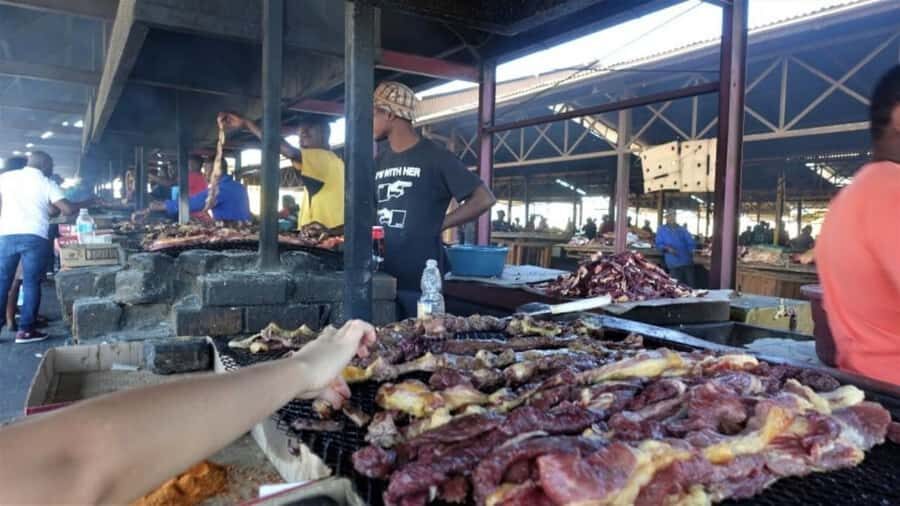
The market stop is where this tour becomes concrete. You’ll see local vendors selling fresh produce and handmade crafts, and you’ll get a taste of traditional street food. The tour notes include traditional foods such as single quarters—so be open to trying something you might not recognize from a menu at home.
This is also the part where the guide’s role really matters. Without guidance, markets can feel like a blur: lots of colors, prices, and movement, and you miss the “why” behind what you’re seeing. With a guide, you get explanations tied to how the market functions in community life.
If craft-making and shopping are your interests, this is likely where you’ll enjoy yourself the most. One visitor highlighted Penduka as a standout, describing it as a place where you can see plenty of craft work and buy something you like. Even if your exact highlights differ, it’s a good signal: the tour is not only about looking—it’s about noticing quality and learning what goes into the items people make.
Practical tip: if you want to buy crafts, give yourself mental room for slow choices. Markets move fast, and a 4-hour tour can still feel tight if you shop like you have a week.
The cultural center stop: why it helps you understand what you’re walking through
After the market, you visit a local cultural center. This part is about context: the guide explains the township’s heritage and highlights stories of resilience and unity that shaped Katutura into a thriving community.
This is where you’ll benefit most if you like historical context, even in a short format. A cultural center visit can turn what might feel like “just a walk through streets” into something you can interpret: why certain things exist, what communities have had to overcome, and how culture shows up in daily life.
Be aware, though: not every trip seems to have run exactly to plan. Some visitors reported missing the cultural center entirely on their day. So if the cultural center is a top reason you booked, treat it as a must-see in your own mind—and ask the guide early where your day stands. In other words: check in, but keep it friendly.
Street walk with local stories: music, art, and dance in motion
Next comes a guided walk through lively streets. This isn’t a photo-only stroll. The guide shares stories about the people living in Katutura, with highlights on music, art, and dance.
This type of commentary changes how you move. Instead of scanning for sights, you start noticing the everyday signals: how people gather, how creativity shows up in public spaces, and what kind of energy fills the street when you’re listening for it.
You’ll also get a chance to ask questions in the moment. That’s one of the reasons small group sizes are a selling point here. When the group is smaller, you get more back-and-forth instead of feeling like you’re tagging along behind a crowd.
If you’re sensitive to noise or crowds, consider using a “gentle observer” approach. You can still experience the street without pushing to the front. The goal is connection through understanding, not adrenaline.



Community project visit: seeing the positive impact on the ground
Your tour finishes with a visit to a community project. The stated purpose is to show the positive impact local initiatives have. In practice, this can be the most meaningful part of the day because it connects stories to outcomes.
A cultural center helps you understand the past. A community project helps you see what’s happening now—how people organize, how support takes shape, and how local efforts aim to improve day-to-day life. Even without deep technical explanations, seeing a working project gives you a “this is real” feeling.
One thing to keep in mind: a short tour can only touch the surface of a project. If you want deeper knowledge, treat this as your starting point. You’ll likely leave with questions you can pursue later on your own.
Comfort, safety, and what’s included (and what to watch for)
The tour includes round-trip transportation, a guided tour with an experienced local guide, entry to a cultural center, and bottled water and snacks during the tour. It also includes bottled water and snacks, plus a guided street-food tasting at the market.
There’s also mention of skip-the-line through a separate entrance. For you, that mainly means less waiting and more time at the stops.
English and Afrikaans guidance are offered, and the tour is wheelchair accessible. That’s a real plus if you’re managing mobility needs and want a structured experience with transport included.
One caution from actual visitor experiences: a couple of people said they didn’t get the planned snacks or water, or that the tour ran shorter than 4 hours. That doesn’t mean your day will be like theirs, but it’s a strong hint to do two simple things:
- Confirm what’s included before you set off (water/snacks, cultural center time, and the overall flow)
- Keep your plans after the tour flexible, since you’re counting on the 4-hour window
Think of it as expectation management. You booked a guided experience, so be proactive, not passive.
Price and value: is $60 fair for 4 hours in Katutura?
At $60 per person for a 4-hour guided tour, you’re paying for more than walking. You’re paying for:
- hotel pickup and round-trip transport
- a live guide in English/Afrikaans
- market access and guided interpretation
- cultural center entry
- a planned street-food tasting
- bottled water and snacks (per the tour description)
In other words, the cost is largely for structure. You’re not paying for a long itinerary—you’re paying for a guided “day portion” that covers several core stops without you needing to figure out transport or entrances.
That said, you should weigh the value against the quality of execution. When people reported the tour running short, skipping key stops, or not providing water/snacks, the value dropped fast. If you’re the kind of traveler who likes things exactly as scheduled, you might feel that more sharply than someone who’s mainly there to learn from the human side.
My practical take: $60 can be good value if your day runs to plan and you enjoy market + culture + community context. If your priority is strict timing and every stop, do a quick confirmation and give yourself breathing room.
Who should book this tour (and who might want another option)
This tour fits best if you want:
- a guided introduction to Katutura’s markets, culture, streets, and community initiatives
- a short experience that doesn’t require transport planning
- opportunities to ask questions in English or Afrikaans
- time to look for handmade crafts and eat local street food
You might skip it or look for another option if:
- you’re planning a tight schedule with no flexibility
- you strongly need every listed stop to happen in full
- you prefer tours that run with tight, clockwork consistency (some past departures seem inconsistent)
If you’re traveling solo or as a couple, you may especially like the smaller-group setup. You’ll likely feel more like a participant than a number.
Best way to get the most from your 4 hours
If you only remember one thing, remember this: ask questions. The market and street walk are the best places for it. If you don’t know what you’re looking at, ask. If you see something interesting, ask why it’s made that way. If someone offers food, ask what it is and how locals eat it.
Also, pace yourself at the market. You’ve got a limited time window, so don’t spend all your minutes only shopping. Switch between looking, listening, and selecting.
Finally, keep an eye on timing without becoming tense. If your group is moving quickly, it’s normal for a short tour. Just make sure the core stops you care about—market, cultural center, street walk, community project—are actually happening.
Should you book Katutura:tours and transport around the townships?
I’d book it if your goal is a guided, structured introduction to Katutura’s everyday culture—especially if you care about markets, crafts, and local interpretation of what you’re seeing. The combination of hotel pickup, transport, cultural center entry, street-food tasting, and a community project visit makes it more than a quick walk.
I’d also recommend booking with eyes open: $60 for 4 hours is fair on paper, but a few reports point to variability in timing and whether snacks/cultural center time are handled as planned. If you can be flexible and you want real conversation over perfect scheduling, this tour can be a strong start to understanding Windhoek beyond the hotel strip.
FAQ
Where does the tour pick you up in Windhoek?
You can be picked up at either Hilton Windhoek or Avani Windhoek Hotel & Casino.
How long is the Katutura tour?
The duration is 4 hours.
How much does it cost per person?
The price is $60 per person.
What language is the live tour guide in?
The live tour guide speaks English and Afrikaans.
Is round-trip transportation included?
Yes. Round-trip transportation to and from Katutura Township is included.
What stops are included during the tour?
You’ll visit local markets, a cultural center, walk through local streets with stories, and visit a community project.
Is traditional street food included?
Yes, the tour includes a tasting of traditional street food.
Are bottled water and snacks included?
Bottled water and snacks are included during the tour.
Is the tour wheelchair accessible?
Yes, the tour is wheelchair accessible.
What is the cancellation policy?
You can cancel up to 24 hours in advance for a full refund.