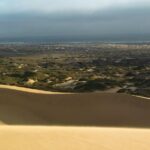
Namibia’s Namib Desert can feel like a movie set of time and survival. This cruise liner special packs Swakopmund’s coastal sights and the desert’s signature “fog lives here” ecology into one long, well-paced day.
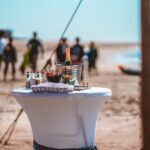
I love how it stays small (max 16), so you’re not watching your own tour from across a crowd. I also like the practical touch: you stop for a drink and light lunch at a 360-degree lookout, which turns the hard-to-reach scenery into a real break rather than just another photo stop.
One thing to consider: this is a timing game. Stops are far apart, and cruise docking delays can make the schedule feel a bit tight—sometimes that means you see Dune 7 from outside rather than climbing it.
In This Review
- Key highlights you’ll care about
- A calm, well-run cruise-day into Walvis Bay and the Namib
- Swakopmund Jetty to the German-coastal relics and Martin Luther steam tractor
- Goanikontes: fog-dependent lichen and the old watering-hole that kept everything going
- Moon Landscape viewpoint 4: lava layers, wind erosion, and geological deep time without the lecture
- Quick drawback to accept here
- Welwitschia Plains: the two-leaf plant, uranium signs, and why fog matters
- A small, practical reality
- Dune 7 near Walvis Bay: a Namib summit moment you may have to skip climbing
- Price and logistics: what $191 buys you on a cruise-day schedule
- Languages and guides: great info, but German may not be guaranteed
- Who should book this Namib Desert highlight day
- Should you book the Swakopmund and Namib Desert Highlight Tour?
- FAQ
- What’s the duration of the Swakopmund and Namib Desert Highlight Tour?
- Where does the tour start?
- Is pickup included?
- How big is the group?
- What’s included in the price besides the tour itself?
- Are tickets mobile?
- Do you always have German-speaking guides?
- What should I expect about physical activity?
Key highlights you’ll care about
- Air-conditioned comfort with a limited group size (max 16), built for cruise-ship days
- Fog-driven ecology at Goanikontes, including tiny lichen plants that rely on moisture from sea fog
- Moon Landscape viewpoints with visible lava flow layers and signs of extreme climate swings
- Welwitschia Plains and Welwitschia mirabilis, including male and female plants and their slow growth
- A 360-degree lookout lunch and drink, so you eat with a view instead of eating in transit
A calm, well-run cruise-day into Walvis Bay and the Namib
This tour is designed for one purpose: get cruise passengers from Walvis Bay into real Namib Desert country without wasting the day in logistics. You ride in an air-conditioned vehicle, and the group stays tight at 16 people max, which matters because the best moments in the desert are quiet ones. When you’re not squeezed shoulder-to-shoulder, you actually notice wind noise, distance, and how the light changes as clouds move through.
You’ll also feel the rhythm of the region. Namibia’s coast and desert are close on a map, but the sites themselves are spread out. That means plenty of driving, but it’s the kind of driving that sets you up for what comes next: harsh geology outside your window, then sudden pockets of life at the watering holes and fog zones.
The day runs about 7.5 hours, which is long enough to cover multiple “worlds,” but short enough that you don’t try to do everything the country is famous for. Instead, you hit several key sites in the Swakopmund–Namib corridor, with time carved into viewpoint stops rather than nonstop racing.
You can also read our reviews of more boat tours in Walvis Bay

Swakopmund Jetty to the German-coastal relics and Martin Luther steam tractor
The day starts with the coast, because Swakopmund isn’t just a jumping-off point—it’s the coastal face of a desert that’s otherwise easy to misunderstand.
You pass Bird Island, described as the only manmade guano island along the coast. It’s a reminder that humans have always tried to make a living on the edge of a desert system—sometimes using what the ocean provides rather than what the land offers.
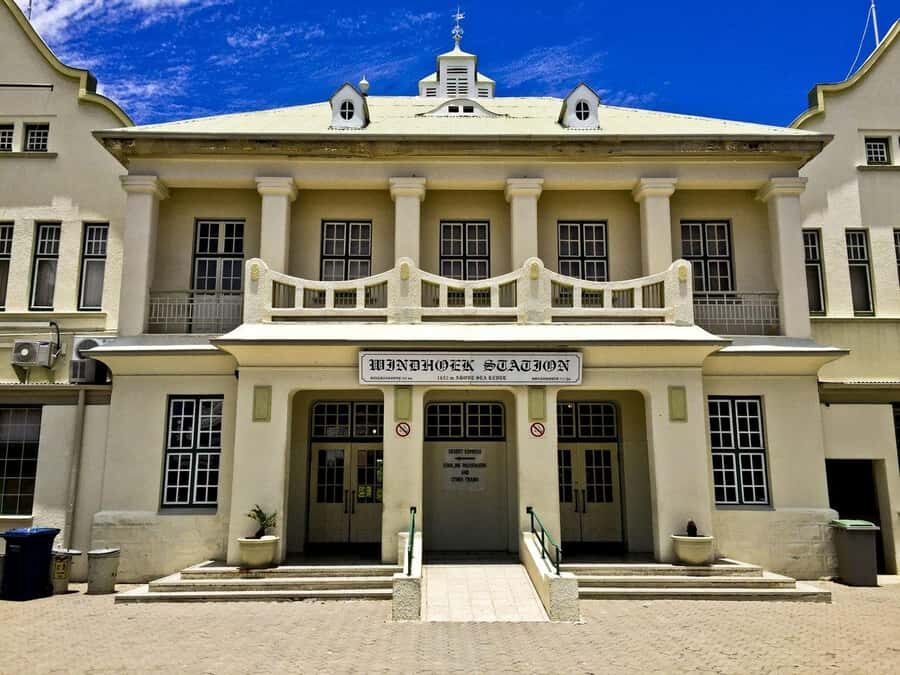
Then you reach Swakopmund Jetty, and the tour leans into story. You hear about the struggles to build the mole and the jetty, then move through the area’s old German colonial buildings. Even if you’re not a history nut, the point is clear: this coastline was shaped by ambition in a place that rarely makes anything easy.
One of my favorite named stops here is the Martin Luther steam tractor. It was tried to tow wagons during the years of Rinderpest, when moving goods and surviving livestock crises meant using whatever machinery could be forced into service. It’s a concrete way to see that “desert harshness” wasn’t only about sand and sun. It was about epidemics, transport, and desperation.
Practical note: you’ll spend about 1 hour driving to the next big desert area after Swakopmund. The drive time is part of the deal here, so it helps to treat it as travel, not delay.
Goanikontes: fog-dependent lichen and the old watering-hole that kept everything going
Goanikontes is the tour’s “life happens here” stop, and it’s not because the desert suddenly becomes green. It’s because the desert gets a different kind of moisture.
On the way in, you stop at lichen fields, where you look for tiny plants—millimeters big—that live in a small strip on the desert floor. The key idea is simple but powerful: this lichen system is a partnership that uses fog moisture, not rainfall. Sea fog blows in, and the plants have adapted to live off what lands on their surface.
If you’re the type who wonders how any ecosystem survives in such dry country, this is where it clicks. You’re not just seeing a plant. You’re seeing the logic of survival.
Then the tour hits the historic Goanikontes watering-hole itself. In earlier times, it was a critical stop in the Swakop River network—an oasis where horses and oxen were watered and where life could restart after long stretches of difficulty. Later, it also became the vegetable garden for Swakopmund, plus there’s mention of an old police station and a small restaurant area with toilet facilities.
What I like about this stop is how it links ecology to human history. The same fog and moisture patterns that help tiny lifeforms thrive are also what made watering places worth fighting for.
And because this is a highlight tour, you also get “viewing points” here—higher angles in a harsh environment—before you move on to the signature plant country.
Moon Landscape viewpoint 4: lava layers, wind erosion, and geological deep time without the lecture
At Moon Landscape viewpoint 4, the day turns quiet in the best way. The area is described as roughly 500 million years old, and the scenery is all about physical evidence: wind erosion, vastness, and visible layers from lava flows that happened millions of years ago.
This is one of the tour segments where you’ll understand why people keep describing the Namib as otherworldly. You don’t need special effects. You just need distance and patience, because the features are in the ground and the wind has done the carving.
The tour structure helps. Instead of one long stop, you’re guided through multiple viewpoints, spending about 15 minutes at each. That pacing works well for two reasons: it prevents the common “we rushed, so we didn’t really see” problem, and it gives your eyes time to adjust as light shifts across different rock layers.
There’s also mention that the region is believed to have had at least two ice ages. Whether you take that detail literally or as an interpretation of the geology, it reinforces the main idea: this place has survived massive climate swings, and the current desert conditions aren’t the whole story.
Quick drawback to accept here
It’s open, and it’s exposed. If weather is foggy, you might lose some distant visibility until later. That said, fog can also make the desert feel more mysterious and less touristy.
Welwitschia Plains: the two-leaf plant, uranium signs, and why fog matters
After Moon Landscape, you head into Welwitschia country, where the tour focuses on one of Namibia’s most iconic survivors: Welwitschia mirabilis.
Along the route, you may see uranium prospecting sites and weather stations. That’s a practical contrast to the slow plant life. The desert is a place where mining interests and science both show up, even when nature looks like it’s doing nothing.
Then you reach the Welwitschia Plains, where stops revolve around the plants themselves. You learn that there are male and female plants, and that Welwitschia grows very slowly—so slowly that some plants are believed to be hundreds of years old. The form is strange: it has no stem and only two leaves, which is part of why it can endure extreme conditions and keep functioning year after year.
Locals call it the plant that never dies. Even if you know nothing about botany, you’ll get the point fast when you see how the plant is built for survival rather than growth speed.
A small, practical reality
These plants are not the kind of thing you’ll want to sprint through. The tour’s value is that you get enough time to look closely and understand what you’re seeing. If you’re the type who likes to ask questions, the guide conversation here is usually the highlight of the highlight.
Dune 7 near Walvis Bay: a Namib summit moment you may have to skip climbing
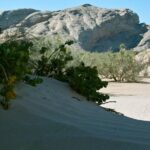
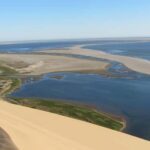
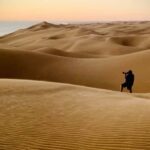
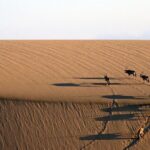
The last scenery hit is Dune 7, just outside Walvis Bay. It’s named for distances from Walvis Bay and the British enclave boundary, with the reference described as 7 miles and later extending to 10 miles into the desert.
Here’s the honest framing: Dune 7 is not claimed as the highest dune in Namibia. The tour explains that the highest dune is near Sossusvlei, but that you cannot climb that one in the way you might expect. Dune 7 is likely one of the highest dunes you can climb in this area—but this particular tour does not include climbing it, largely because time runs short after the earlier stops.
So you’ll view it, you’ll get the scale, and you’ll get the “sand and sky” feeling. But you should expect to stay outside and keep moving.
It’s a good moment for photos, and it also helps close the day with something simple after a string of geology and plant biology.
Price and logistics: what $191 buys you on a cruise-day schedule
At $191 per person, you’re paying for a very specific kind of convenience and access. This price isn’t just for driving. It’s for a planned route, an air-conditioned vehicle, a small group, and included food: a light lunch and drink at a lookout point with a 360-degree view.
Most admissions are listed as free on the day, which helps keep costs predictable. The only explicitly not-included admission noted in the day is for entering where you would climb or access Dune 7, and the tour itself mentions that you do not go in because there isn’t time. Translation: the pricing structure matches what you actually do on the day, not some “possible add-on” fantasy.
Value-wise, the biggest factor is whether the tour timing matches your ship day. Cruise-ship days are rarely flexible. This one tries to be: if your ship docks at a different time than expected, the start time should be rescheduled to meet you at the dock and still allow enough time to complete the tour.
Still, the schedule can feel tight. That’s not a reason to skip it—it’s just the reality of a 7.5-hour highlights tour that covers multiple far-apart sites.
Languages and guides: great info, but German may not be guaranteed
The tour uses professional guide-drivers, and German-speaking guides are described as scarce. You can’t count on German in peak cruise times when large numbers disembark. If German is important for you, I’d treat it as a request, not a promise.
In practice, the tour experience depends on the guide’s ability to connect the dots: fog ecology, lava geology, and how historic watering holes shaped settlement along the coast. When the guide has strong local detail, the day turns from scenery into understanding.
Who should book this Namib Desert highlight day
I think this tour is a strong fit if you:
- Want a one-day sampler of Swakopmund plus key Namib Desert sites
- Like your sightseeing with real context (fog ecology, lava history, survival plants)
- Prefer small groups and air-conditioned comfort
- Are short on time because you’re on a cruise stop
You might skip it if you:
- Want lots of free roaming time instead of structured viewpoints
- Dream of climbing dunes as a major activity (Dune 7 climbing isn’t part of this version)
- Need guaranteed German language support
The tour also asks for moderate physical fitness, which likely means you should be comfortable with repeated getting on/off the vehicle and short walks to viewpoints on uneven ground.
Should you book the Swakopmund and Namib Desert Highlight Tour?
If you want the Namib Desert’s big ideas—fog feeding tiny life, ancient geology in plain sight, and Welwitschia’s slow survival—in one efficient cruise day, this tour is a sensible pick. The small group size, included lunch and drink, and the structure of short viewpoint stops make it easier to see more than just the scenery blur.
If your cruise day is tight or you care deeply about climbing Dune 7 or having German, plan for compromises. But if you can enjoy it as a well-run highlights route, this is the kind of day that leaves you thinking about how life works in extreme places—and how humans tried to make a way anyway.
FAQ
What’s the duration of the Swakopmund and Namib Desert Highlight Tour?
It runs about 7 hours 30 minutes.
Where does the tour start?
It’s centered around Walvis Bay, with pickup offered and the meeting point at the port area using a name board and a tear drop flag.
Is pickup included?
Pickup is offered.
How big is the group?
Maximum group size is 16 travelers.
What’s included in the price besides the tour itself?
The tour includes a light lunch and a drink at a 360-degree lookout point. Admission is listed as free for the stops shown as free, and Dune 7 access is noted as not included because you don’t go in.
Are tickets mobile?
Yes, you receive a mobile ticket.
Do you always have German-speaking guides?
German-speaking guides are scarce and not guaranteed, especially during peak season or when many cruise passengers disembark.
What should I expect about physical activity?
It’s listed for travelers with moderate physical fitness. Expect short walks and viewpoint stops rather than a long hike.