REVIEW · WALVIS BAY
Walvis Bay: 4×4 Desert Excursion to Sandwich Harbour Bay
Book on GetYourGuide →Operated by Catamaran Charters · Bookable on GetYourGuide
One place in Namibia makes the desert feel loud: giant dunes meeting the sea. This Walvis Bay 4×4 desert excursion pushes you out from flamingos and wetland mudflats to places where the hot sand stops, and the cold Atlantic starts. You’ll ride in a 4×4, swap quick bird-spotting stops for big dune views, and get guided stories from drivers like Nico or Elmar when luck swings your way.
I really like two parts most. First, the thrill of driving the dunes—up, down, and sideways along the Namib sand. Second, the stop for a light meal with fresh Namibian oysters and sparkling wine served with snacks and cold drinks, right on a dune or the beach with ocean views. It turns the scenery into something you can actually taste.
One drawback to plan around: tides can change the route. If the beach driving to Sandwich Harbour can’t happen, you’ll still see the lagoon from lookout points and get time to walk, but the exact views can shift—so don’t assume you’ll drive the full stretch along the shoreline.
In This Review
- Key things to know before you go
- Walvis Bay dunes meet the Atlantic, and it feels unreal
- Starting at the Walvis Bay Waterfront: flamingos and an easy warm-up
- Tidal lagoon bird habitat: where intertidal mudflats do the work
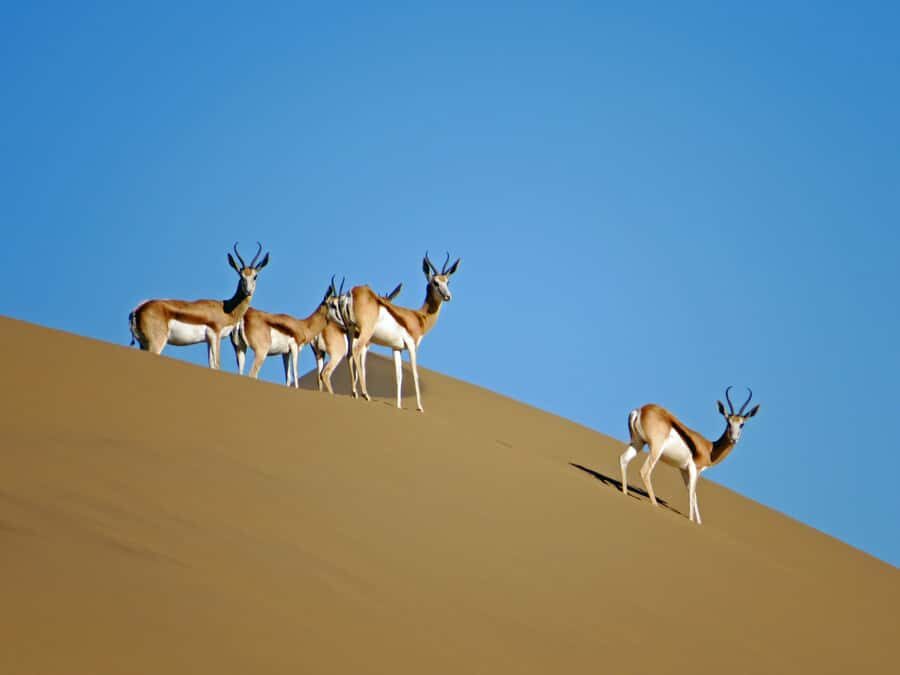
- Kuiseb River Delta stop: springbuck in a dry riverbed
- Beach access to Sandwich Harbour: what tides change (and what you still get)
- The dune-top oyster lunch: why the food tastes better here
- How the 4×4 drive really works: thrilling, not reckless
- Wildlife and plant spotting: what to watch for in harsh country
- Price and value: is $153 for 4 hours worth it?
- Who should book this 4×4 to Sandwich Harbour (and who should think twice)
- Practical tips so your dune day feels smooth
- Should you book it?
Key things to know before you go
- Flamingos first: you start at the Walvis Bay Lagoon area where birds can be thick in the right season.
- Two RAMSAR wetlands: you visit a tidal lagoon area and then Sandwich Harbour Lagoon, both major bird habitats.
- Kuiseb Delta stop: a dry riverbed where springbuck are often seen.
- Dune driving is the main event: expect big dunes, frequent photo halts, and lots of time outside the vehicle.
- Oysters and fizz on sand: the light lunch includes fresh Namibian oysters paired with sparkling wine, plus snacks and drinks.
Walvis Bay dunes meet the Atlantic, and it feels unreal
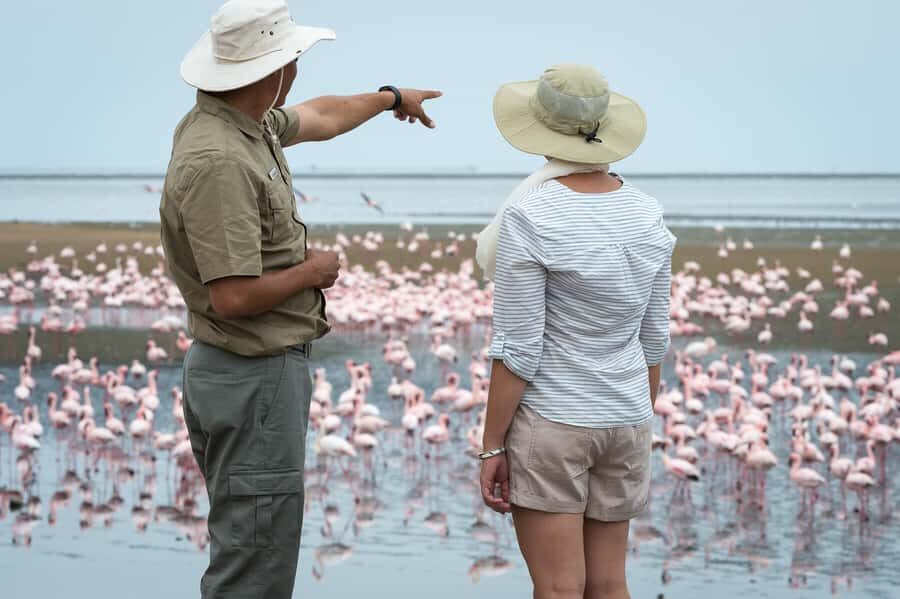
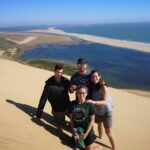
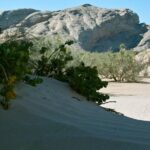
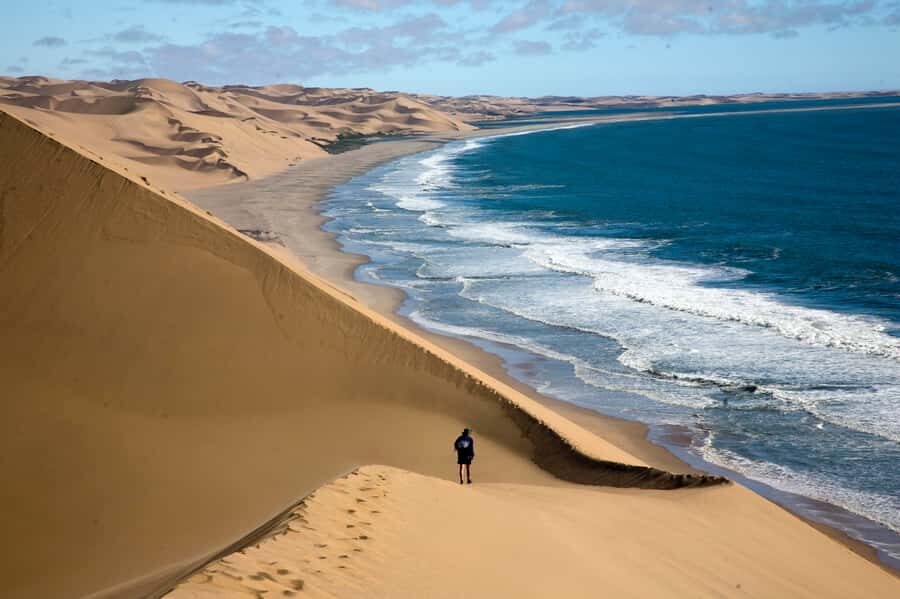
The Walvis Bay area is famous for a rare mix: desert sand and serious ocean energy. On this 4×4 excursion to Sandwich Harbour, you’re not just riding past scenery. You’re crossing the boundary where the Namib Desert’s dunes run toward the sea—and then, for a few hours, you get to experience that boundary at close range.
The whole experience is built around contrast. You’ll move from wetlands and mudflats to a dry riverbed and then to a coastal lagoon wedged between dunes and the South Atlantic. One minute it feels like you’re in a bird sanctuary. The next, you’re bouncing along dune crests with the ocean wind on your face.
If you’re the kind of traveler who likes variety in a short day, this works well. It’s not one long “drive and hope.” You get multiple stops, and the guide is there to explain what you’re seeing—how birds feed in intertidal areas, why the delta looks dry, and how plants and animals handle extreme desert conditions.
You can also read our reviews of more tours and experiences in Walvis Bay.
Starting at the Walvis Bay Waterfront: flamingos and an easy warm-up
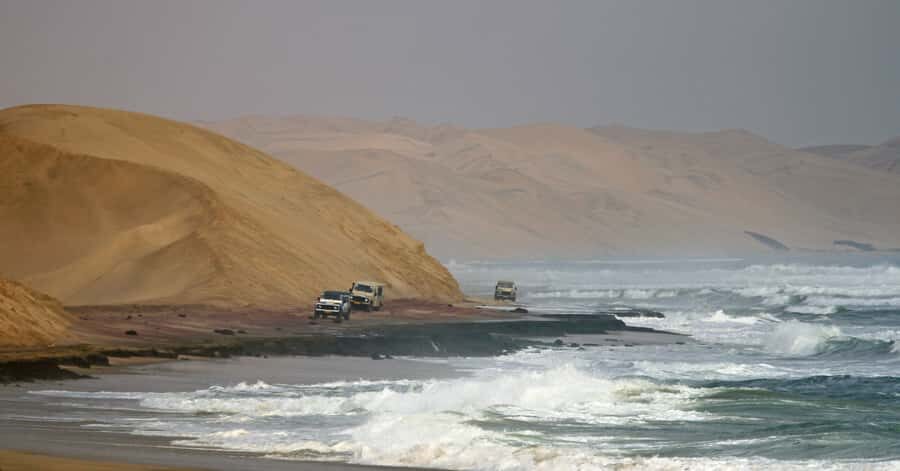
The tour begins at the Walvis Bay Waterfront, where you meet your guide at a small dark blue building near the jetty (marked with the Sandwich Harbour 4×4 logo). If you’re coming from a cruise ship, there’s a new access gate south of the passenger liner terminal that helps you reach the waterfront directly. From there, plan for about a 10-minute walk to the check-in office.
Before the engine really gets exciting, there’s a “warm-up stop” for birds. You’ll admire the mass of flamingos in the Walvis Bay Lagoon. Even if birds aren’t your main hobby, flamingos are a great way to set the tone. You’re surrounded by life in a place that, on paper, sounds harsh and empty.
This start also matters practically. It gets you oriented. You learn what kind of terrain you’ll be moving through next—wet sand, shallow water edges, and the transition toward dunes. Then the 4×4 heading out makes more sense.
Tidal lagoon bird habitat: where intertidal mudflats do the work
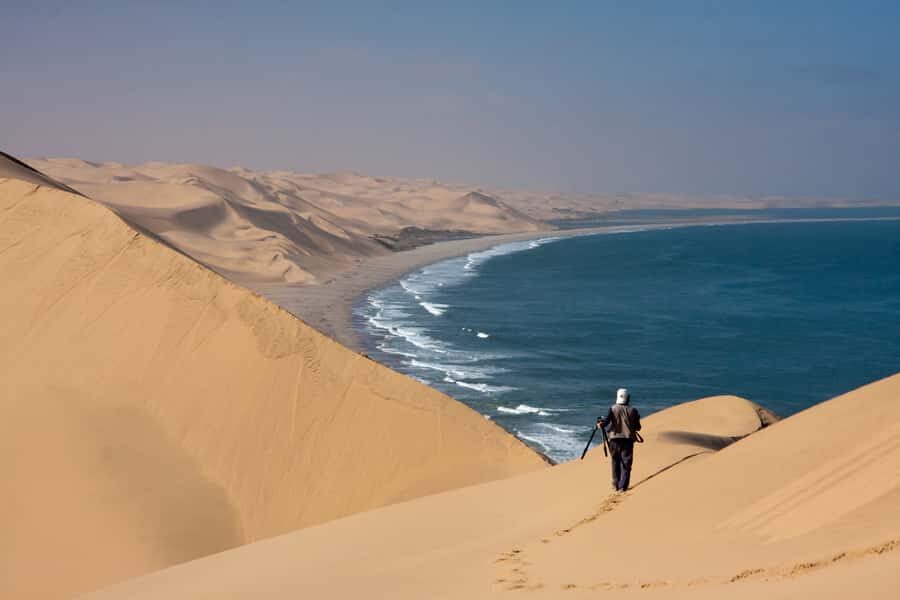
Soon after you leave the waterfront, your 4×4 tour heads toward a tidal lagoon system made up of adjacent intertidal areas, mudflats, and sandbars. This isn’t a decorative wetland. It’s a feeding machine for birds.
The key detail here is that this is a Ramsar site, and the area supports thousands of wetland birds. You can also look out for 11 species of endangered birds that are regularly observed at this location.
What does that mean for you in real life? It means the guide’s stop routine matters. Instead of rushing to the next view, you’ll likely spend time at spots where birds are actively using the habitat. The guide can help you spot patterns—where waders stand, how birds move along the flats, and what to watch for in the mix of water edges and sandbars.
If you’re sensitive to long, quiet drives, this segment breaks things up nicely. It’s also one of the better photo windows, because birds give you scale and motion, not just static dunes.
Kuiseb River Delta stop: springbuck in a dry riverbed
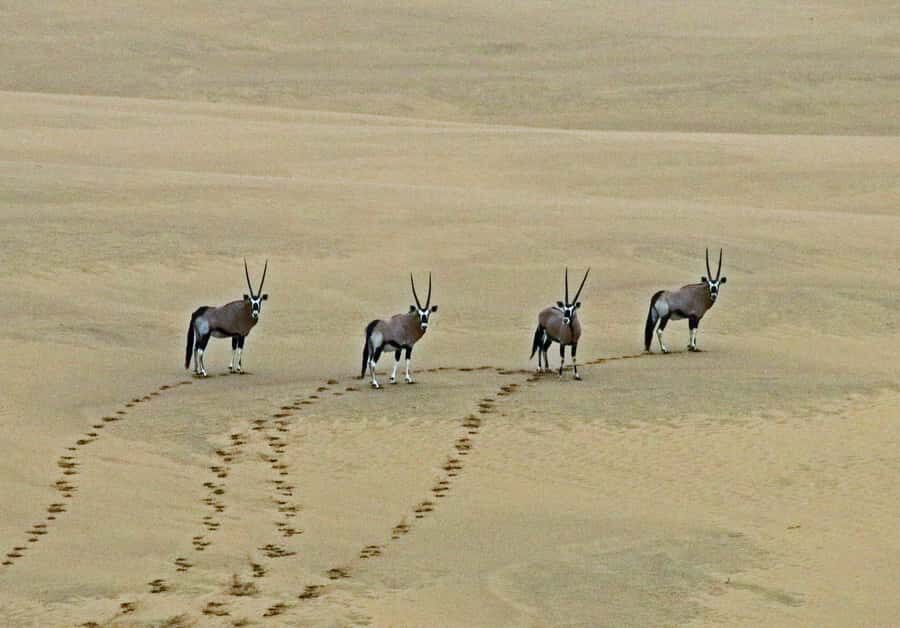
After the wetland bird time, you move to the Kuiseb river delta. This is a dry riverbed—so it looks like nothing is happening, even though it’s part of the larger ecosystem.
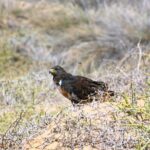
Here’s what you should hope for: springbuck. They’re often seen in this area. In other words, you’re not only looking for wetland life. You’re switching your focus to desert-adapted animals that can handle sparse conditions.
This stop also helps you understand Namibia’s extremes. A dry delta doesn’t mean a dead one. It’s about timing—water and food move through the system, and animals adjust their behavior around what’s available.
Even if you don’t see springbuck immediately, you’ll still get value from the context. You’ll start noticing how dunes, river channels, and coastal winds shape where life can survive.
Beach access to Sandwich Harbour: what tides change (and what you still get)
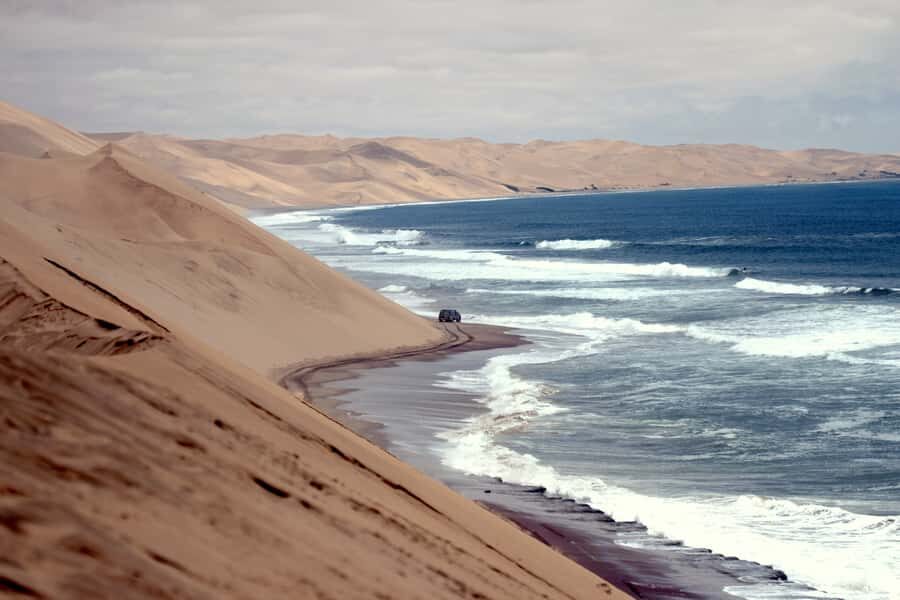
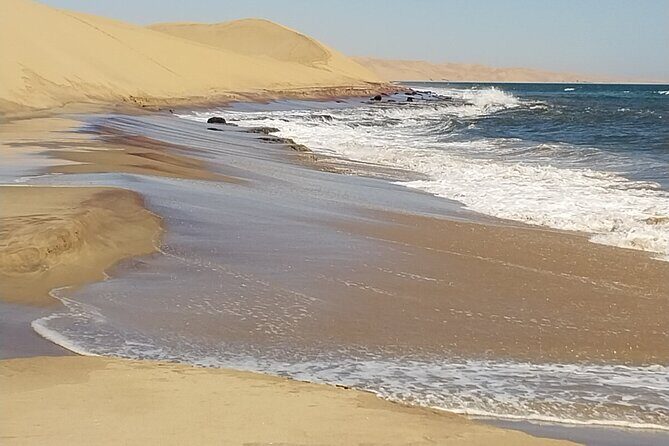
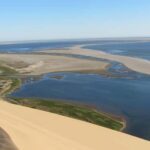
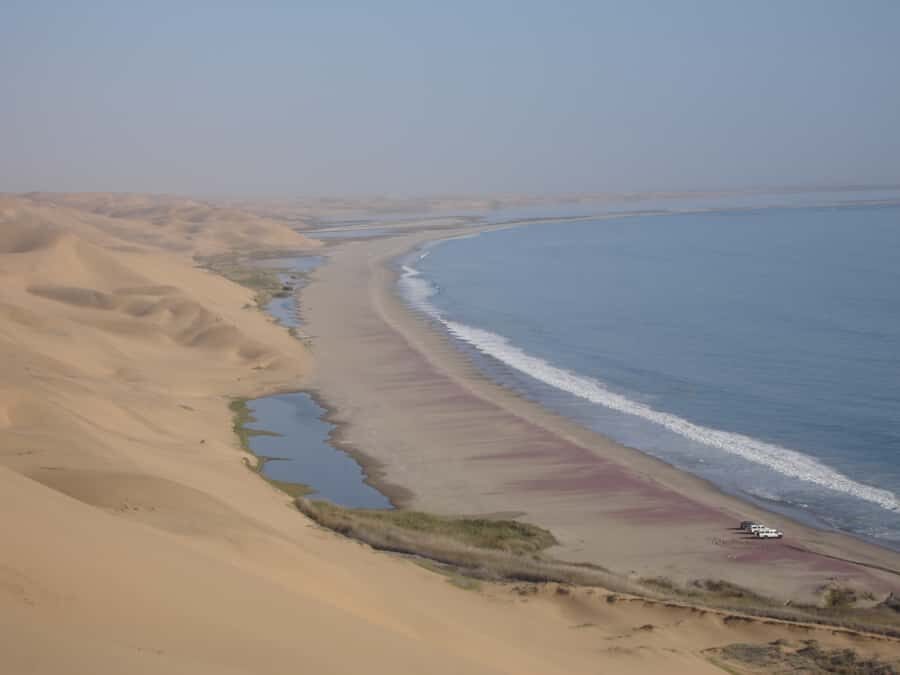
The big payoff is Sandwich Harbour Lagoon, one of Namibia’s most important coastal wetlands. It’s also a Ramsar site and described as one of Southern Africa’s richest wetlands. It sits in a dramatic pocket between the sea and the Namib Dunes.
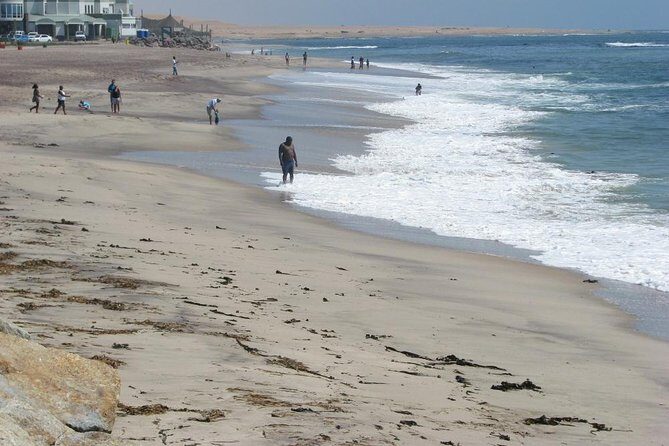
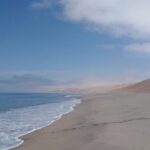
Your ability to drive all the way along the beach depends on weather and tides. When conditions allow it, you may get to drive right along the shore, with the dunes on one side and ocean on the other. That’s the kind of route that turns a drive into a memory.
When conditions don’t allow beach driving (high tide is the typical culprit), you’ll still see the lagoon. The tour will pivot to lookout spots with great views. You’ll also get time to walk and explore rather than just sit in the vehicle.
Either way, this part of the tour is about bird habitat and horizon lines. Sandwich Harbour is known for wading birds, so you’ll want to keep your eyes scanning flats and water edges rather than just staring at dunes. The guide’s photo stops help here: you’re not forced to guess where the best sightlines are.
The dune-top oyster lunch: why the food tastes better here
Let’s talk about the meal, because the setting makes it more than a roadside snack.
At the end of the main bird-and-dune portion, you enjoy a light lunch that includes:
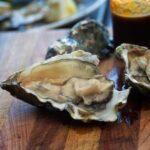
- fresh Namibian oysters
- sparkling wine (paired with the oysters)
- savoury and sweet snacks
- cooldrinks, bottled mineral water, and Namibian beer
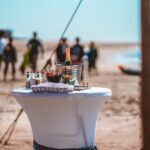
Served on top of a sand dune or on the beach, with ocean views in all directions.
Food in the dunes can feel like a luxury for a reason. You’re not eating in a dining room. You’re eating with sand blowing around, salty air in the air, and views that keep changing as light shifts. It’s the rare moment where the tour’s geography and the meal’s ingredients feel connected.
I also like that it’s described as a light lunch. It keeps the pace from slowing too much, while still giving you something substantial enough to enjoy the later dune driving and views without feeling stuffed.
If you’re not an oyster person, you can still find value here through the overall picnic style and the drink pairing. And if you have dietary needs, the local partner can cater for vegetarian, vegan, gluten sensitivities, and food allergies—worth mentioning when you book.
How the 4×4 drive really works: thrilling, not reckless
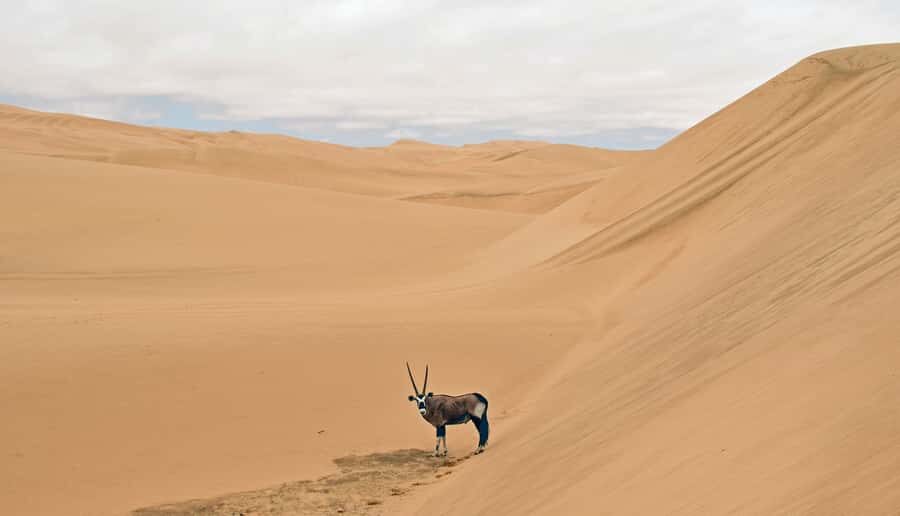
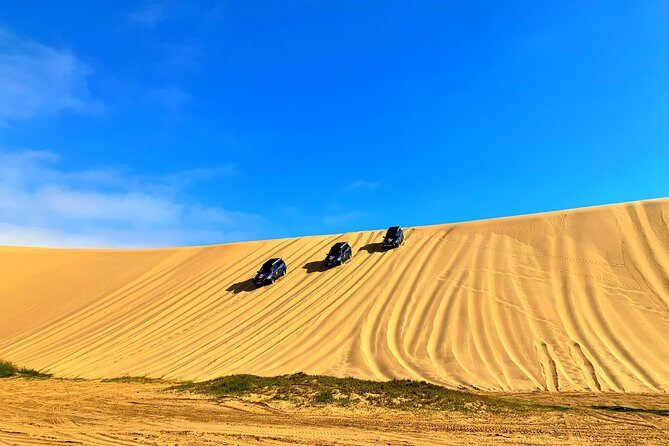
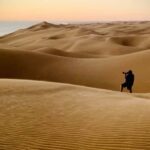
The headline activity is the exhilarating 4×4 trip through desert dunes. That’s not just marketing language. This is a drive that uses the terrain as part of the experience.
You’ll bounce over dune tops and travel through sand where the vehicle clearly has to work. The guide’s job isn’t just storytelling; it’s route choice and safety judgment, especially when you’re near the ocean or handling changes in sand conditions.
From the experience, a few practical points stand out:
- You’ll likely stop often for photography.
- You’ll spend time up high for panoramic views of Sandwich Bay and the Kuiseb Delta.
- You’ll feel the ocean influence even far inland—wind and salt can change how the day feels.
One real consideration: dune driving can cause car sickness for some people. If you’re prone to motion sickness, plan for it. It’s one of those “you’ll only know after” issues, and better to be prepared than surprised.
Also, the vehicle size can feel snug for groups. It’s not described as private, and you may be traveling with other participants depending on availability. For some people, that tighter seating makes the jostling feel more intense—another reason to dress thoughtfully and keep expectations realistic.
Wildlife and plant spotting: what to watch for in harsh country
A big part of why this tour has strong ratings is that it’s not just dunes-as-a-background. You get chances to observe how life survives in a tough environment.
In the lagoon areas, you’re watching birds that thrive in intertidal zones—especially where mudflats and sandbars create feeding opportunities. You’re also looking for endangered species in the Ramsar habitat.
On the delta stop, your focus shifts to desert animals—especially springbuck. That change in scenery is the point. You’re seeing the system from different angles: wetlands → dry riverbed → coastal dunes and lagoon.
Even the vegetation can become interesting. The tour is set up to help you notice how plants and animals adapt to desert heat, sand movement, and extreme salt and wind conditions along the coast. You don’t have to be a naturalist. Just keep your eyes open and let the guide point out what’s worth seeing.
Price and value: is $153 for 4 hours worth it?
At about $153 per person for a 4-hour outing, this isn’t a budget add-on. You’re paying for a very specific mix:
- a 4×4 vehicle in sand and dunes (not a normal road transfer)
- guided navigation across remote terrain
- access to key bird habitat areas that matter for wildlife viewing
- and food that’s not an afterthought: oysters plus sparkling wine, snacks, and drinks
For many people, the value comes from the experience density. In a few hours, you get multiple ecosystems, serious bird habitat time, and a major scenery payoff that’s hard to replicate on your own without the right vehicle and local knowledge.
You can treat it like a “pay for access” day. If you want to see Sandwich Harbour and the dunes up close, this style of excursion is a straightforward way to do it without spending hours planning routes, tides, and safe driving.
Who should book this 4×4 to Sandwich Harbour (and who should think twice)
This tour is a good fit if you want:
- a short, action-packed outing from Walvis Bay
- a mix of wildlife spotting + big dune views
- a dune picnic with oysters and wine
- a guided experience in English or Afrikaans
It’s also listed as wheelchair accessible and suitable for people with mobility concerns. Still, keep reality in mind: you’ll be in sand, moving between viewing spots, and spending time outdoors. If mobility is limited, you’ll be safest when you choose sensible footwear and plan on some walking around lookouts.
Skip this tour if you fit the stated “not suitable” categories:
- pregnant women
- people with back problems
And for everyone else, one more tip: since luggage or large bags aren’t allowed, travel light. Comfortable shoes and sun protection matter here more than in town.
Practical tips so your dune day feels smooth
Bring:
- comfortable shoes (sand is unforgiving)
- a sun hat and sunscreen
- comfortable clothes for hot sun and wind
Plan for:
- no large bags or luggage in the vehicle
- lots of photo stops, so you may want to keep your phone/camera handy
- motion sensitivity if you’re prone to car sickness
If you’re celebrating a special occasion, the partner can cater for that too. Just advise when booking so they can handle the details.
If you’re coming from a cruise ship, the new access gate helps. Still, double-check your timing because the check-in walk is part of the day.
Should you book it?
If you’re in Walvis Bay and you want the Namib Desert to feel physical—sand under your tires, ocean air on the dunes, birds in serious numbers—this 4×4 to Sandwich Harbour is an easy yes.
Book it if:
- you want a single afternoon that covers wetlands, a river delta, and coastal dunes
- you care about bird habitat time, including endangered species chances
- you’ll enjoy the surprise of oysters and sparkling wine in a landscape that doesn’t do subtle
Think twice if:
- you’re pregnant or have significant back issues
- you get car sick easily and haven’t planned for dune driving motion
- you’re expecting a guaranteed beach drive all the way to the lagoon (tides decide that)
Overall, it’s not just a drive through scenery. It’s a guided way to experience the desert meeting the Atlantic—with enough bird time and a real meal to make those hours worth it.