REVIEW · WALVIS BAY
Cruise liner Special: Swakopmund and Namib Desert Highlights
Book on Viator →Operated by Desert Dunes and Dust Tours · Bookable on Viator
Namibia can feel worlds away in 7.5 hours. What I really like is the mix of German-flavored Swakopmund and then the Namib going moon-cold and scientific, stop by stop. The main drawback is the long driving day—you’ll spend plenty of time on the road for a packed set of viewpoints.
This is run by Desert Dunes and Dust Tours from Walvis Bay, and it’s built for cruise schedules, with pickup and timing set around ship arrivals. It’s not a private tour, and guides who speak German are limited (so language isn’t guaranteed in peak cruise season). If you want control of pace and stops, you’ll need to buy extra seats for a private setup.
In This Review
- Key Things to Know Before You Go
- A Long Day With Big Payoff: How This Tour Runs
- Getting On Board: Walvis Bay Pickup and Cruise-Ship Timing
- Swakopmund Jetty and Mole: German Colonial Town Walk
- Swakopmund Town Stops to the Lichen Field: Desert Life You’d Miss
- Moon-Viewpoint 4: Lava Traces, Ice-Age Clues, and Uranium Sites
- Goanikontes: An Oasis in a Dry River Bed With Real History
- Welwitschia Plains: The Two-Leaf Plant That Lasts Centuries
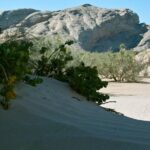
- Dune 7 View Only: Why You Don’t Climb It
- Walvis Bay Lagoon Bird Stop: 750,000 Birds Worth the Stop
- Price and Value: Is $193.68 Worth It for 7.5 Hours?
- Group Size, Seats, and Guide Language: The Stuff That Shapes Your Comfort
- Stop Timing and What to Prioritize With Your Energy
- Who This Tour Suits (and Who Might Prefer Another Option)
- Should You Book This Tour?
- FAQ
- How long is the Swakopmund and Namib Desert Highlights tour?
- Where does the tour start and end?
- Is pickup offered?
- Is this a private tour?
- What’s the group size limit?
- Are tickets and admissions included?
- Will you climb Dune 7?
Key Things to Know Before You Go
- Cruise-ship timing matters: they structure pickup around when the ship docks and you should still be okay if it’s running late.
- Max 25 people keeps it from feeling like a cattle market, even though it’s not private.
- Lichen + mushroom/algae lesson turns a plain-looking field into a real survival story.
- Moon-view gravel plus geology clues: lava-flow and ice-age traces, plus uranium exploration sites along the way.
- Goanikontes is a true “oasis in a dry river” with history tied to watering and settlement.
- Welwitschia Plains are fog-powered: two-leaf plants that can live for hundreds of years.
A Long Day With Big Payoff: How This Tour Runs
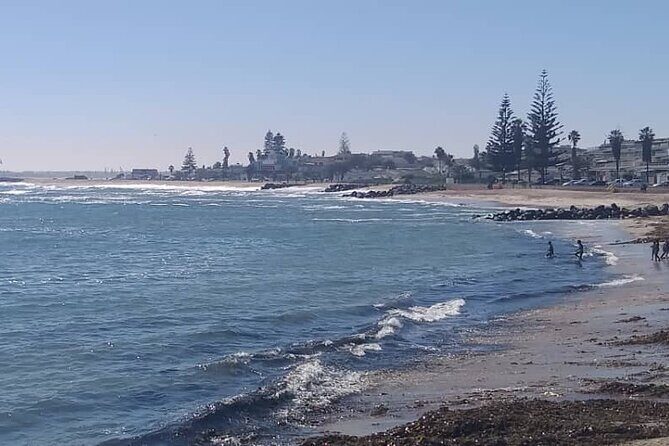
This tour is designed as a highlights loop: Walvis Bay to Swakopmund, then into the Namib desert, and back again to Walvis Bay. The pacing is purposeful, but it’s still a long day, with stretches of driving between stops. If you hate bus rides and prefer to linger, you may feel short-changed by the time you spend at each viewpoint.
The upside is you get a broad “Namibia in miniature” overview—coast town, desert plants, harsh geology, and a bird stop that feels almost like a nature documentary. I like how the day explains what you’re seeing instead of just pointing and moving on.
And yes, you’ll likely do it with some people chatting in multiple languages. German-speaking guides can be assigned on a first-come, first-served basis, and in peak cruise conditions they say they can’t guarantee German.
You can also read our reviews of more boat tours in Walvis Bay

Getting On Board: Walvis Bay Pickup and Cruise-Ship Timing
The start point is at Walvis Bay Port (near Port2FWR+CFH, Unnamed Road). You’ll get pickup offered, and the operator says they align pickup times with ship arrival and will wait if the ship docks late. That matters a lot when you’re working with port schedules and limited shore time.
You’ll also use a mobile ticket, which is handy if you don’t want to manage paper while walking around harbor areas. For most people, the tour is set up to be straightforward to join, but it does require the tour to have at least two people to run.
Swakopmund Jetty and Mole: German Colonial Town Walk
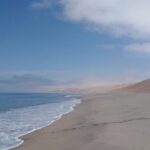
The day begins in Walvis Bay harbor/port, then you head north toward Swakopmund. On the drive, you pass Bird Island and a manmade guano island, which is an early hint that this coast has been worked, not just admired.
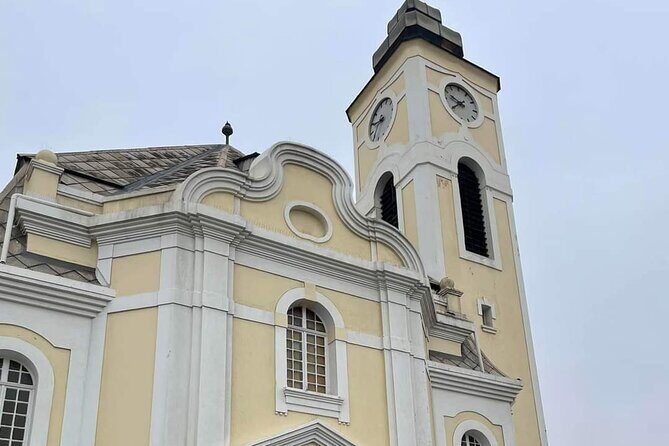
At Swakopmund Jetty and Mole, the walking part is short but meaningful: you stroll out along the waterfront and hear the history of this small German colonial town. You also walk around and see old buildings, which gives the day a strong “place” before it goes remote.
This stop is about an hour, and admission is listed as free. I like that it’s not rushed. It’s just enough time to get your bearings and then shift your brain from harbor streets to desert science.
Swakopmund Town Stops to the Lichen Field: Desert Life You’d Miss
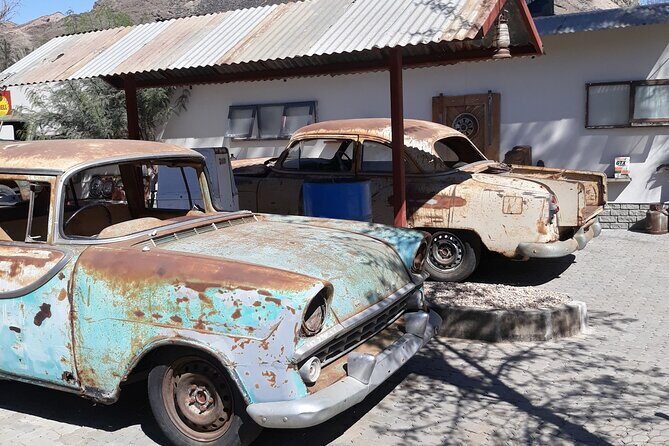
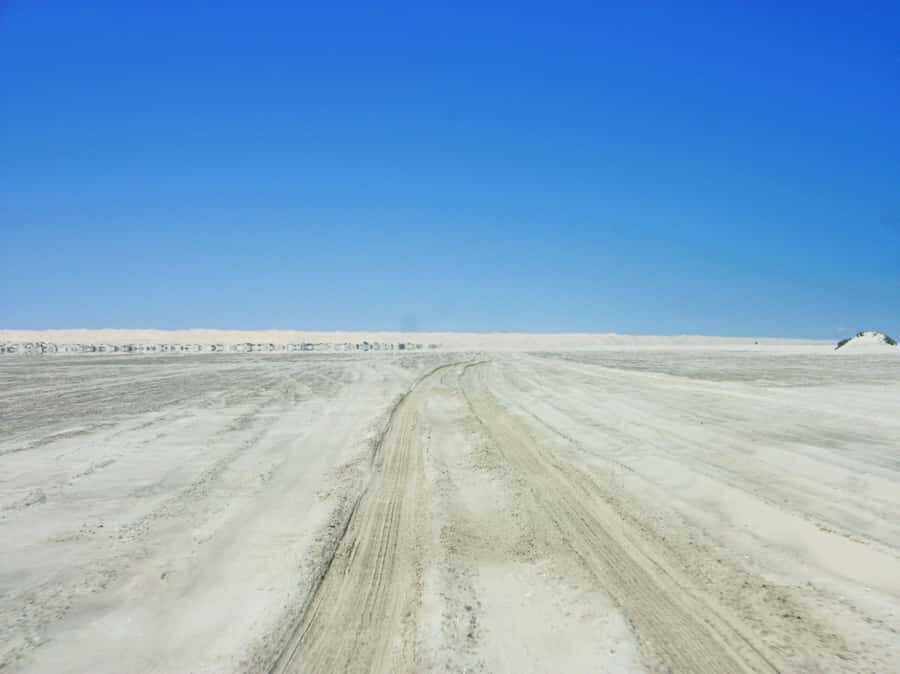
Back on the route, you look at old hotels and stations as you pass through Swakopmund. Then it’s out onto gravel plains toward the Namib, and your first true “desert survival” stop is the lichen field.
This is the kind of stop that turns the desert from empty to readable. You learn about the lichen as a partnership between a mushroom and an algae, and how they work together to survive in extreme conditions. The key idea here is that the Namib doesn’t reward big plants. It rewards clever systems.
This stop runs about an hour and admission is included. The value is not only the visuals, but the explanation—so even if you’re not the type who studies nature, you can still leave with a real takeaway: survival here is built on small collaborations.
Moon-Viewpoint 4: Lava Traces, Ice-Age Clues, and Uranium Sites
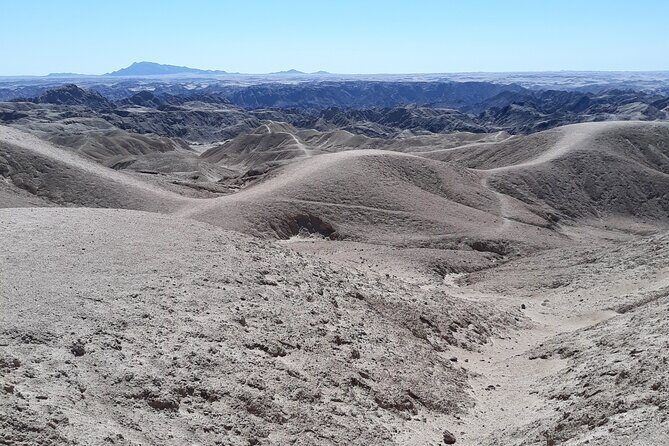
Next comes a series of viewpoint stops along the Moon-view gravel areas. The feeling is intentionally otherworldly: traces of lava-flow periods and ice ages show up in the rock and surface patterns around you. It’s easy to understand why people describe this part of the Namib as being on another planet.
Along the way, you’ll also see uranium exploration sites. The tour doesn’t treat this like a scary movie set—it’s more a “this is what people noticed here, and why” moment that adds context to the desert’s scientific interest.
Time here is about an hour, with admission included. Wildlife sightings are possible—zebra or springbuck are mentioned as potential—but nothing is guaranteed. I’d come with realistic expectations: you’re going for the geology and the scale of the place first, and wildlife is a bonus.
Goanikontes: An Oasis in a Dry River Bed With Real History
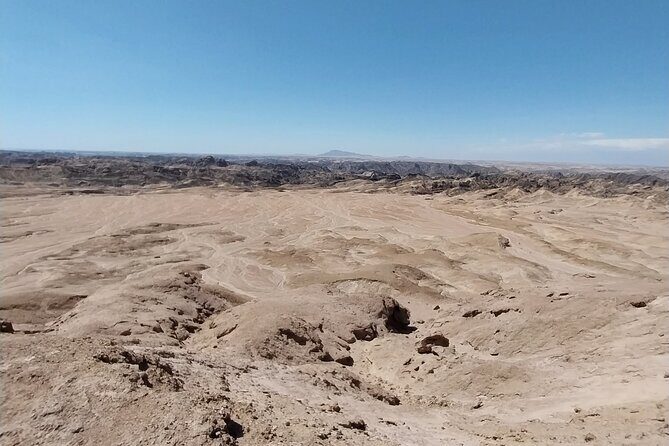
Goanikontes is described as an oasis in the Swakopmund River. The dramatic part is that you’re in a dry river bed, so the idea of a watering place stands out even more. The tour frames Goanikontes as important because it was the first watering hole in the desert route from Swakopmund.
You also learn that there was an old police post there, and that vegetables were grown. That’s a powerful reminder that people didn’t just pass through—someone tried to make a living in harsh conditions.
This stop is about an hour and admission is free. I like it because it adds human stakes. The desert day isn’t only rocks and plants; it’s also routes, survival, and decisions made by people with limited water.
Welwitschia Plains: The Two-Leaf Plant That Lasts Centuries
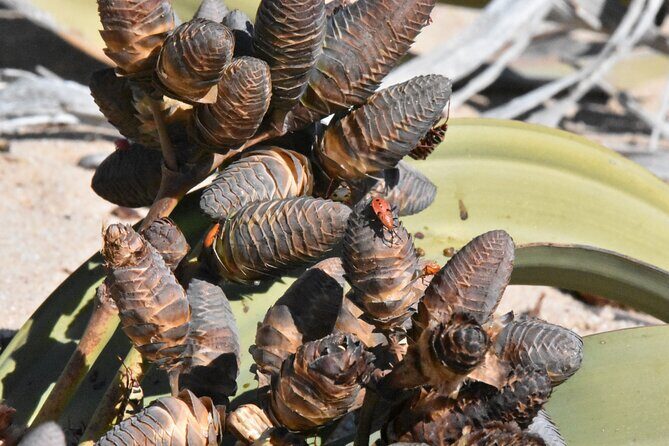
The highlight for plant lovers is the Welwitschia stop on the hard gravel plains where you’d swear nothing grows. Welwitschia has no stem and only two leaves, but it can live for hundreds of years.
You’ll learn how it adapts to absorb moisture from fog and occasional rain—this isn’t a plant that needs comfort, it needs timing. The tour also explains the male and female plants and that pollen is carried by small brown and orange bugs that live around the plant. And because thousands of seeds are produced, wind helps spread them across the harsh ground.
This stop takes about two hours and admission is included. That extra time matters, because if you only look for a quick photo, you’ll miss the bigger point: fog isn’t background here. It’s infrastructure.
If you want one clear “lesson you’ll remember” from the whole day, this is it.
Dune 7 View Only: Why You Don’t Climb It
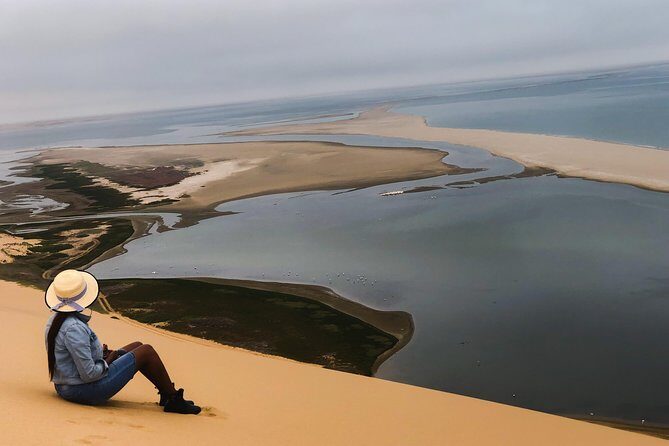
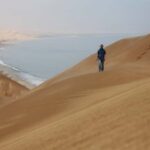
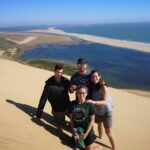
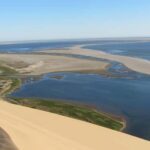
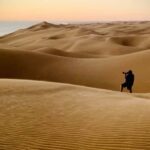
After more desert driving, you pass Dune 7 close to Walvis Bay. The time here is basically for viewing only—there’s no climbing given in the schedule.
That choice may feel limiting, especially if you’re picturing dune footprints and a dramatic scramble. But it also keeps the day moving and helps manage safety and time on a shore-day schedule. The trade is simple: you get the dune in your line of sight, not on your legs.
This stop is about an hour and admission is not included. Then you head back toward the Walvis Bay harbor, where the day’s second act comes to a finish with birds.
Walvis Bay Lagoon Bird Stop: 750,000 Birds Worth the Stop
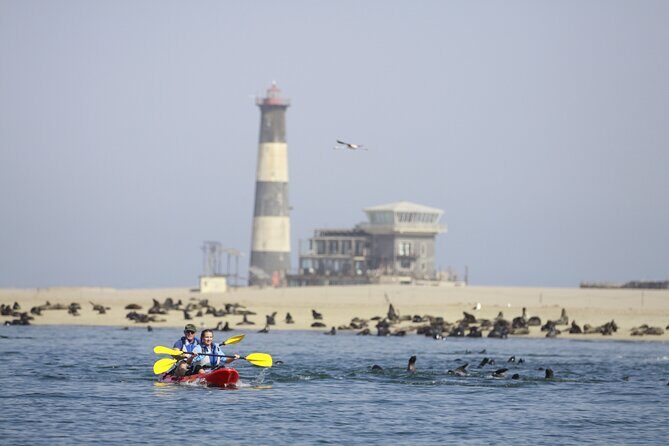
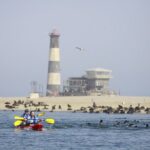
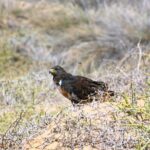
The final stop is Walvis Bay, with a brief stop at flamingos in the lagoon. The numbers here are eye-popping: more than 750,000 birds across 54 bird species. You may see palearctic migratory birds, along with pelicans, terns, and cormorants.
This stop is short—about 15 minutes—and admission is free. It’s not enough time to linger if you’re a hardcore birder, but it is enough time to experience the big “this place is famous for a reason” moment.
I’d think of it like a payoff stop: you end your desert plant-and-rock day with the living proof that even a harsh coastline can be a food factory.
Price and Value: Is $193.68 Worth It for 7.5 Hours?
At about $193.68 per person, you’re paying for a packed half-day-plus experience that links coast history with multiple desert learning stops and included admissions at several points.
Here’s how the “value math” looks in practical terms:
- You get Swakopmund walking time (jetty/mole) plus town sights, without needing to rent a car.
- You get desert science stops where admission is included (lichens, the Moon-viewpoint area, and Welwitschia).
- You also get at least one major “wow” outcome at the end: the lagoon bird viewing.
The biggest reason the price could feel high is the day length and time spent driving. If you’re the type who gets bored between stops, the negatives about driving and comfort will hit you harder than the included admissions help.
On the other hand, if you’re on a cruise with limited shore time and you want a broad overview in one go, this price can make sense. You’re paying to compress distance and get guided context.
If you’re budget-stretching, it’s worth also comparing this with a Swakopmund city-focused option run by the same provider, which may cut desert driving time and suit you better if you’d rather focus on town.
Group Size, Seats, and Guide Language: The Stuff That Shapes Your Comfort
The tour caps at 25 travelers. That’s not tiny, but it’s also not a huge bus mob. Still, it’s not private, so you’ll move at the rhythm of the group and the driver’s route.
Comfort can be a divider. One criticism called out uncomfortable seats, and that’s a real consideration on a long day. If you’re sensitive to sitting for long stretches, plan for it: wear comfy clothes, bring water (even if not mentioned in the schedule details), and don’t assume the van will feel like a modern long-distance coach.
On the guide side, German speakers are scarce. German guides are allocated first come first served, and they specifically warn that in peak season or when a cruise ship brings around 2000 people, they can’t guarantee German. If German is important to you, treat it as a hope, not a guarantee.
If you get a guide named Hannes, one of the strong positive experiences highlighted him as an exceptional host who adjusted the pace to avoid crowd timing.
Stop Timing and What to Prioritize With Your Energy
Since the day is packed, you’ll enjoy it more if you plan your energy:
- Go slow with photos at Welwitschia and the geology viewpoints. Those stops reward observation time.
- If you care most about Swakopmund, the morning jetty/mole walk is the moment to focus there.
- If you love nature explanations, pay attention during the lichen and plant parts. That’s where the tour turns into something more than scenery.
Also, note the dune stop is view-only. If climbing dunes is a must for you, consider another activity type or a different itinerary. Here, you’re absorbing the dune from a distance, not conquering it.
Who This Tour Suits (and Who Might Prefer Another Option)
This fits best if you want:
- a cruise-port-friendly day that covers both Swakopmund and core Namib highlights
- guided context on geology, plants, and desert survival
- a structured introduction without renting a vehicle
It may not fit as well if you:
- hate long driving days and prefer fewer stops
- need lots of time at each site instead of quick walk-throughs
- count on German language support as a requirement
If your top priority is Swakopmund town time, you might consider the operator’s city tour instead of stacking desert stops into one day.
Should You Book This Tour?
I think it’s a solid booking for the right traveler: someone with limited time in Namibia who wants a guided, mixed day—coast history, desert biology, geology clues, and a final bird payoff.
I would book it if you’re excited by the ideas behind the stops: lichens that survive as partnerships, Welwitschia powered by fog, and a Moon-like view where rocks tell stories about lava and ice. The tour’s format is built for that.
I’d skip or rethink it if you’re likely to feel frustrated by driving between scattered points, or if you strongly need a German-speaking guide. In that case, either pick a different tour style or plan for the guide language reality.
FAQ
How long is the Swakopmund and Namib Desert Highlights tour?
The tour runs about 7 hours 30 minutes.
Where does the tour start and end?
It starts at Walvis Bay Port (near Port2FWR+CFH, Unnamed Road) and ends back at the same meeting point.
Is pickup offered?
Yes, pickup is offered, and times are structured around cruise ship arrival and disembarkation.
Is this a private tour?
No. It’s not private. If you want a private tour, you would need to pay for extra seats in the vehicle locally.
What’s the group size limit?
The tour has a maximum of 25 travelers.
Are tickets and admissions included?
Some admissions are included (noted at Lichen field, Moon Landscape Viewpoint 4, and Welwitschia Plains). Swakopmund Jetty and Goanikontes are free, and the Flamingos bird stop is free. Dune 7 viewing is listed as admission not included.
Will you climb Dune 7?
No. The schedule indicates a view from near Dune 7, but no dune climb due to limited time.