REVIEW · WALVIS BAY
Sandwich Harbour Full Day Excursion
Book on Viator →Operated by Sandwich Dune Tours and Safari cc · Bookable on Viator
One day, three big ecosystems—what a deal. This Sandwich Harbour excursion ties together Walvis Bay Lagoon flamingos and the high-energy dune driving that makes the Namib feel real, fast. You also get a seal stop at Pelican Point, plus a look at how Namibia’s salt world works.
I like that it’s built for efficiency: air-conditioned vehicle travel and a qualified guide keep the day moving, without turning it into a race. The one thing to consider is that the experience needs good weather, so if conditions are poor the plan may be adjusted or refunded.
In This Review
- Key tour takeaways
- Why Sandwich Harbour fits so well into a half-day format
- Pickup, timing, and how to plan your day around it
- Walvis Bay Lagoon: flamingos, bird-watching pace, and what to look for
- Walvis Bay Salt Refiners: turning a roadside stop into real context
- Into the Namib Desert: wildlife chances and keeping expectations grounded
- Sandwich Harbour dunes and dune driving: the moment most people remember
- Pelican Point seals: how this coastal stop delivers
- Guides and group size: what it feels like in the real world
- Food, comfort, and the little details that add value
- Price and value: is $169.13 worth it?
- Should you book Sandwich Harbour from Walvis Bay?
Key tour takeaways
- Walvis Bay Lagoon flamingo time: you’re aimed at the cooler, calmer morning hours for serious bird-watching
- Salt refinery stop: you’ll see how natural salts are taken out of seawater in a big, working operation
- Namib Desert wildlife chances: look out for desert geckos and other hardy animals that handle the heat
- Sand dunes with ocean views: the dune driving is the kind of moment you’ll remember long after photos
- Pelican Point seal colony: a focused stop to watch seals in their coastal hangout
Why Sandwich Harbour fits so well into a half-day format
If you only have a short window in Walvis Bay, this is the kind of trip that makes your time count. Sandwich Harbour isn’t just scenery. It’s a working stretch of coast shaped by salt pans, dunes, and wildlife living on the edge of what most places can handle.
What I enjoy about this tour concept is the mix of “wow” and “why.” You get the obvious highlights—like thousands of flamingos at the lagoon and seals at Pelican Point. But you also get a practical education stop at the Walvis Bay Salt Refiners, Namibia’s biggest salt refinery. It adds meaning to what you’re seeing, instead of just ticking off locations.
The pacing matters, too. With an approx 6-hour duration and a max group size of 40, you’re not stuck all day waiting in a bus line. You’re moving through the day, with enough stops to feel full, but not so many that you feel rushed.
A few more Walvis Bay tours and experiences worth a look
Pickup, timing, and how to plan your day around it
This excursion runs for about 6 hours, with a start time of 10:00 am from Walvis Bay. You can meet the guide-driver at the Walvis Bay Waterfront or connect via hotel pickup. Either way, you’ll be rolling out early in the day to catch better light and cooler temperatures.
That 10:00 am start is a key detail. It’s not “sunrise chaos,” but the plan is still to beat the midday heat where possible. Wear something light you can layer, because desert air can shift fast once the sun climbs.
Logistically, the tour is designed to be easy to join. It uses a mobile ticket, and it’s near public transportation, so you’re not forced into a complicated routing plan just to get to the meeting point. Also, since all travel is by air-conditioned vehicle, long drives won’t drain you before the fun parts.
One small practical tip: keep your daypack for snacks and water, even if you’re expecting lunch. The itinerary is action-focused, and I like having control if you get hungry between stops.
Walvis Bay Lagoon: flamingos, bird-watching pace, and what to look for
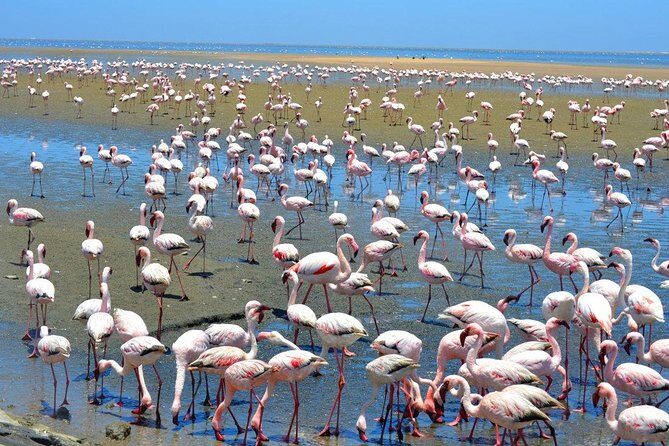
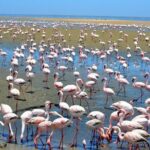
Walvis Bay Lagoon is the tour’s first big biological hit. This is where flamingos feed and rest, and the numbers are what you feel in your gut when you see them—hundreds of thousands of birds in the area.
I like this stop because it’s not just a static “look at animals” moment. The lagoon scene tends to feel alive: birds moving through shallow areas, feeding rhythms you can watch for a while, and lots of other bird activity in the same zone. Your guide can help you focus on what’s worth watching rather than wasting time hunting for shapes.
Photo-wise, the best approach is patience. Don’t chase every blink. Watch for patterns—flamingos feeding in groups, birds shifting locations, and the way the whole lagoon scene changes with the wind. If you’re the type who enjoys wildlife without sprinting between viewpoints, you’ll probably relax and enjoy this part.
Also, if you care about getting the most out of your time, flamingo viewing works best when you’re not overheating. That’s why the morning timing matters—even with a 10:00 am departure, you’re still more likely to be comfortable than if you started late afternoon.
Walvis Bay Salt Refiners: turning a roadside stop into real context
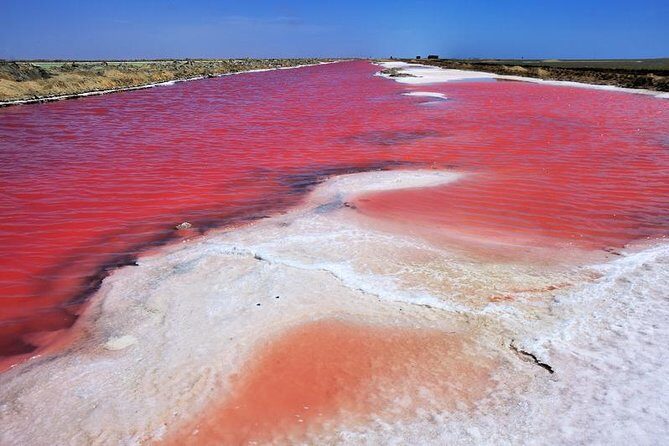
Most tours mention salt like it’s trivia. This one actually gives you a reason to care by stopping at the Walvis Bay Salt Refiners, described as Namibia’s biggest salt refinery.
When I see a stop like this on a day trip, I treat it as a “connect the dots” moment. The lagoon’s salty water environment is part of the story, and the refinery is how that natural supply gets used at scale. You learn that the area isn’t just scenic—it’s working, producing, and shaped by industry that depends on the local conditions.
You’ll also appreciate the contrast. A lagoon packed with wildlife sits next to industrial salt processing. It makes you think harder about how ecosystems and human systems share the same space. If you like learning something practical during your vacation day (even briefly), this is a strong addition.
If you prefer only “pure nature” stops, this is still worth seeing. It’s short enough to keep the day from losing momentum, and it gives you a deeper frame for why the salt pans and coastal conditions look the way they do.
Into the Namib Desert: wildlife chances and keeping expectations grounded
After the lagoon and refinery, you head toward the Namib Desert. This is where the day can swing from birdlife to desert survival—plants and animals built for harsh conditions.
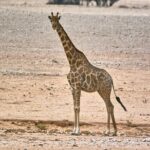
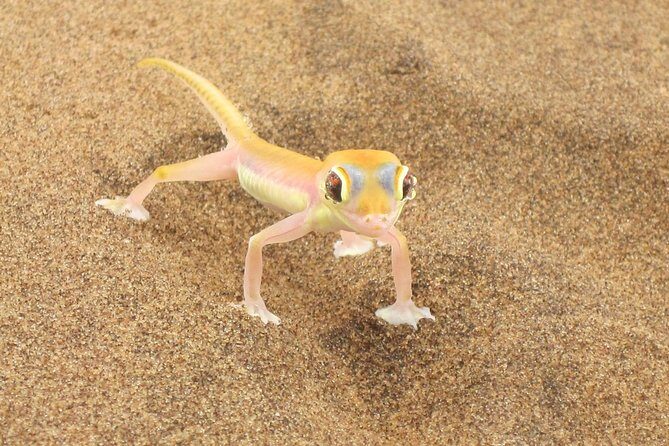
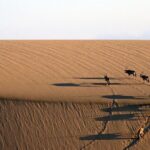
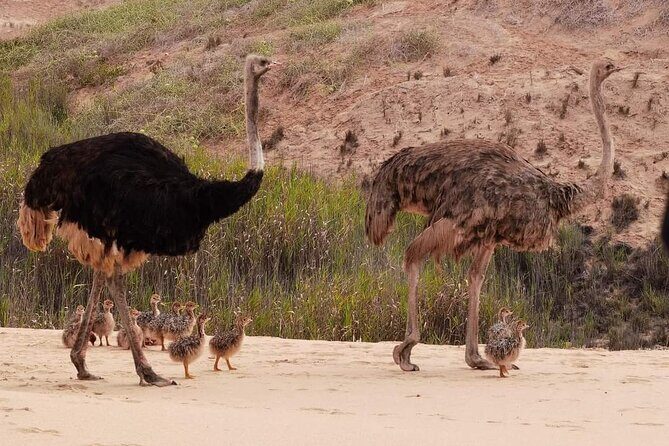
Here’s what’s useful to know: desert wildlife sightings are not guaranteed, but the day is set up for them. In past outings, people have reported spotting things like desert geckos, black-backed jackals, and ostriches. If you’re lucky, you might also spot small creatures that are easy to miss unless someone points them out.
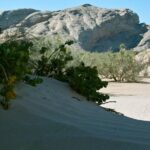
I like this section for its perspective shift. In many places, desert equals “nothing.” Here, the point is that the desert is full of adaptations. You’re looking for what survives, not what looks pretty on a postcard.
Your guide can help you slow down just enough to notice desert plants and small movement. I’d plan on doing some looking with your own eyes—screens can distract you from noticing subtle motion. The guide’s job is to point you toward what’s actually there, not to make the desert into a slideshow.
Sandwich Harbour dunes and dune driving: the moment most people remember
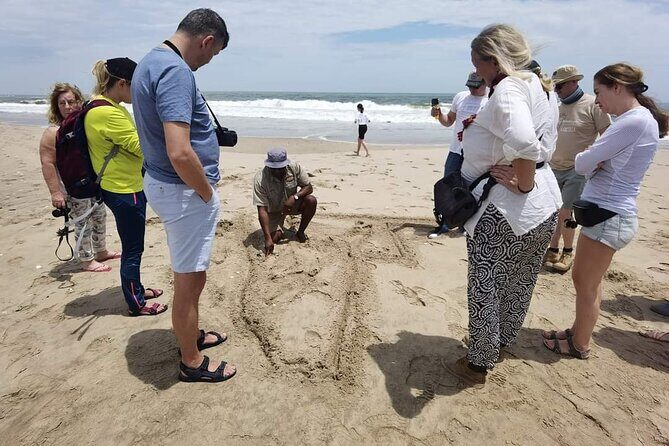
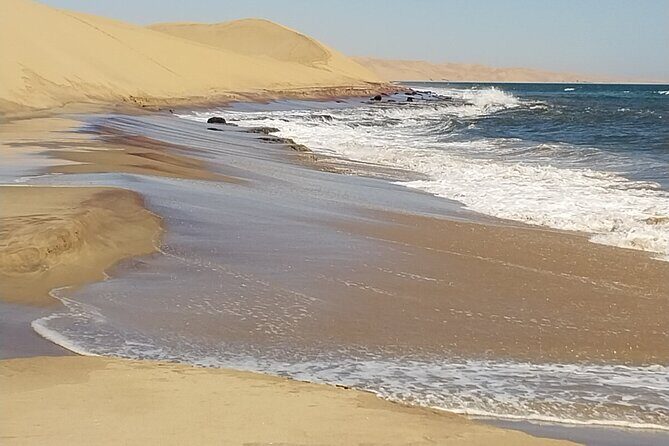
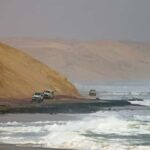
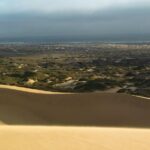
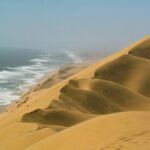
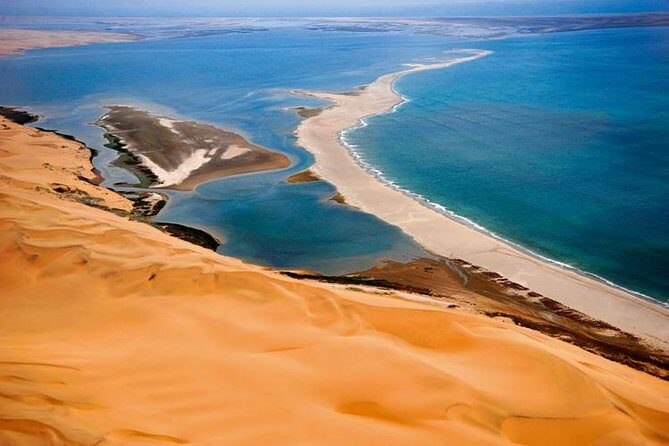
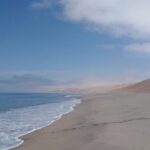
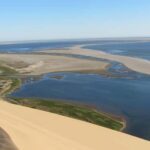
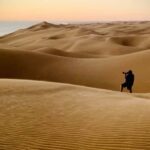
Sandwich Harbour is the name that carries the hype, and for good reason. This is where the day turns playful. One of the most praised parts is the dune driving—people describe thrilling rides over the sand and ocean-view angles that feel cinematic.
The practical point: dune driving can be bumpy. Even though the main transport is in an air-conditioned vehicle, the dune segment is typically a different kind of ride. Dress for comfort over style. If you get motion sick easily, it’s smart to sit where the ride feels most stable and keep your focus ahead, not down at your feet.
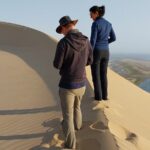
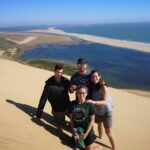
If you enjoy “hands-on” travel moments, this part is for you. It’s not just watching from a platform. You’re moving over dunes, feeling the scale, and seeing how the coastline and dunes connect. Several guide-led days describe ocean views stretching across the sand, which is exactly the kind of perspective you can’t replicate from the road.
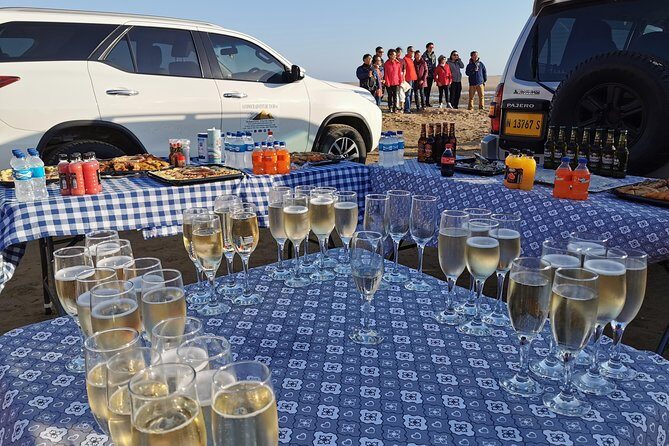
One detail I found especially memorable from past experiences: the dunes can set the stage for a very relaxed lunch moment. The tour includes a picnic lunch, and one featured day even described champagne enjoyed on top of the sand dune. Even if that extra flourish isn’t on every schedule, the core idea stands: lunch is part of the experience, not just a random stop.
Pelican Point seals: how this coastal stop delivers
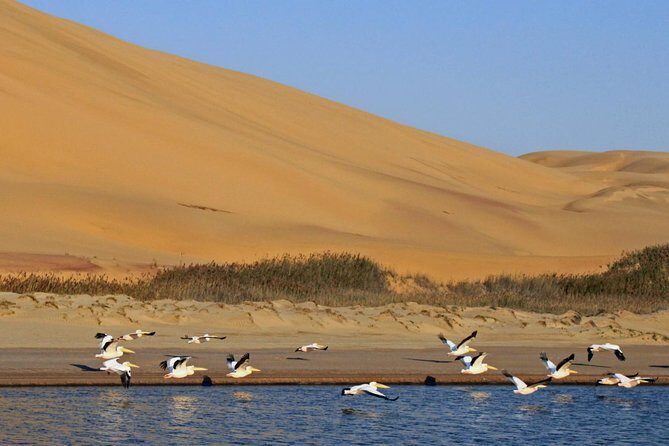
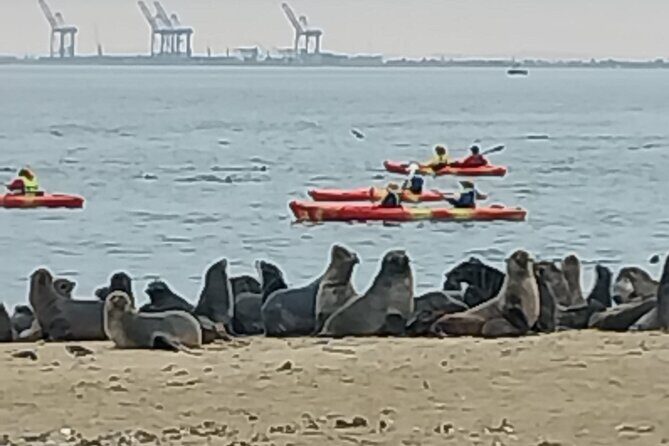
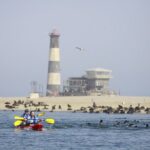
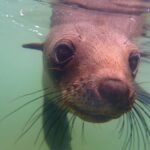
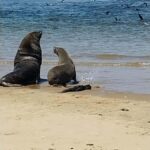
The tour ends with a drive to Pelican Point Peninsula to see a seal colony. This is a straightforward, focused wildlife stop, and that matters. Instead of trying to cram five animal encounters into one frantic hour, the day gives you a chance to watch seals properly.
How to enjoy it: treat it like a slow observation session. Seals can be active, but they also pause to rest and watch the shoreline. If you’re patient, you’ll catch more than a quick glance. If you’re with a guide who knows the area, you’ll spend more time looking at the right locations rather than wandering around.
One review described the seal colony as the highlight after dune driving, and another noted seeing a large number of seals at Pelican Point. Either way, this stop tends to land well because it’s visually rewarding without requiring deep hiking or complicated logistics.
Guides and group size: what it feels like in the real world
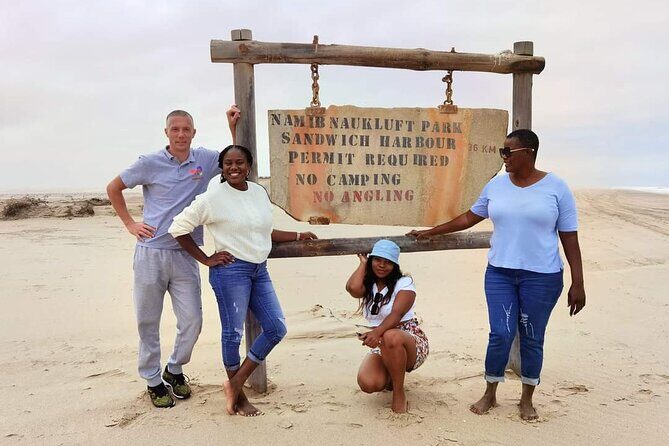
This is a group tour with a maximum of 40 travelers, led by a qualified tour guide. The smaller the group, the easier it is to get attention when you’re trying to spot wildlife or hear explanations over wind and movement.
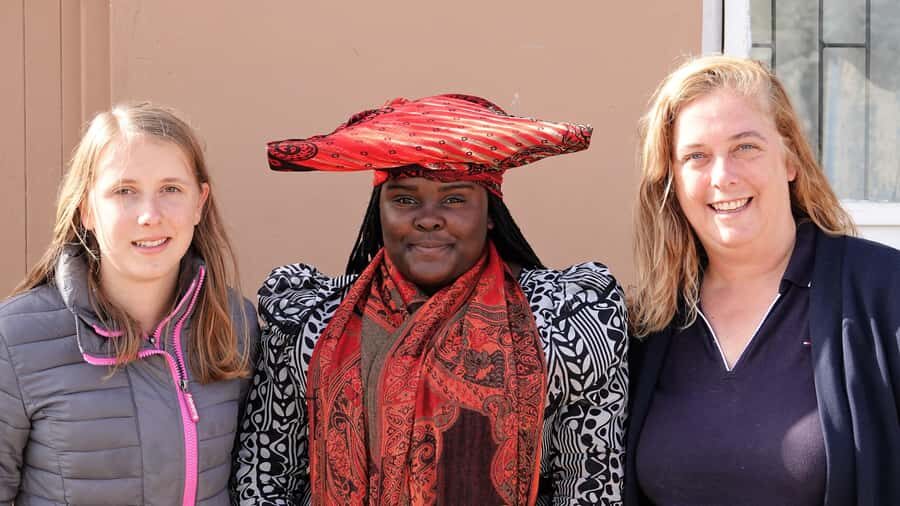
I also like that the guide quality comes through in the details. Past days include guides such as Dennis, Andres, and David, and the theme is the same: active guiding, good dune driving, and extra effort to make wildlife sightings happen. One guide even helped guests locate a gecko during the day, and that kind of “small win” is exactly what turns a good tour into a memorable one.
The air-conditioned vehicle also helps group comfort. You’re not sweating through the ride between stops. That makes a difference in a desert-focused itinerary, where your energy can drop fast if you’re constantly baking.
Food, comfort, and the little details that add value
The tour includes a picnic lunch, and it’s frequently described as delicious and plentiful. That’s important when your day includes long drives, dune time, and wildlife viewing. If lunch is tiny or rushed, the day can feel like it’s running on adrenaline alone.
Bring practical expectations. Picnic lunches are not always restaurant-level, but they can be exactly what you want in the open air—simple, filling, and timed so you’re not waiting too long. If your day includes a dune-top lunch moment, even better, because you’re eating with that ocean-and-sand perspective around you.
Also plan for sun and sand. Even if you’re in a vehicle most of the time, the stops are outdoors. Sunglasses, sun protection, and closed-toe shoes are your friends.
The included mobile ticket means less fuss. You don’t need to track paper, and you can keep your focus on the day instead of your wallet.
Price and value: is $169.13 worth it?
At $169.13 per person for an approx 6-hour excursion, the value depends on what you want from your day.
Here’s the honest math in travel terms:
- You’re paying for a packed route across Walvis Bay Lagoon, a major salt refinery, Namib Desert driving, Sandwich Harbour, and Pelican Point seals.
- You’re getting a qualified guide, transport in an air-conditioned vehicle, and a picnic lunch.
- You’re not shopping for separate tours or trying to coordinate multiple bookings.
If you’re short on time and want the “best hits” within one day, this pricing starts to look reasonable. The itinerary is structured so you don’t waste half your vacation moving between far-apart stops yourself.
If you’re traveling slowly and prefer to linger at one place for hours, you might find the pace a bit tight. But if you’re the kind of person who likes variety—birds, industry context, desert wildlife, dunes, and seals—this tour is built for you.
One more value angle: it’s rated 4.6 with 17 reviews, and the best feedback centers on guide skills, dune fun, and wildlife sightings. That usually means the tour is delivering what it promises, not just selling a name.
Should you book Sandwich Harbour from Walvis Bay?
I think you should book it if you want a single-day sampler that hits the key coastal-wildlife and desert-feeling highlights near Walvis Bay—without turning your day into a logistics project. The combination of flamingos, salt refinery context, Namib Desert wildlife chances, dune driving, and Pelican Point seals is a strong mix for a limited schedule.
Skip it (or at least be flexible) if weather swings are a concern for your travel dates. Since the experience requires good weather, plan to be okay with schedule adjustments if conditions aren’t right.
If you go, go ready to look, not just to pass by. Bring sun protection, stay patient at the lagoon and seal stop, and let the guide point you toward the small stuff—geckos and other desert surprises can make the day feel personal, not generic.