REVIEW · WALVIS BAY
Local Guided Walvisbay & Swakopmund Township Experience Day Tour
Book on Viator →Operated by Explorer Cultural Township Tours in Swakopmund /WalvisBay · Bookable on Viator
Mondesa life in four hours beats a museum. This Walvis Bay and Swakopmund township experience focuses on everyday culture, not just photo stops, with history, laughter, and real community visits. You’ll get an introduction to Mondesa Township and how the area came to reflect movement across different groups, from Owambo regions toward Damara and Herero life.
I especially like the hands-on parts: learning about traditional dress and trying out the Damara Nama clicking language with your guide. The second highlight is the family-home meal, where you taste traditional Oshiwambo food and drink as part of a warm, normal visit, not a staged performance.
One thing to keep in mind: this tour is weather-dependent and there can be last-minute changes if plans shift. Also, because pickup is Swakopmund-focused, you should confirm your exact meeting/pickup point the day before so you do not lose time at the start.
In This Review
- Key things I’d circle on your planning map
- How this township tour tells Namibia through people, not props
- Start in Swakopmund at 10:00, then choose how you roll
- Stop 1: the Damara and Namaqua trading building and the Damara Tower
- Moving from Owambo areas toward Damara and Herero life
- Traditional dress and the Damara Nama clicking language lesson
- Family home stop: lunch buffet and Oshiwambo food and drink
- DRC kindergarten visit: kids playing and a real school-day feel
- Finish with music: a live Mondesa choir performance
- Price and value: why $82.06 can be fair (if you want interaction)
- Logistics that can make or break your morning
- Who should book this tour, and who might skip it
- Should you book it? My honest call
- FAQ
- How long is the Local Guided Walvis Bay & Swakopmund Township Experience Day Tour?
- Where does pickup happen?
- What does the tour include?
- What time does the tour start?
- Is it a private tour?
- How many people can be in the group?
- Is there walking involved?
- What if the weather is bad?
- Can I cancel and get a full refund?
Key things I’d circle on your planning map

- Damara Tower story (built in 1905) ties town life to old shipping-watch and trading eras
- Damara Nama clicking language practice with a chance to demonstrate, not just listen
- Traditional dress plus food and drink at a local family home in the township
- DRC kindergarten visit with kids playing and school-day energy
- Live choir performance from Mondesa to close the day on music and community spirit
- Small groups (max 10) and private format make it easier to ask questions
How this township tour tells Namibia through people, not props
This is a culture day tour built like living history. You start with a short introduction that frames the Mondesa Township in Swakopmund, and then the guide helps connect dots between places, people, and stories. The day moves from Owambo areas toward communities associated with Damara and Herero, with history and culture threaded through each stop.
What makes it work is the pacing. Instead of rushing past “sights,” you spend time where people live, cook, sing, and teach small parts of daily life. That matters because township culture is not a single event. It’s a place where language, clothing, food, school, and music all show up together.
And yes, you’ll hear plenty of laughter in the group. That’s not fluff; it’s a signal that the tour is meant to be interactive. You are not just standing there holding a camera.
You can also read our reviews of more guided tours in Walvis Bay
Start in Swakopmund at 10:00, then choose how you roll

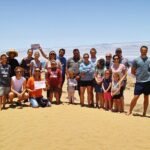
Your day starts at 10:00 am, with pickup offered in Swakopmund only. The tour is private, and your group size stays small: a minimum of 2 people and a maximum of 10.
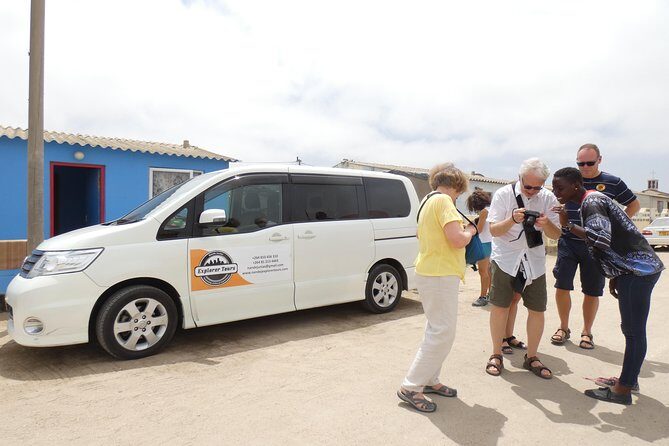
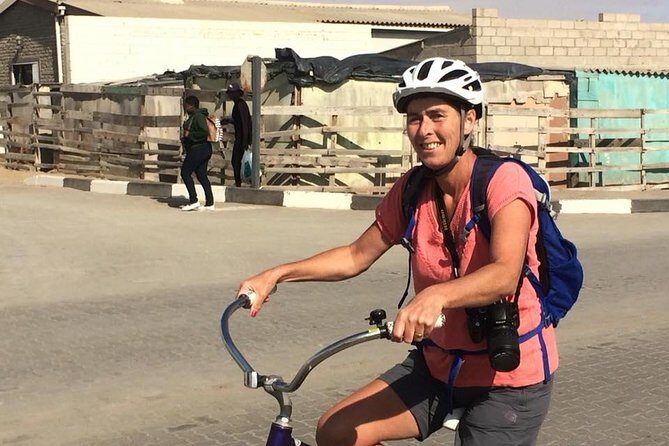
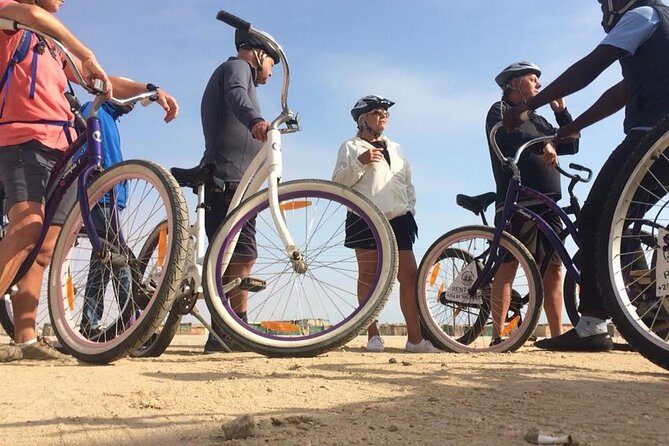
One practical bonus: you can choose bicycle or car. If you want less jostling or you’re managing comfort, car is the obvious pick. The tour also notes moderate 5 minutes of walking, so you should expect short stretches on foot, not long hikes.
The whole experience runs about 4 hours. Some versions are described as lasting 3 hours or longer, so build in the idea that timing can flex a bit depending on the day’s flow and how the community moments fit together.
Stop 1: the Damara and Namaqua trading building and the Damara Tower
One of the first story stops is the house of Damara and Namaqua Trading Company, designed by architect Friedrich Hoft. The building was completed in 1905, and the tower—named the Damara Tower—was used by observers to look for ships off the ocean and also for ox wagons in the desert.
This is a great way to get context fast. Namibia’s coast towns and inland routes have always been tied to movement—goods, people, and news. When your guide connects the trading company, the tower’s view, and the idea of observation over distance, you start to understand why these towns developed where they did.
You also get a business-history layer that helps explain how names and ownership changed. In April 1909, the Damara and Namaqua Trading Company sold its shares to C. Woermann, and it was renamed Woermann Brock & Co. The guide also covers the company connections, including Carl Woermann as a founder, and that the company was run by Adolf and Eduard Woermann, with in-laws Max Brock and Arnold Amsinck. Manager E. Wardesky stayed on after the shift.
Why this matters for your day: even if you are not a history nerd, this kind of story gives you something you can carry into the township visits. The day stops feel less like random “culture breaks” and more like chapters in a single place’s timeline.
Moving from Owambo areas toward Damara and Herero life
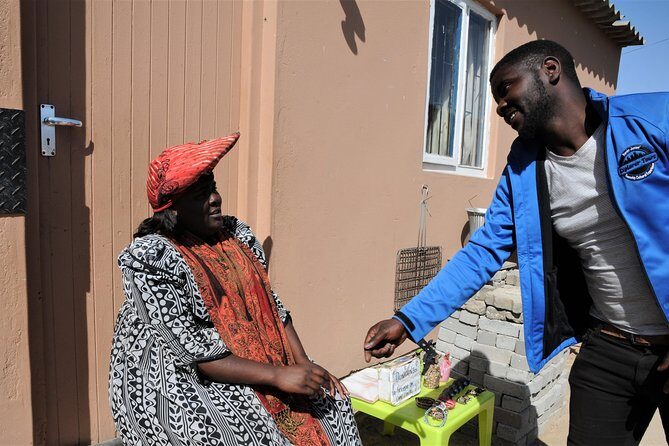
After the early history framing, you’ll shift into the cultural learning part of the day. The tour is designed around the idea of movement across regions and communities, so you are not only seeing one cultural snapshot. Instead, you get a sense of how the township reflects people from different backgrounds, and how those identities show up in daily life.
At stops along the way, you get small but meaningful segments: bits of culture, bits of history, and time to ask questions. The guide’s job is to translate what you are seeing so you understand what’s special about it, not just that it looks interesting.
This section is often the difference between a “tour” and a day that sticks. You begin to notice details, like how clothing choices and language use signal identity, and how food routines reveal what’s valued at home.
Traditional dress and the Damara Nama clicking language lesson
This is one of the most memorable parts of the experience. You’ll learn about traditional dress and get the chance to see it in context, not just in a photo. Clothing is one of those topics where a brief explanation can change everything—suddenly you know what to look for.
Then comes the headline skill: Damara Nama clicking language. Your guide explains it and you get to try it. Practicing clicks with a local guide is oddly satisfying. It’s not a party trick; it’s language, and the moment you try to make the sound yourself you understand how much skill and precision go into communication.
If you are worried about whether you can manage learning a new language sound, don’t. The tour tone is friendly and supportive. You are there to participate, not to pass a test.
Family home stop: lunch buffet and Oshiwambo food and drink
The day tour builds toward one of the best value moments: a family home visit with lunch buffet included. You’ll taste traditional Oshiwambo food and drink, served as part of a normal household welcome.
This is where the day earns its keep. A lunch included in the price is helpful on its own. But the bigger win is that you’re eating within township life as the guide explains what you’re seeing and tasting. You get to ask simple questions, watch how food is served, and experience the hospitality in a way that feels human-scale.
A practical note: since this is a home visit, keep expectations flexible. This is not a restaurant service machine. It’s slower, more personal, and usually more interesting because of it.
DRC kindergarten visit: kids playing and a real school-day feel

Next, you’ll visit a DRC kindergarten. This part of the day is built around children playing, singing, and being kids while you’re there. It’s one of those experiences that lands emotionally because it feels honest and immediate.
The tour description frames this as part of immersing you in township life. I’d phrase it more simply: you get to see what education and everyday joy look like in a community setting. There’s no need for heavy interpretation; the kids do that part for you.
If you bring anything, keep it appropriate and follow the guide’s lead. This is about respect and attention, not handing out stuff and moving on.
Finish with music: a live Mondesa choir performance
You end the tour with a live performance by a local choir from Mondesa. Closing with music is smart. It turns the day’s scattered stories into a single emotional signature—voice, rhythm, and community energy.
In the past, guides named in the experience have also been strong performers themselves, and that matters for how the day feels overall. When your guide is engaging and expressive, the history stops land better and the cultural moments feel less like a lecture and more like conversation.
If you like ending a tour on something you can actually hear and feel, this finale is a big reason to book. It gives you a sensory memory that lasts longer than a list of facts.
Price and value: why $82.06 can be fair (if you want interaction)
At $82.06 per person for a roughly 4-hour private township experience, the price can be a solid value—especially because lunch buffet, a professional guide, and transport choice (bicycle or car) are included.
Where the value shows up:
- You’re not paying extra for the key experiences like lunch or the cultural activities.
- You get a guide who connects history to what you’re seeing, including the Damara Tower trading story.
- The group stays small (max 10), so it feels more like a guided day than a cattle-car group run.
Where you should be careful:
- If weather forces a schedule change, you may need to accept a different date (or seek a refund if offered).
- Because the tour depends on community timing, any communication mistakes around pickup or meeting points can turn into lost time. Confirm the plan clearly and early.
If you want purely scenic photos, you might feel this is not the right match. If you want a day that explains Namibia through people and daily life, it’s priced like a cultural experience should be.
Logistics that can make or break your morning
Pickup is the key practical detail: the tour offers pickup in Swakopmund only. Your start time is 10:00 am, so aim to be ready slightly early.
Also pay attention to comfort and movement:
- There’s moderate walking (listed as about 5 minutes).
- It’s recommended for participants with back problems, which is another nudge that car travel might be a good plan if you have any discomfort.
Lastly, the day needs good weather. If it’s canceled due to weather, you should be offered a different date or a full refund. When a tour is community-based, weather can affect accessibility and safety, so don’t treat that as a minor inconvenience.
Who should book this tour, and who might skip it
Book this if you:
- Want real cultural contact through language practice, food, and home visits
- Like tours that include history but still keep it human and interactive
- Prefer small groups and private attention (max 10)
Consider skipping if you:
- Want a fast-moving, strictly sightseeing style day
- Dislike situations where plans can shift based on community timing or weather
It’s a strong fit for first-time visitors who want more than coastal scenery and want to understand what township life looks like day-to-day. It’s also a good option if you are comfortable asking questions and joining in, even if you’re not “confident” with language or cultural activities.
Should you book it? My honest call
I think this is worth booking if your goal is cultural understanding with real people in the room. The combination of Damara Tower history, Damara Nama clicking language practice, an Oshiwambo lunch at a family home, a kindergarten visit, and a Mondesa choir finale gives you a full arc in one day.
Just do two things to protect your trip: confirm pickup details in advance, and keep your schedule flexible in case weather changes the plan. If you handle those basics, you’ll get a day that feels personal rather than packaged.
FAQ
How long is the Local Guided Walvis Bay & Swakopmund Township Experience Day Tour?
The duration is listed as about 4 hours.
Where does pickup happen?
Pickup is offered in Swakopmund only.
What does the tour include?
The tour includes a professional guide, lunch buffet, and use of bicycle or car (your choice).
What time does the tour start?
The start time is 10:00 am.
Is it a private tour?
Yes. It is listed as a private tour/activity, so only your group participates.
How many people can be in the group?
A minimum of 2 people is required, and the maximum per booking is 10.
Is there walking involved?
Yes. There is a moderate amount of walking, noted as about 5 minutes.
What if the weather is bad?
The experience requires good weather. If it’s canceled due to poor weather, you’ll be offered a different date or a full refund.
Can I cancel and get a full refund?
You can cancel for a full refund if you cancel at least 24 hours before the experience’s start time. Cancellation less than 24 hours before is not refunded.